QUESTION IMAGE
Question
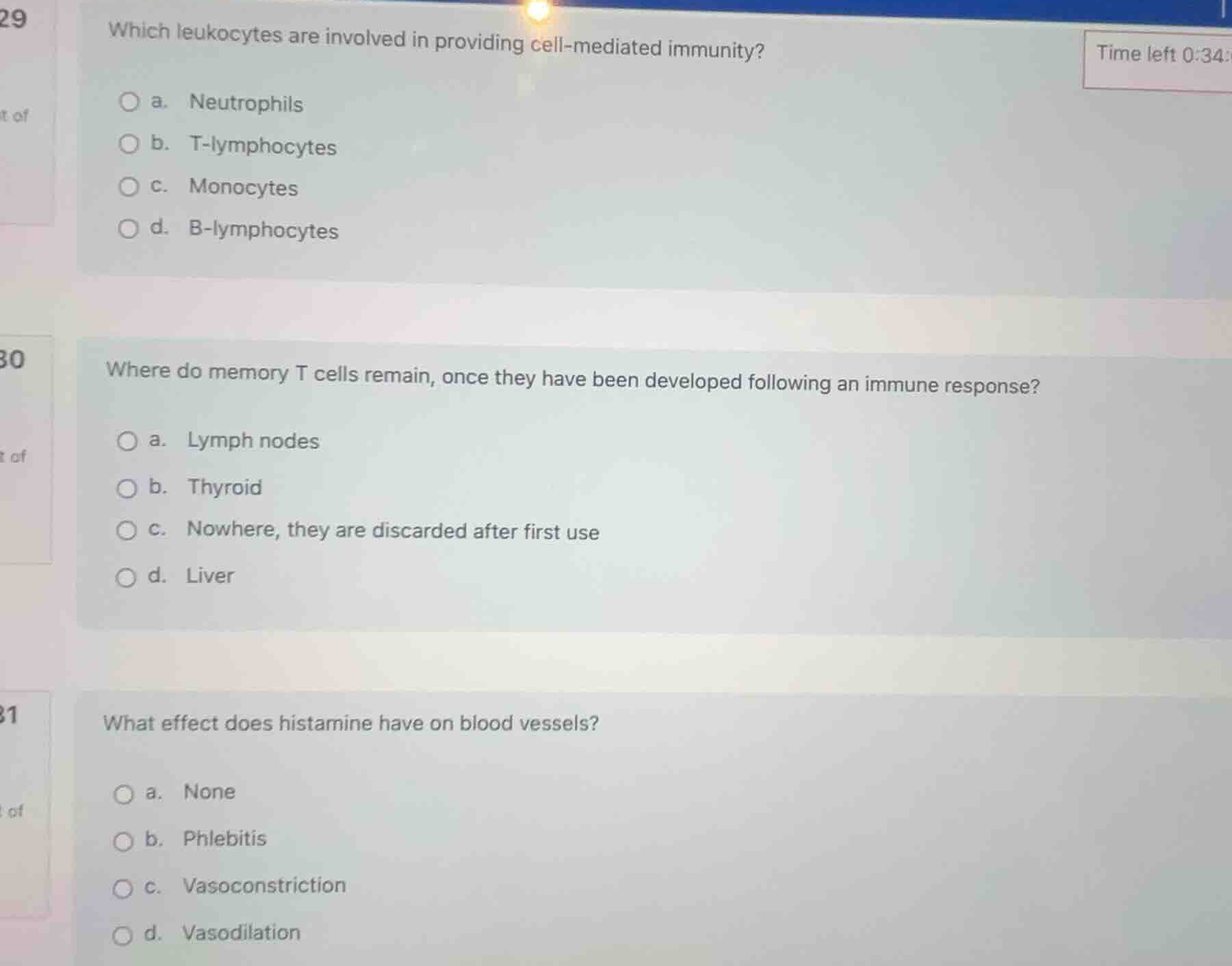
which leukocytes are involved in providing cell-mediated immunity?
a. neutrophils
b. t-lymphocytes
c. monocytes
d. b-lymphocytes
where do memory t cells remain, once they have been developed following an immune response?
a. lymph nodes
b. thyroid
c. nowhere, they are discarded after first use
d. liver
what effect does histamine have on blood vessels?
a. none
b. phlebitis
c. vasoconstriction
d. vasodilation
Analyze cell-mediated immunity
Cell-mediated immunity is an immune response that does not involve antibodies. Instead, it relies on the activation of phagocytes, antigen-specific cytotoxic T-lymphocytes, and the release of various cytokines in response to an antigen. Therefore, T-lymphocytes (T cells) are the primary leukocytes responsible for providing cell-mediated immunity, whereas B-lymphocytes are responsible for humoral (antibody-mediated) immunity.
Determine memory T cell localization
After an immune response, memory T cells are generated to provide long-term protection. These cells persist in a quiescent state and primarily reside in secondary lymphoid organs, such as the lymph nodes and spleen, as well as circulating through the blood and peripheral tissues to quickly encounter re-entering pathogens. Among the choices, lymph nodes are the correct anatomical site.
Evaluate histamine vascular effects
Histamine is a vasoactive amine released by mast cells and basophils during inflammatory and allergic reactions. It binds to receptors on vascular endothelial cells, leading to the relaxation of vascular smooth muscle. This physiological action results in the widening of blood vessels, known as vasodilation, which increases blood flow to the affected tissue.

Snap & solve any problem in the app
Get step-by-step solutions on Sovi AI
Photo-based solutions with guided steps
Explore more problems and detailed explanations
Question 29
- a. Neutrophils
- b. T-lymphocytes (Correct answer)
- c. Monocytes
- d. B-lymphocytes
Question 30
- a. Lymph nodes (Correct answer)
- b. Thyroid
- c. Nowhere, they are discarded after first use
- d. Liver
Question 31
- a. None
- b. Phlebitis
- c. Vasoconstriction
- d. Vasodilation (Correct answer)