QUESTION IMAGE
Question
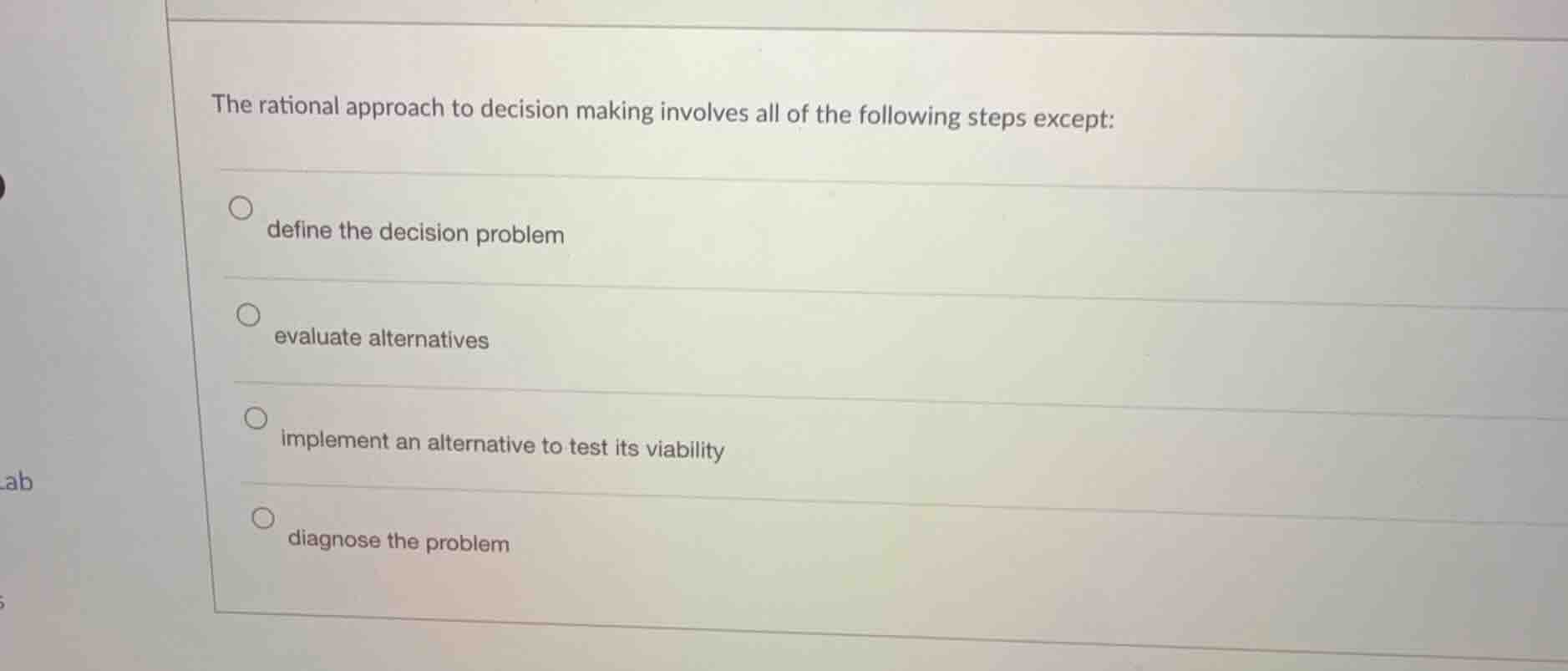
the rational approach to decision making involves all of the following steps except:
define the decision problem
evaluate alternatives
implement an alternative to test its viability
diagnose the problem
Analyze the rational decision-making model
Using the Rational Decision Making Model and Decision Making Steps knowledge points
The rational approach to decision-making is a systematic, step-by-step process designed to maximize outcomes by selecting the optimal alternative. The standard steps typically include:
- Monitor the decision environment
- Define the decision problem
- Specify decision objectives
- Diagnose the problem
- Develop alternative solutions
- Evaluate alternatives
- Choose the best alternative
- Implement the chosen alternative
Evaluate the given options
Using the Decision Making Steps knowledge point
- define the decision problem: This is a core early step in the rational model to establish what needs to be solved.
- evaluate alternatives: This is a critical analytical step where each potential solution is weighed against criteria.
- implement an alternative to test its viability: In the rational model, implementation occurs after the final choice is made to put the selected solution into action, not as a trial-and-error testing step to see if it is viable. Trial implementation is more characteristic of incremental or heuristic decision-making.
- diagnose the problem: This step involves analyzing the underlying causes of the defined problem.
Therefore, "implement an alternative to test its viability" is not a standard step of the rational decision-making process.

Snap & solve any problem in the app
Get step-by-step solutions on Sovi AI
Photo-based solutions with guided steps
Explore more problems and detailed explanations
- define the decision problem
- evaluate alternatives
- implement an alternative to test its viability (Correct answer)
- diagnose the problem