QUESTION IMAGE
Question
question 3
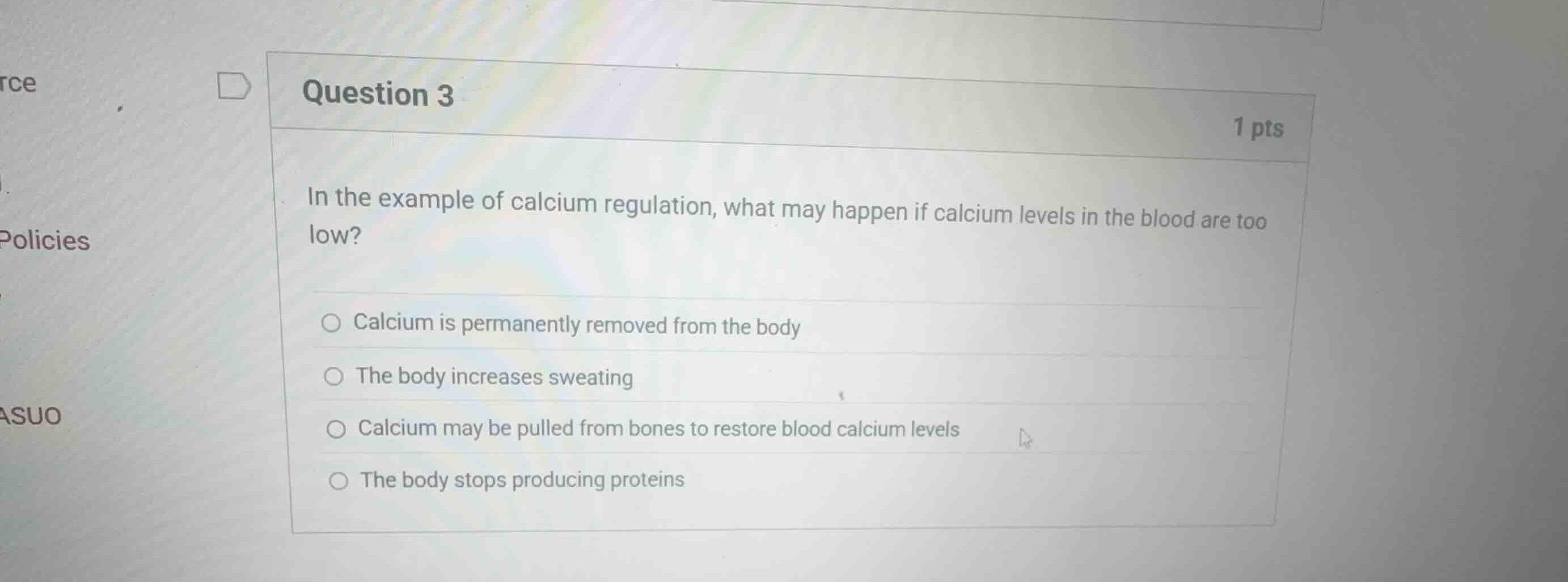
in the example of calcium regulation, what may happen if calcium levels in the blood are too low?
- calcium is permanently removed from the body
- the body increases sweating
- calcium may be pulled from bones to restore blood calcium levels
- the body stops producing proteins
Identify the physiological challenge
The question asks what happens when calcium levels in the blood are too low. This is a classic challenge to Homeostasis and Homeostatic Regulation.
Analyze the homeostatic response
When blood calcium levels drop, the parathyroid glands release parathyroid hormone (PTH). PTH acts on bones to stimulate osteoclasts, which break down bone tissue to release calcium back into the bloodstream.
Evaluate the given options
- "Calcium is permanently removed from the body": Incorrect, as the body conserves and regulates calcium.
- "The body increases sweating": Incorrect, sweating is related to thermoregulation, not calcium homeostasis.
- "Calcium may be pulled from bones to restore blood calcium levels": Correct, bones serve as the primary reservoir for calcium storage and release.
- "The body stops producing proteins": Incorrect, protein synthesis is not directly halted by low calcium levels in this regulatory context.

Snap & solve any problem in the app
Get step-by-step solutions on Sovi AI
Photo-based solutions with guided steps
Explore more problems and detailed explanations
- Calcium is permanently removed from the body
- The body increases sweating
- Calcium may be pulled from bones to restore blood calcium levels (Correct answer)
- The body stops producing proteins