QUESTION IMAGE
Question
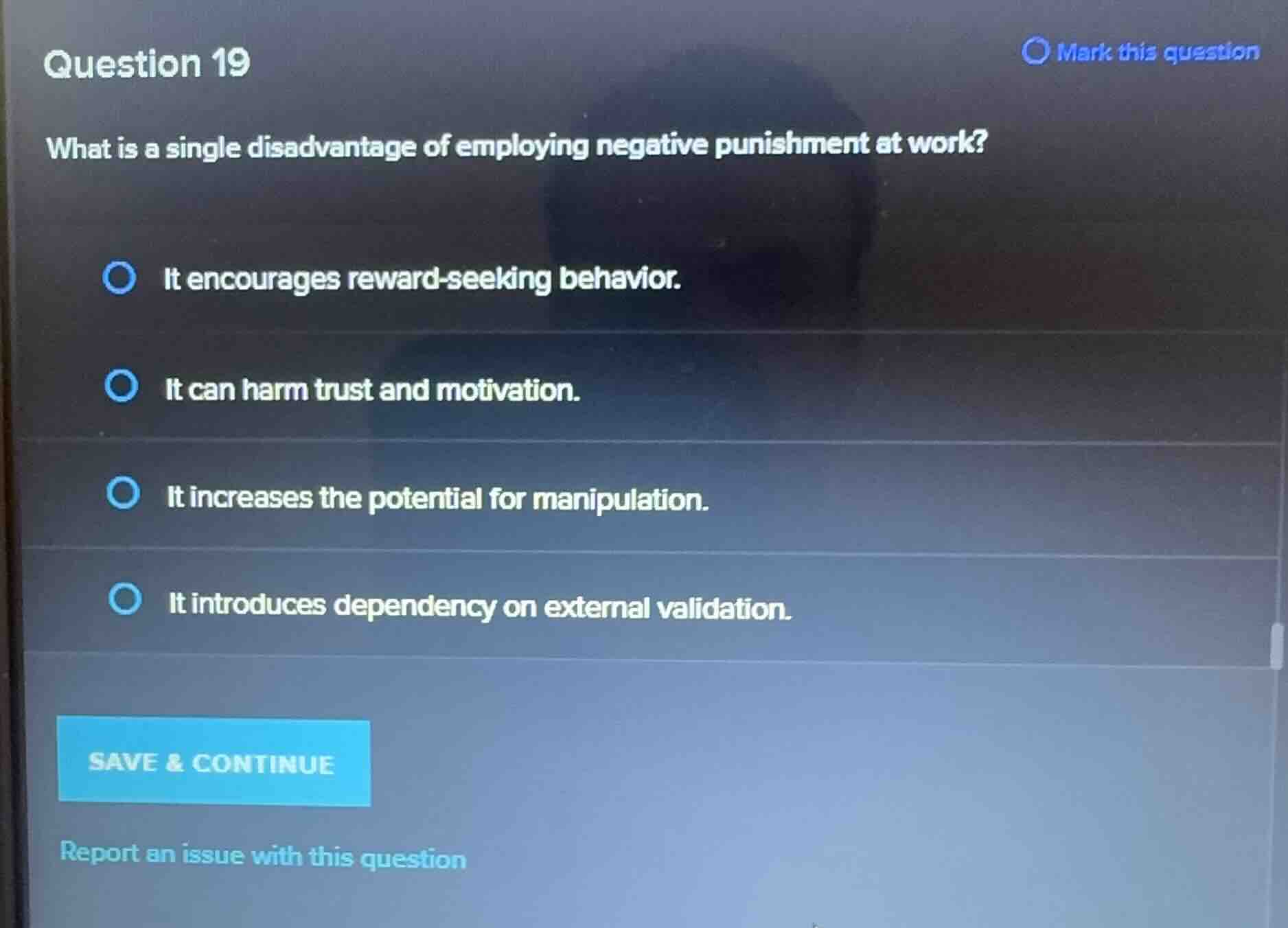
question 19
what is a single disadvantage of employing negative punishment at work?
- it encourages reward-seeking behavior.
- it can harm trust and motivation.
- it increases the potential for manipulation.
- it introduces dependency on external validation.
Define negative punishment in the workplace
Negative punishment involves removing a desirable stimulus or privilege to decrease an unwanted behavior. Examples include taking away bonuses, reducing flexible hours, or removing privileges.
Analyze the impact on employee relations
Removing positive stimuli can create resentment, damage the relationship between employees and management, and lower overall morale.
Evaluate the given options
- "It encourages reward-seeking behavior": This is more closely associated with positive reinforcement.
- "It can harm trust and motivation": Removing valued privileges directly damages the psychological contract, reducing trust and intrinsic motivation.
- "It increases the potential for manipulation": This is not a primary, direct disadvantage of negative punishment.
- "It introduces dependency on external validation": This is typically a consequence of overusing positive reinforcement.
Select the correct option
The most direct and recognized disadvantage of employing negative punishment in a professional setting is that it can harm trust and motivation.

Snap & solve any problem in the app
Get step-by-step solutions on Sovi AI
Photo-based solutions with guided steps
Explore more problems and detailed explanations
- (A) It encourages reward-seeking behavior.
- (B) It can harm trust and motivation. (Correct answer)
- (C) It increases the potential for manipulation.
- (D) It introduces dependency on external validation.