QUESTION IMAGE
Question
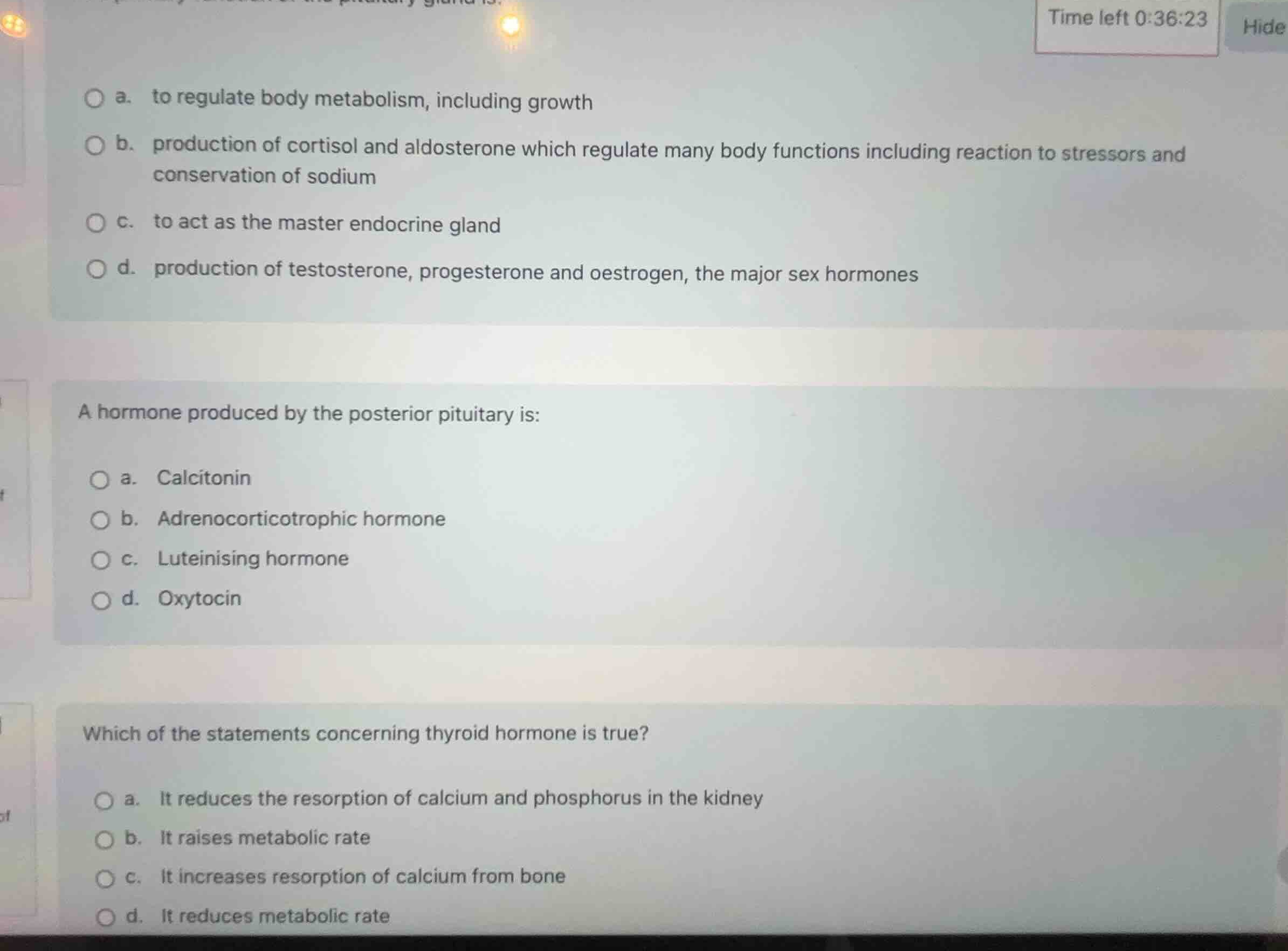
the primary function of the pituitary gland is:
a. to regulate body metabolism, including growth
b. production of cortisol and aldosterone which regulate many body functions including reaction to stressors and conservation of sodium
c. to act as the master endocrine gland
d. production of testosterone, progesterone and oestrogen, the major sex hormones
a hormone produced by the posterior pituitary is:
a. calcitonin
b. adrenocorticotrophic hormone
c. luteinising hormone
d. oxytocin
which of the statements concerning thyroid hormone is true?
a. it reduces the resorption of calcium and phosphorus in the kidney
b. it raises metabolic rate
c. it increases resorption of calcium from bone
d. it reduces metabolic rate
Analyze the primary function of the pituitary gland
The pituitary gland is historically and functionally referred to as the "master endocrine gland" because it secretes hormones that control and regulate the activity of multiple other endocrine glands throughout the body.
Identify the hormone produced by the posterior pituitary
The posterior pituitary gland stores and releases two primary hormones synthesized in the hypothalamus: oxytocin and antidiuretic hormone (ADH/vasopressin). Among the choices, oxytocin is the correct hormone. Calcitonin is produced by the thyroid gland, adrenocorticotrophic hormone (ACTH) and luteinising hormone (LH) are produced by the anterior pituitary.
Evaluate statements concerning thyroid hormone
Thyroid hormones (primarily thyroxine, $T_4$, and triiodothyronine, $T_3$) act on nearly every cell in the body to increase the basal metabolic rate, regulate protein synthesis, and help control macronutrient metabolism. Therefore, the statement "It raises metabolic rate" is true.

Snap & solve any problem in the app
Get step-by-step solutions on Sovi AI
Photo-based solutions with guided steps
Explore more problems and detailed explanations
Question 1
- a. to regulate body metabolism, including growth
- b. production of cortisol and aldosterone which regulate many body functions including reaction to stressors and conservation of sodium
- c. to act as the master endocrine gland (Correct answer)
- d. production of testosterone, progesterone and oestrogen, the major sex hormones
Question 2
- a. Calcitonin
- b. Adrenocorticotrophic hormone
- c. Luteinising hormone
- d. Oxytocin (Correct answer)
Question 3
- a. It reduces the resorption of calcium and phosphorus in the kidney
- b. It raises metabolic rate (Correct answer)
- c. It increases resorption of calcium from bone
- d. It reduces metabolic rate