Sovi.AI - AI Math Tutor

Scan to solve math questions

QUESTION IMAGE

identify a diagram of binary fission, and identify a similarity between…

Question

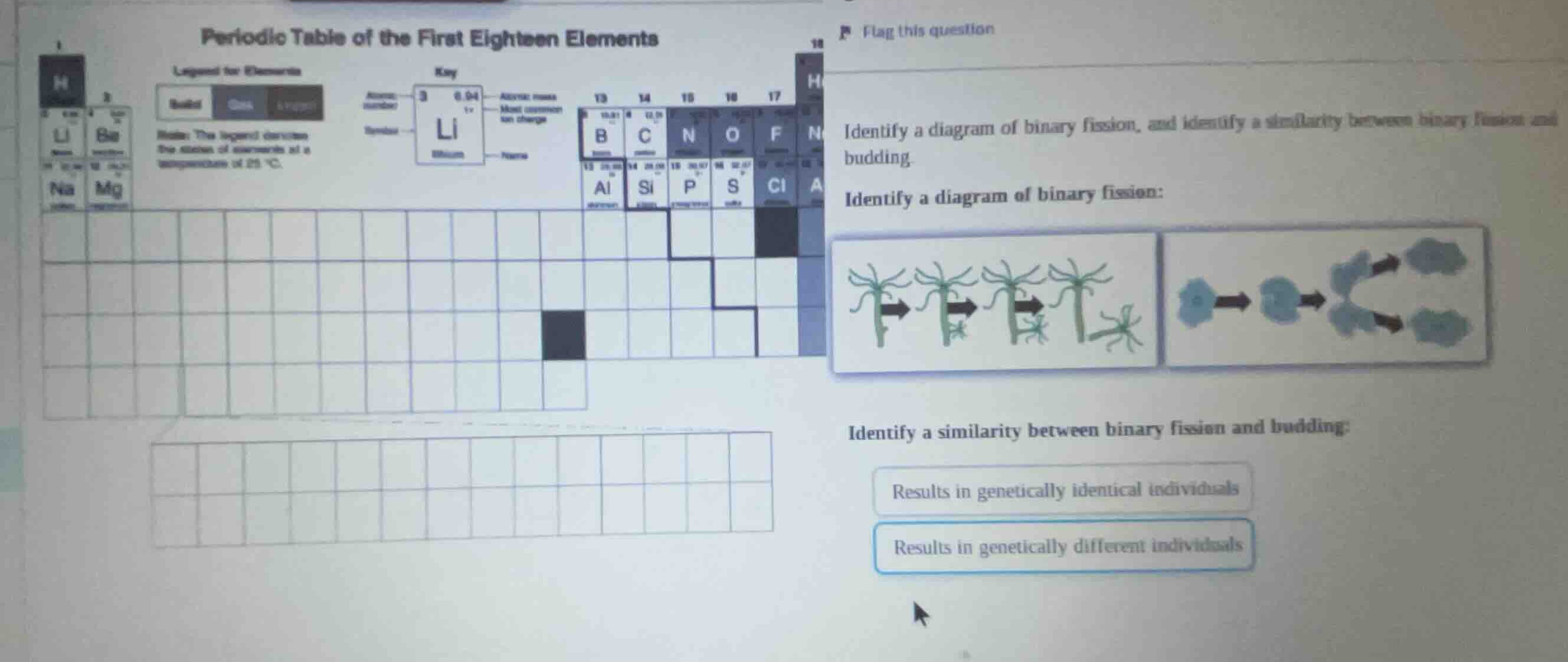
identify a diagram of binary fission, and identify a similarity between binary fission and budding.

identify a diagram of binary fission:

identify a similarity between binary fission and budding:

  • results in genetically identical individuals
  • results in genetically different individuals

Explanation:

Response

<pre_analysis>
{
"quality": "clear",
"question_count": 2,
"skills_matched": [
"direct_cot",
"explain_then_answer",
"tutor"
],
"needs_drawing": false,
"concepts_used": [
"Asexual Reproduction",
"Budding"
],
"new_concepts": [
"Binary Fission"
],
"current_concepts": [
"Asexual Reproduction",
"Budding",
"Binary Fission"
]
}
</pre_analysis>

<reasoning>

Identify the diagram of binary fission

The first part of the question asks to identify a diagram of binary fission.

  • The left diagram shows a multicellular organism (Hydra) growing a small outgrowth (bud) on its side, which eventually detaches to become a new individual. This represents Budding.
  • The right diagram shows a single-celled organism (like an amoeba or bacterium) elongating, replicating its genetic material, and dividing symmetrically into two separate, independent cells of equal size. This represents Asexual Reproduction via binary fission.

Therefore, the right diagram is the correct representation of binary fission.

Identify a similarity between binary fission and budding

The second part of the question asks to identify a similarity between binary fission and budding.

  • Both binary fission and budding are forms of Asexual Reproduction.
  • Because they involve only a single parent and do not involve the fusion of gametes, there is no genetic recombination.
  • Consequently, both processes result in offspring that are genetically identical to the parent organism.

Therefore, the correct choice is "Results in genetically identical individuals".
</reasoning>

<answer>

Question 1

The diagram representing binary fission is the right diagram (showing a single cell dividing into two equal cells).

Question 2

<mcq-correct>Results in genetically identical individuals</mcq-correct>
<mcq-option>Results in genetically different individuals</mcq-option>
</answer>

<post_analysis>
{
"subject": "Natural Science",
"question_type": "Multi-part",
"knowledge_point": [
"Natural Science",
"Biology",
"Asexual Reproduction"
]
}
</post_analysis>

Answer:

<pre_analysis>
{
"quality": "clear",
"question_count": 2,
"skills_matched": [
"direct_cot",
"explain_then_answer",
"tutor"
],
"needs_drawing": false,
"concepts_used": [
"Asexual Reproduction",
"Budding"
],
"new_concepts": [
"Binary Fission"
],
"current_concepts": [
"Asexual Reproduction",
"Budding",
"Binary Fission"
]
}
</pre_analysis>

<reasoning>

Identify the diagram of binary fission

The first part of the question asks to identify a diagram of binary fission.

  • The left diagram shows a multicellular organism (Hydra) growing a small outgrowth (bud) on its side, which eventually detaches to become a new individual. This represents Budding.
  • The right diagram shows a single-celled organism (like an amoeba or bacterium) elongating, replicating its genetic material, and dividing symmetrically into two separate, independent cells of equal size. This represents Asexual Reproduction via binary fission.

Therefore, the right diagram is the correct representation of binary fission.

Identify a similarity between binary fission and budding

The second part of the question asks to identify a similarity between binary fission and budding.

  • Both binary fission and budding are forms of Asexual Reproduction.
  • Because they involve only a single parent and do not involve the fusion of gametes, there is no genetic recombination.
  • Consequently, both processes result in offspring that are genetically identical to the parent organism.

Therefore, the correct choice is "Results in genetically identical individuals".
</reasoning>

<answer>

Question 1

The diagram representing binary fission is the right diagram (showing a single cell dividing into two equal cells).

Question 2

<mcq-correct>Results in genetically identical individuals</mcq-correct>
<mcq-option>Results in genetically different individuals</mcq-option>
</answer>

<post_analysis>
{
"subject": "Natural Science",
"question_type": "Multi-part",
"knowledge_point": [
"Natural Science",
"Biology",
"Asexual Reproduction"
]
}
</post_analysis>