Sovi.AI - AI Math Tutor

Scan to solve math questions

QUESTION IMAGE

fill in the chart, summarizing information from the tutorial (slide #10…

Question

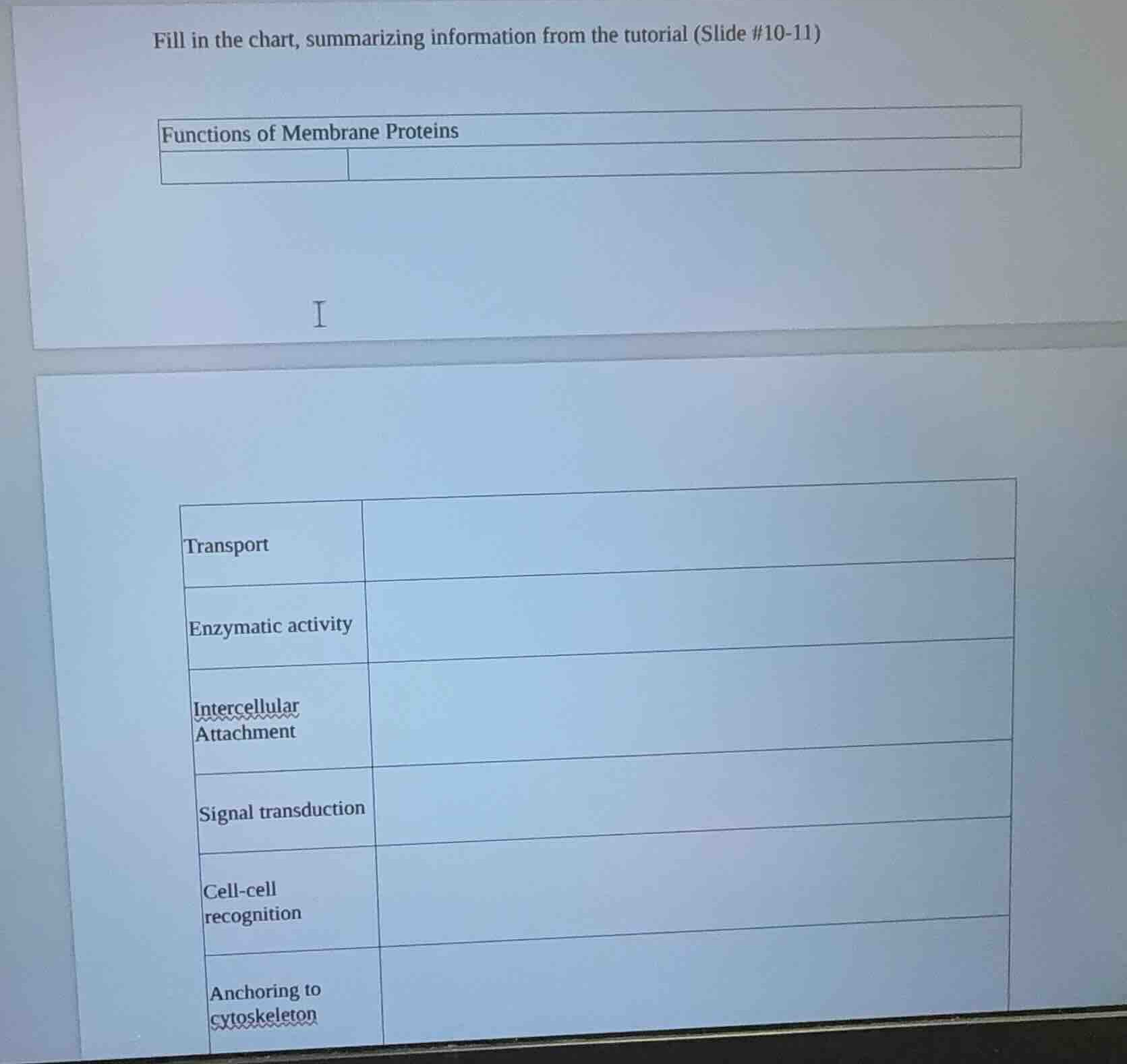
fill in the chart, summarizing information from the tutorial (slide #10-11)

functions of membrane proteins

transport
enzymatic activity
intercellular attachment
signal transduction
cell-cell recognition
anchoring to cytoskeleton

Explanation:

Response

<pre_analysis>
{
"quality": "clear",
"question_count": 1,
"skills_matched": [
"direct_cot",
"table_formatter",
"explain_then_answer",
"tutor",
"mastery_adaptive_brevity"
],
"needs_drawing": false,
"concepts_used": [
"Membrane Protein Functions",
"Receptor Proteins"
],
"new_concepts": [
"Enzymatic Activity",
"Intercellular Attachment",
"Cell-Cell Recognition"
],
"current_concepts": [
"Membrane Protein Functions",
"Receptor Proteins",
"Enzymatic Activity",
"Intercellular Attachment",
"Cell-Cell Recognition"
]
}
</pre_analysis>

<reasoning>

Identificar las funciones clave

Using the Membrane Protein Functions and Receptor Proteins knowledge points

  • Transporte (Transport): Movimiento de solutos específicos a través de la bicapa lipídica mediante canales o transportadores.
  • Actividad enzimática (Enzymatic activity): Proteínas de membrana que actúan como enzimas con su sitio activo expuesto al medio adyacente.
  • Unión celular / Intercelular (Intercellular Attachment): Proteínas que enganchan células adyacentes mediante uniones (como uniones estrechas o desmosomas).
  • Transducción de señales (Signal transduction): Receptores que se unen a un mensajero químico (ligando) y transmiten la señal al interior celular.
  • Reconocimiento célula-célula (Cell-cell recognition): Glicoproteínas que sirven como etiquetas de identificación reconocidas por otras células.
  • Anclaje al citoesqueleto (Anchoring to cytoskeleton): Microfilamentos u otros elementos del citoesqueleto unidos a proteínas de membrana para mantener la forma celular.

</reasoning>

<answer>

FunciónDescripción
Enzymatic activityProteínas que actúan como enzimas para catalizar reacciones químicas directamente en la membrana.
Intercellular AttachmentProteínas que conectan y aseguran la unión física entre células adyacentes.
Signal transductionReceptores que reconocen mensajeros químicos externos y transmiten la señal al interior de la célula.
Cell-cell recognitionGlicoproteínas que actúan como etiquetas de identificación para que otras células las reconozcan.
Anchoring to cytoskeletonProteínas que se unen al citoesqueleto y a la matriz extracelular para mantener la forma y estabilidad celular.

</answer>

<post_analysis>
{
"subject": "Natural Science",
"question_type": "Fill-in-the-blank",
"knowledge_point": [
"Natural Science",
"Biology",
"Membrane Protein Functions"
]
}
</post_analysis>

Answer:

<pre_analysis>
{
"quality": "clear",
"question_count": 1,
"skills_matched": [
"direct_cot",
"table_formatter",
"explain_then_answer",
"tutor",
"mastery_adaptive_brevity"
],
"needs_drawing": false,
"concepts_used": [
"Membrane Protein Functions",
"Receptor Proteins"
],
"new_concepts": [
"Enzymatic Activity",
"Intercellular Attachment",
"Cell-Cell Recognition"
],
"current_concepts": [
"Membrane Protein Functions",
"Receptor Proteins",
"Enzymatic Activity",
"Intercellular Attachment",
"Cell-Cell Recognition"
]
}
</pre_analysis>

<reasoning>

Identificar las funciones clave

Using the Membrane Protein Functions and Receptor Proteins knowledge points

  • Transporte (Transport): Movimiento de solutos específicos a través de la bicapa lipídica mediante canales o transportadores.
  • Actividad enzimática (Enzymatic activity): Proteínas de membrana que actúan como enzimas con su sitio activo expuesto al medio adyacente.
  • Unión celular / Intercelular (Intercellular Attachment): Proteínas que enganchan células adyacentes mediante uniones (como uniones estrechas o desmosomas).
  • Transducción de señales (Signal transduction): Receptores que se unen a un mensajero químico (ligando) y transmiten la señal al interior celular.
  • Reconocimiento célula-célula (Cell-cell recognition): Glicoproteínas que sirven como etiquetas de identificación reconocidas por otras células.
  • Anclaje al citoesqueleto (Anchoring to cytoskeleton): Microfilamentos u otros elementos del citoesqueleto unidos a proteínas de membrana para mantener la forma celular.

</reasoning>

<answer>

FunciónDescripción
Enzymatic activityProteínas que actúan como enzimas para catalizar reacciones químicas directamente en la membrana.
Intercellular AttachmentProteínas que conectan y aseguran la unión física entre células adyacentes.
Signal transductionReceptores que reconocen mensajeros químicos externos y transmiten la señal al interior de la célula.
Cell-cell recognitionGlicoproteínas que actúan como etiquetas de identificación para que otras células las reconozcan.
Anchoring to cytoskeletonProteínas que se unen al citoesqueleto y a la matriz extracelular para mantener la forma y estabilidad celular.

</answer>

<post_analysis>
{
"subject": "Natural Science",
"question_type": "Fill-in-the-blank",
"knowledge_point": [
"Natural Science",
"Biology",
"Membrane Protein Functions"
]
}
</post_analysis>