QUESTION IMAGE
Question
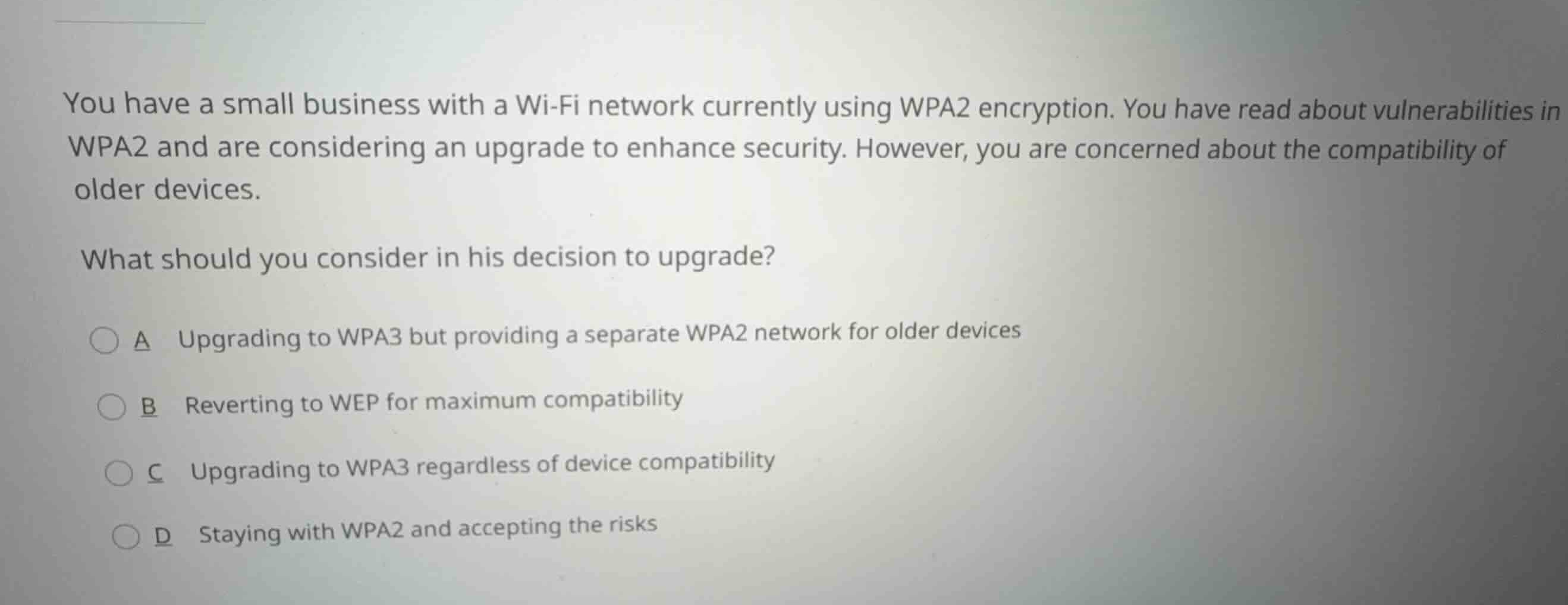
you have a small business with a wi-fi network currently using wpa2 encryption. you have read about vulnerabilities in wpa2 and are considering an upgrade to enhance security. however, you are concerned about the compatibility of older devices.
what should you consider in his decision to upgrade?
a upgrading to wpa3 but providing a separate wpa2 network for older devices
b reverting to wep for maximum compatibility
c upgrading to wpa3 regardless of device compatibility
d staying with wpa2 and accepting the risks
Analyze the security upgrade scenario
The scenario describes a small business currently using WPA2 encryption. The business owner wants to enhance security due to known vulnerabilities in WPA2 but is concerned about the compatibility of older legacy devices that might not support newer standards.
Evaluate the options
- Option A: Upgrading to WPA3 but providing a separate WPA2 network for older devices
This option balances security and compatibility. It allows newer, capable devices to benefit from the enhanced security features of WPA3 (such as individualized data encryption and protection against brute-force attacks), while maintaining a separate, isolated WPA2 network to ensure older legacy devices can still connect.
- Option B: Reverting to WEP for maximum compatibility
WEP (Wired Equivalent Privacy) is highly outdated and extremely insecure. Reverting to WEP would severely compromise the network's security, making it an unacceptable choice for a business.
- Option C: Upgrading to WPA3 regardless of device compatibility
Upgrading completely to WPA3 without considering compatibility would disconnect older devices that do not support WPA3, disrupting business operations.
- Option D: Staying with WPA2 and accepting the risks
While this avoids compatibility issues, it leaves the business vulnerable to known WPA2 security flaws (such as KRACK attacks) without taking any steps to mitigate risk or improve security.
Determine the best decision
Option A is the most balanced and professional approach. It implements the security benefits of WPA3 for compatible devices while resolving the compatibility issue for legacy hardware by segmenting them onto a separate WPA2 network.

Snap & solve any problem in the app
Get step-by-step solutions on Sovi AI
Photo-based solutions with guided steps
Explore more problems and detailed explanations
- (A) Upgrading to WPA3 but providing a separate WPA2 network for older devices (Correct answer)
- (B) Reverting to WEP for maximum compatibility
- (C) Upgrading to WPA3 regardless of device compatibility
- (D) Staying with WPA2 and accepting the risks