QUESTION IMAGE
Question
criticism
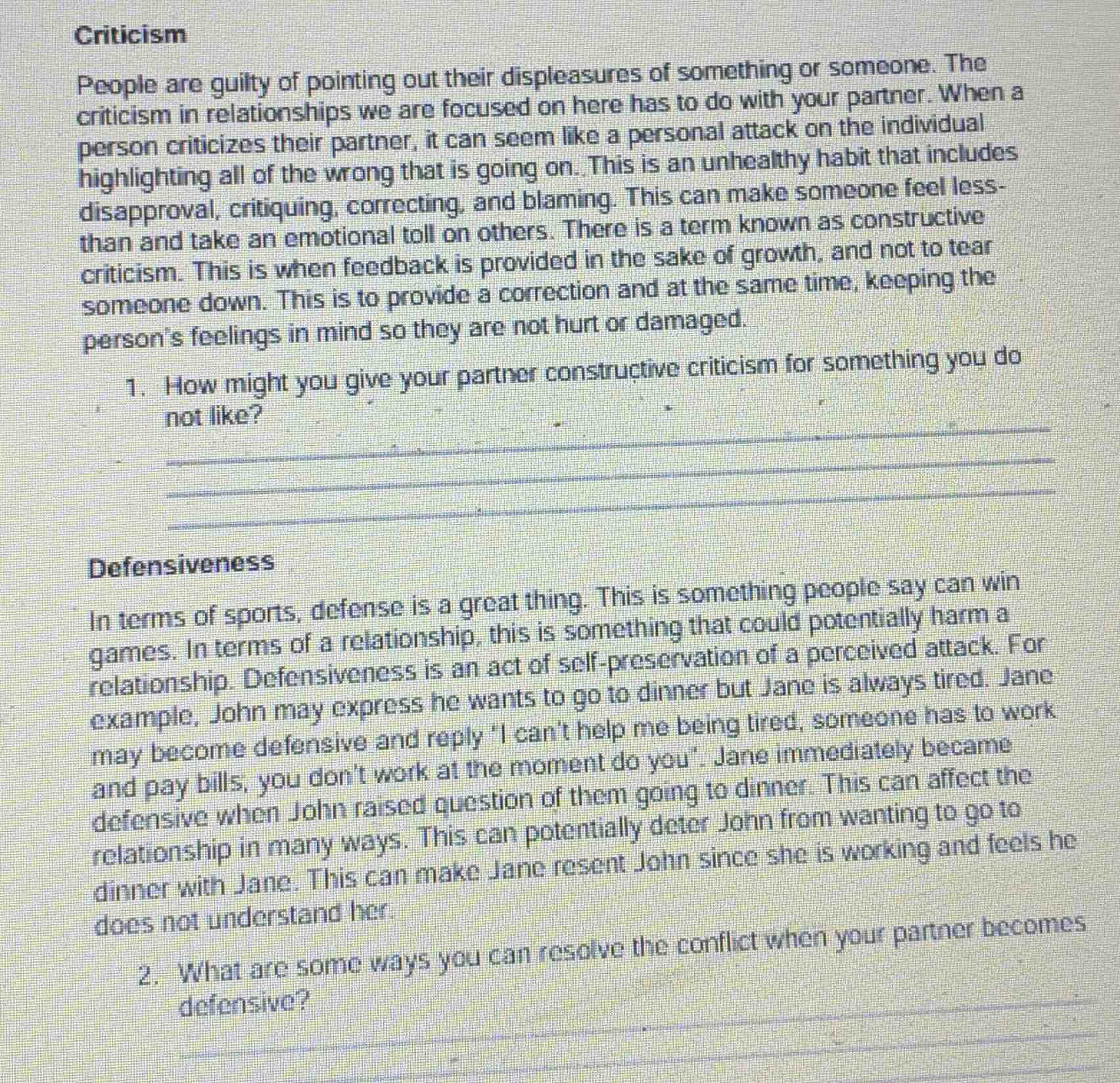
people are guilty of pointing out their displeasures of something or someone. the criticism in relationships we are focused on here has to do with your partner. when a person criticizes their partner, it can seem like a personal attack on the individual highlighting all of the wrong that is going on. this is an unhealthy habit that includes disapproval, critiquing, correcting, and blaming. this can make someone feel less-than and take an emotional toll on others. there is a term known as constructive criticism. this is when feedback is provided in the sake of growth, and not to tear someone down. this is to provide a correction and at the same time, keeping the persons feelings in mind so they are not hurt or damaged.
- how might you give your partner constructive criticism for something you do not like?
defensiveness
in terms of sports, defense is a great thing. this is something people say can win games. in terms of a relationship, this is something that could potentially harm a relationship. defensiveness is an act of self-preservation of a perceived attack. for example, john may express he wants to go to dinner but jane is always tired. jane may become defensive and reply \i cant help me being tired, someone has to work and pay bills, you dont work at the moment do you\. jane immediately became defensive when john raised question of them going to dinner. this can affect the relationship in many ways. this can potentially deter john from wanting to go to dinner with jane. this can make jane resent john since she is working and feels he does not understand her.
- what are some ways you can resolve the conflict when your partner becomes defensive?
Formulate constructive feedback
De-escalate partner defensiveness

Snap & solve any problem in the app
Get step-by-step solutions on Sovi AI
Photo-based solutions with guided steps
Explore more problems and detailed explanations
Question 1
To give constructive criticism, use "I" statements to express your feelings instead of blaming, focus on a specific behavior rather than attacking your partner's character, and offer a positive, actionable suggestion for growth while keeping their feelings in mind.
Question 2
To resolve conflict when a partner becomes defensive, practice active listening to validate their feelings and perspective, avoid reacting with counter-attacks, and take responsibility for your own part in the issue to help de-escalate the tension.