QUESTION IMAGE
Question
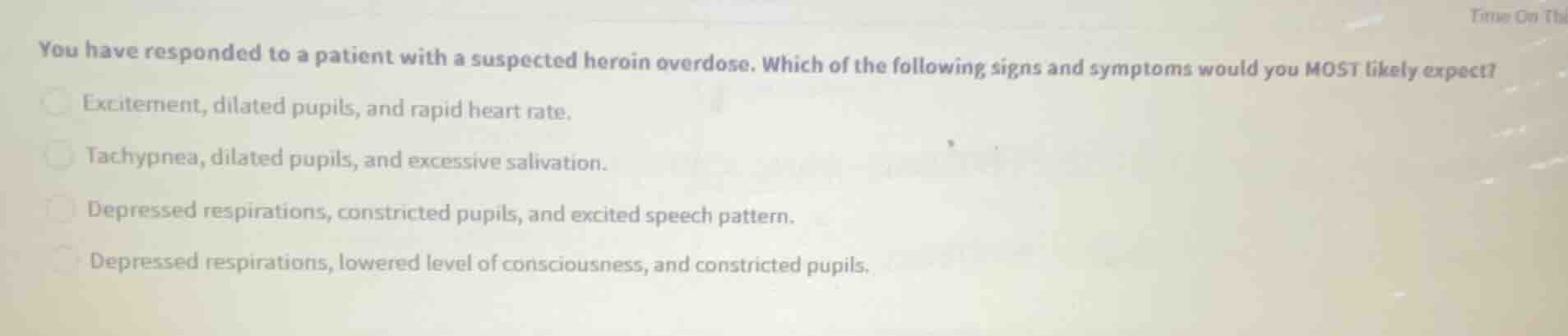
you have responded to a patient with a suspected heroin overdose. which of the following signs and symptoms would you most likely expect?
excitement, dilated pupils, and rapid heart rate.
tachypnea, dilated pupils, and excessive salivation.
depressed respirations, constricted pupils, and excited speech pattern.
depressed respirations, lowered level of consciousness, and constricted pupils.
Identify the toxidrome associated with heroin
Using the Opioid Toxidrome and Narcotic Overdose Pathophysiology knowledge points
Heroin is a potent synthetic opioid agonist. An overdose of opioids characteristically depresses the central nervous system (CNS) and respiratory drive, leading to a classic triad of clinical findings:
- Respiratory depression (slow, shallow, or absent breathing)
- Decreased level of consciousness (lethargy, stupor, or coma)
- Miosis (pinpoint or constricted pupils)
Evaluate the clinical signs in the options
Using the Pupillary Assessment knowledge point
Let's analyze each option against the expected clinical presentation:
- Option 1: "Excitement, dilated pupils, and rapid heart rate" describes a sympathomimetic toxidrome (e.g., cocaine or amphetamines), not an opioid overdose.
- Option 2: "Tachypnea, dilated pupils, and excessive salivation" describes elements of cholinergic toxicity or stimulant use, which contradicts the respiratory depression and miosis of opioids.
- Option 3: "Depressed respirations, constricted pupils, and excited speech pattern" contains contradictory elements; an excited speech pattern is inconsistent with the CNS depression caused by heroin.
- Option 4: "Depressed respirations, lowered level of consciousness, and constricted pupils" perfectly matches the classic opioid overdose triad.

Snap & solve any problem in the app
Get step-by-step solutions on Sovi AI
Photo-based solutions with guided steps
Explore more problems and detailed explanations
- Excitement, dilated pupils, and rapid heart rate.
- Tachypnea, dilated pupils, and excessive salivation.
- Depressed respirations, constricted pupils, and excited speech pattern.
- Depressed respirations, lowered level of consciousness, and constricted pupils. (Correct answer)