QUESTION IMAGE
Question
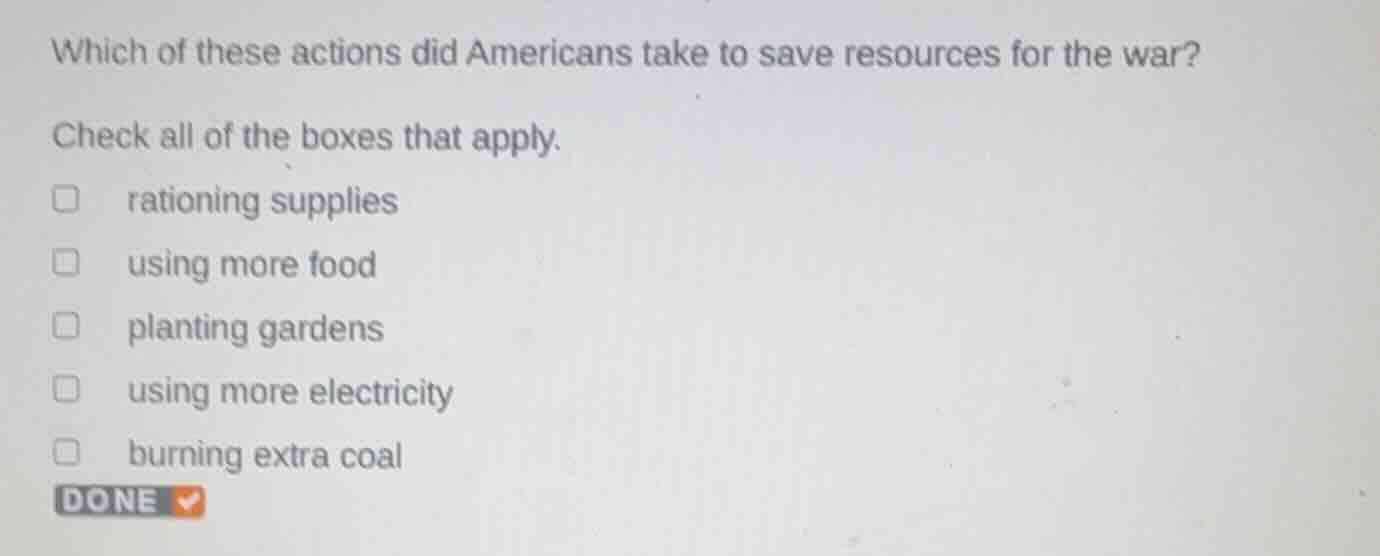
which of these actions did americans take to save resources for the war?
check all of the boxes that apply.
rationing supplies
using more food
planting gardens
using more electricity
burning extra coal
⚡ Using what you learned: home front mobilization in world war ii
Step 1: Analyze the goal of resource conservation
During World War II, the United States government and citizens mobilized the home front to conserve vital materials (like food, fuel, rubber, and metal) so they could be redirected to the military and allied forces overseas. Saving resources meant reducing civilian consumption and producing food locally.
Step 2: Evaluate each option
- rationing supplies: Correct. The government established a rationing system with coupon books to limit civilian consumption of goods like gasoline, sugar, meat, and butter, ensuring enough remained for soldiers.
- using more food: Incorrect. Consuming more food would deplete resources rather than save them.
- planting gardens: Correct. Citizens were encouraged to plant "Victory Gardens" in backyards and public parks to grow their own fruits and vegetables, reducing the demand on the commercial food supply needed for the military.
- using more electricity: Incorrect. Using more electricity would waste fuel resources like coal and oil needed for war production.
- burning extra coal: Incorrect. Burning extra coal would waste a vital energy resource needed to power factories producing military equipment.

Snap & solve any problem in the app
Get step-by-step solutions on Sovi AI
Photo-based solutions with guided steps
Explore more problems and detailed explanations
- rationing supplies
- planting gardens