QUESTION IMAGE
Question
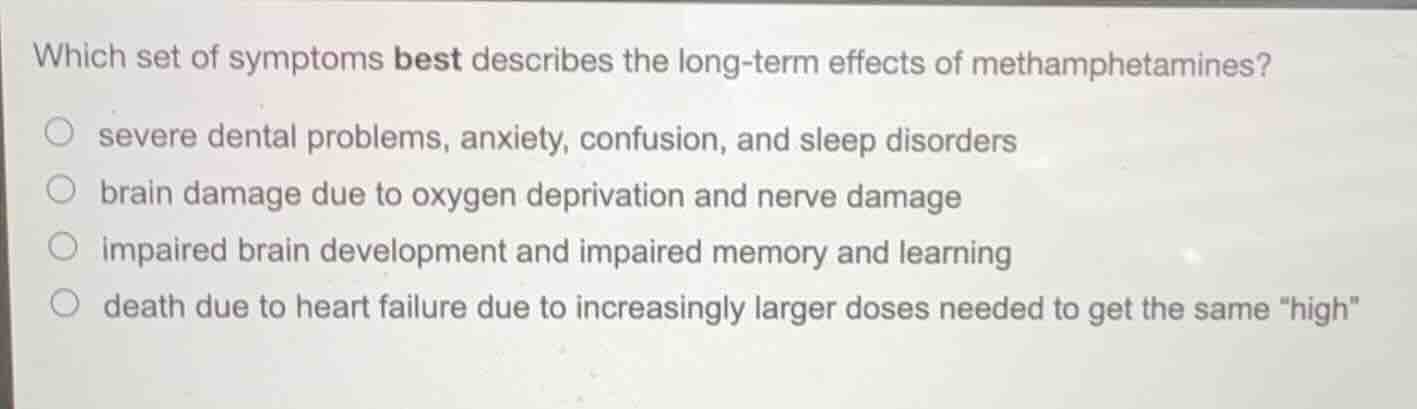
which set of symptoms best describes the long-term effects of methamphetamines?
- severe dental problems, anxiety, confusion, and sleep disorders
- brain damage due to oxygen deprivation and nerve damage
- impaired brain development and impaired memory and learning
- death due to heart failure due to increasingly larger doses needed to get the same \high\
🆕 New Concept Discovered: Physiological Effects of Stimulants
How powerful stimulants alter the body and brain over time.
Step 1: Analyze the drug type
Methamphetamine is an extremely potent central nervous system stimulant. Long-term abuse of stimulants leads to severe physical and psychological deterioration.
Step 2: Evaluate the options against known long-term effects
- Option 1: severe dental problems, anxiety, confusion, and sleep disorders
- Dental problems: Methamphetamine use causes dry mouth, teeth grinding, and poor oral hygiene, leading to a well-documented condition known as "meth mouth."
- Psychological symptoms: Chronic use alters brain chemistry, commonly causing severe anxiety, confusion, paranoia, and chronic insomnia (sleep disorders).
- This set of symptoms aligns perfectly with the established long-term profile of methamphetamine abuse.
- Option 2: brain damage due to oxygen deprivation and nerve damage
- This is more characteristic of inhalants (which starve the brain of oxygen) or severe alcohol/hypoxia-related damage.
- Option 3: impaired brain development and impaired memory and learning
- While methamphetamine does affect memory, this specific combination is more commonly associated with chronic adolescent marijuana (cannabis) use or prenatal alcohol exposure.
- Option 4: death due to heart failure due to increasingly larger doses needed to get the same "high"
- While overdose and cardiovascular failure are risks, this description focuses on acute overdose mechanisms rather than a characteristic "set of symptoms" describing chronic, long-term daily life effects (like dental decay and sleep disorders).

Snap & solve any problem in the app
Get step-by-step solutions on Sovi AI
Photo-based solutions with guided steps
Explore more problems and detailed explanations
severe dental problems, anxiety, confusion, and sleep disorders