QUESTION IMAGE
Question
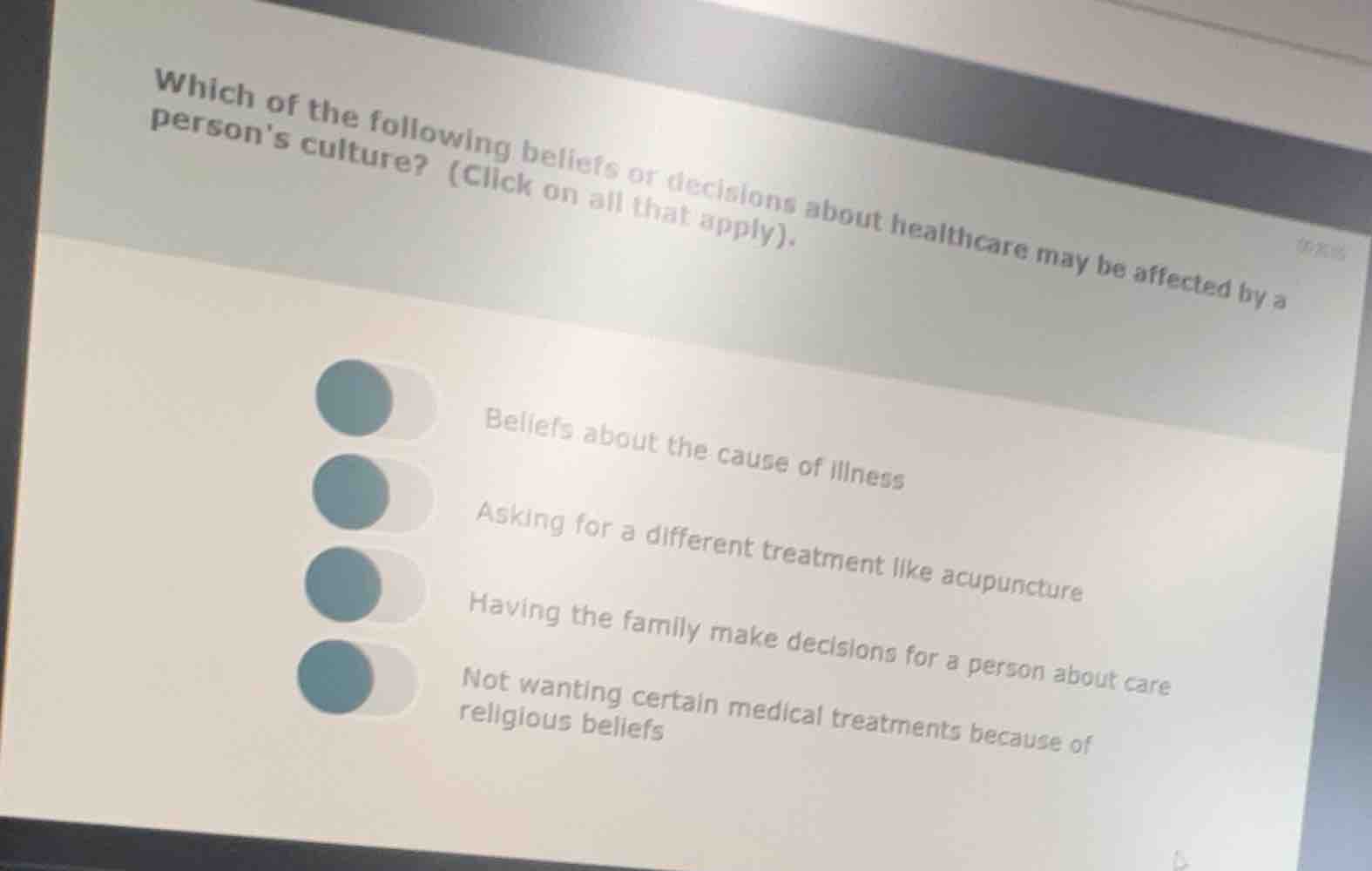
which of the following beliefs or decisions about healthcare may be affected by a persons culture? (click on all that apply).
beliefs about the cause of illness
asking for a different treatment like acupuncture
having the family make decisions for a person about care
not wanting certain medical treatments because of religious beliefs
🆕 New Concept Discovered: Cultural Competence in Healthcare
How cultural backgrounds shape medical beliefs and decisions.
Step 1: Analyze the influence of culture on beliefs about illness causes
Culture deeply shapes how individuals explain and understand the origins of sickness. Some cultures view illness through a purely biomedical lens (germs, genetics), while others attribute it to spiritual imbalances, emotional distress, or environmental disharmony. Therefore, this belief is highly affected by culture.
Step 2: Analyze the influence of culture on treatment preferences
Preferences for alternative therapies, such as acupuncture, herbal medicine, or co-therapy with traditional healers, are rooted in cultural traditions and historical practices. A person's cultural background directly influences whether they seek out or trust these non-Western treatment modalities.
Step 3: Analyze the influence of culture on family decision-making roles
In many Western cultures, individual autonomy is prioritized in medical decision-making. However, many collectivistic cultures place family units at the center of healthcare choices, where elders or the family collective make major medical decisions for an individual. This dynamic is heavily determined by cultural norms.
Step 4: Analyze the influence of culture on religious-based treatment refusals
Religion is a core component of culture. Cultural and religious values frequently dictate which medical interventions are acceptable (for example, dietary restrictions on medications, refusal of blood transfusions, or preferences regarding end-of-life care). Thus, refusing certain treatments due to religious beliefs is directly tied to cultural background.

Snap & solve any problem in the app
Get step-by-step solutions on Sovi AI
Photo-based solutions with guided steps
Explore more problems and detailed explanations
All of the options apply. You should select:
- Beliefs about the cause of illness
- Asking for a different treatment like acupuncture
- Having the family make decisions for a person about care
- Not wanting certain medical treatments because of religious beliefs