QUESTION IMAGE
Question
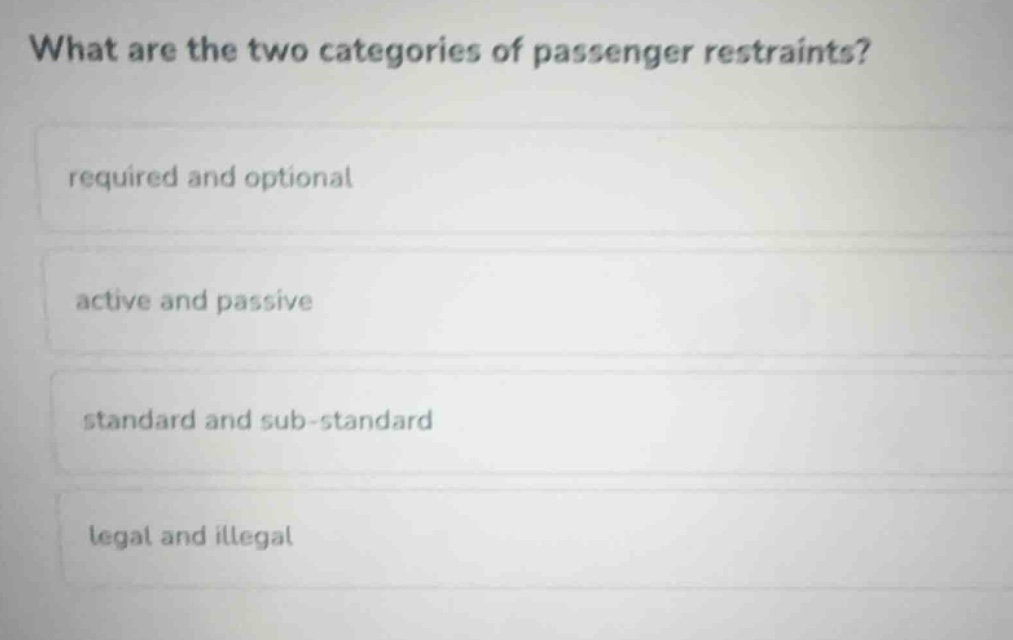
what are the two categories of passenger restraints?
required and optional
active and passive
standard and sub-standard
legal and illegal
🆕 New Concept Discovered: Vehicle Safety Systems
How safety features protect occupants automatically or manually.
Step 1: Define the categories of passenger restraints
In driver's education and vehicle safety, passenger restraints (safety devices designed to protect occupants during a collision) are classified into two main categories based on whether the occupant must take action to use them:
- Active restraints: These require physical action by the occupant to be effective. The most common example is a manual seatbelt, which you must actively buckle.
- Passive restraints: These operate automatically without any action required by the occupant. Examples include airbags, which deploy automatically during an impact, and automatic motorized seatbelts.
Step 2: Evaluate the given options
- required and optional: While some restraints are legally required and others are optional, this is not the technical classification for how restraint systems function.
- active and passive: This matches the standard engineering and safety definitions for passenger restraints.
- standard and sub-standard: This refers to quality or manufacturing levels, not functional categories of restraints.
- legal and illegal: This refers to compliance with the law, not the physical categories of the safety devices themselves.

Snap & solve any problem in the app
Get step-by-step solutions on Sovi AI
Photo-based solutions with guided steps
Explore more problems and detailed explanations
active and passive