QUESTION IMAGE
Question
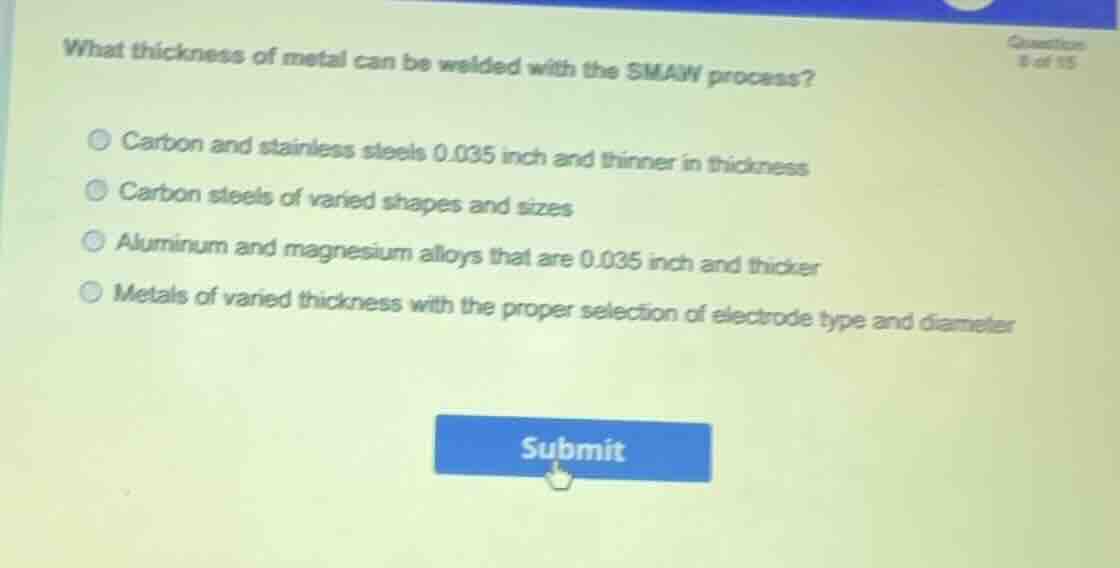
what thickness of metal can be welded with the smaw process?
carbon and stainless steels 0.035 inch and thinner in thickness
carbon steels of varied shapes and sizes
aluminum and magnesium alloys that are 0.035 inch and thicker
metals of varied thickness with the proper selection of electrode type and diameter
Analyze SMAW process capabilities
Using the SMAW knowledge point
Shielded Metal Arc Welding (SMAW), commonly known as stick welding, is highly versatile. It is not limited to a single thin gauge or specific shape. By selecting different electrode types and diameters, operators can weld a wide range of metal thicknesses, from relatively thin sheet metal to extremely thick structural plates.
Evaluate the options
Using the Electrode Selection knowledge point
- Option 1 restricts SMAW to 0.035 inch and thinner, which is incorrect as SMAW is difficult on very thin materials and widely used on thick materials.
- Option 2 focuses only on shapes and sizes of carbon steel, ignoring thickness and other weldable metals.
- Option 3 specifies aluminum and magnesium alloys of a certain thickness, which are not the primary materials welded with SMAW.
- Option 4 correctly states that SMAW can weld metals of varied thickness with the proper selection of electrode type and diameter.

Snap & solve any problem in the app
Get step-by-step solutions on Sovi AI
Photo-based solutions with guided steps
Explore more problems and detailed explanations
- (A) Carbon and stainless steels 0.035 inch and thinner in thickness
- (B) Carbon steels of varied shapes and sizes
- (C) Aluminum and magnesium alloys that are 0.035 inch and thicker
- (D) Metals of varied thickness with the proper selection of electrode type and diameter (Correct answer)