QUESTION IMAGE
Question
question 1 of 5
1 point
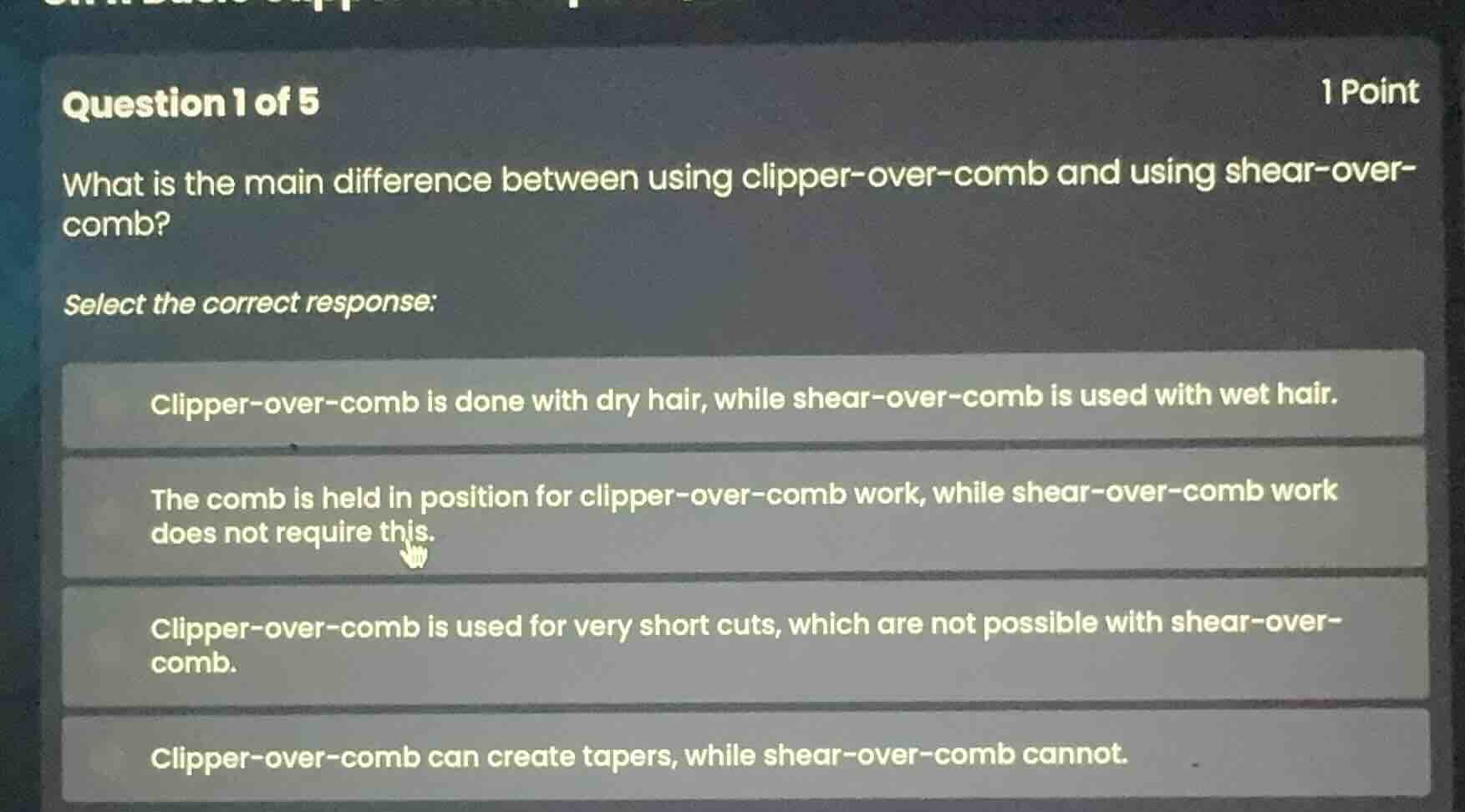
what is the main difference between using clipper-over-comb and using shear-over-comb?
select the correct response:
clipper-over-comb is done with dry hair, while shear-over-comb is used with wet hair.
the comb is held in position for clipper-over-comb work, while shear-over-comb work does not require this.
clipper-over-comb is used for very short cuts, which are not possible with shear-over-comb.
clipper-over-comb can create tapers, while shear-over-comb cannot.
Analyze the techniques
Using the Shear-over-comb Technique knowledge point
The shear-over-comb and clipper-over-comb techniques are both fundamental haircutting methods used to blend and taper hair. The primary difference lies in the state of the hair during execution: clipper-over-comb is performed on dry hair because wet hair can clump and clog the clipper blades, whereas shear-over-comb is typically performed on wet or damp hair for maximum control and precision.
Evaluate the options
- Option 1: Correctly states that clipper-over-comb is done on dry hair, while shear-over-comb is used with wet hair.
- Option 2: Incorrect because the comb must be held in position to guide the cutting tool for both techniques.
- Option 3: Incorrect because very short cuts and close tapers can be achieved with both tools depending on the comb thickness.
- Option 4: Incorrect because both techniques are highly effective at creating tapers.

Snap & solve any problem in the app
Get step-by-step solutions on Sovi AI
Photo-based solutions with guided steps
Explore more problems and detailed explanations
- Clipper-over-comb is done with dry hair, while shear-over-comb is used with wet hair. (Correct answer)
- The comb is held in position for clipper-over-comb work, while shear-over-comb work does not require this.
- Clipper-over-comb is used for very short cuts, which are not possible with shear-over-comb.
- Clipper-over-comb can create tapers, while shear-over-comb cannot.