QUESTION IMAGE
Question
question 3
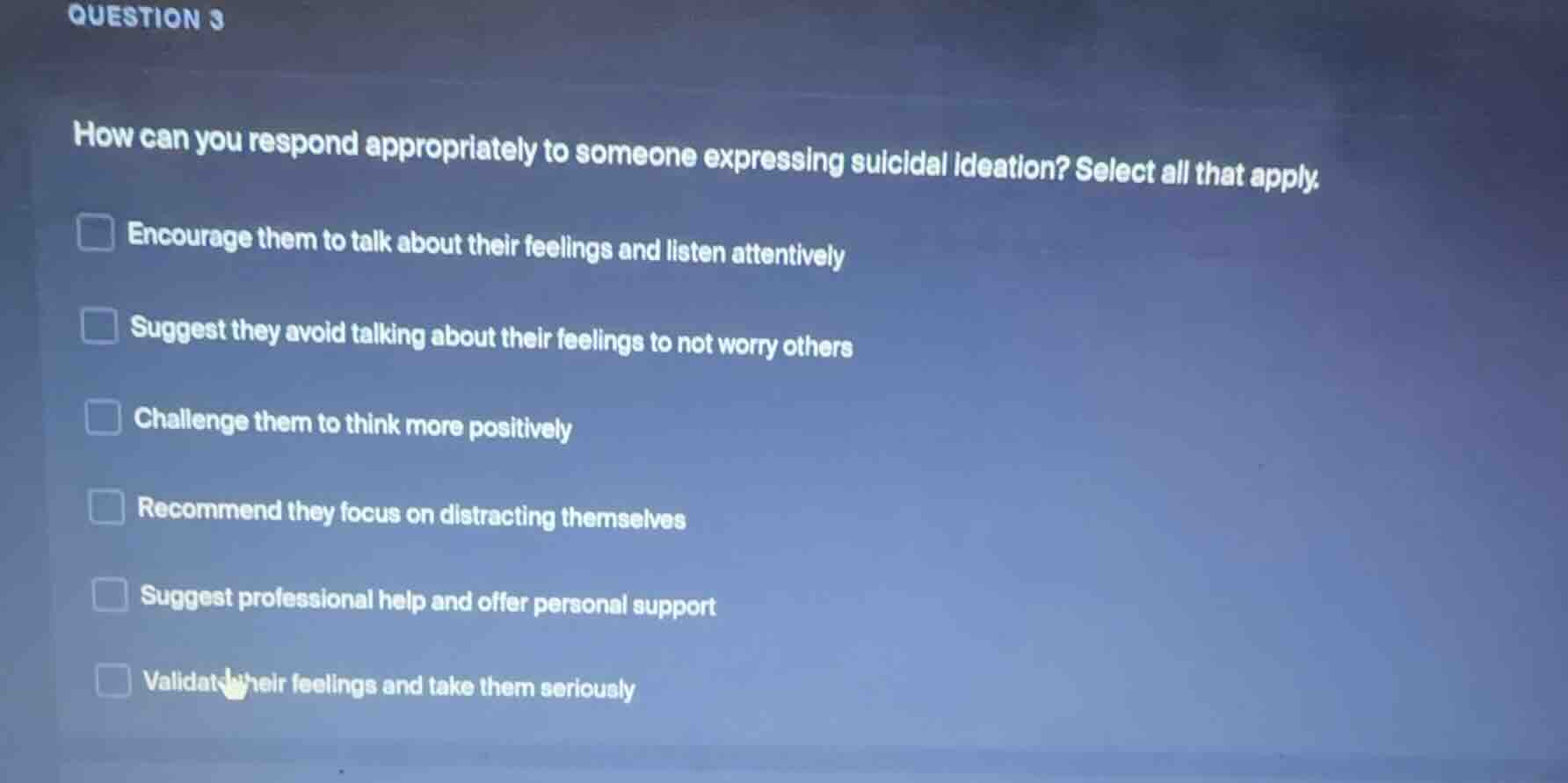
how can you respond appropriately to someone expressing suicidal ideation? select all that apply.
encourage them to talk about their feelings and listen attentively
suggest they avoid talking about their feelings to not worry others
challenge them to think more positively
recommend they focus on distracting themselves
suggest professional help and offer personal support
validate their feelings and take them seriously
<pre_analysis>
{
"quality": "clear",
"question_count": 1,
"skills_matched": [
"direct_cot",
"multiple_choice_formatter",
"explain_then_answer",
"quick"
],
"needs_drawing": false,
"concepts_used": [
"Suicide Prevention Resources"
],
"new_concepts": [
"Crisis Intervention Communication"
],
"current_concepts": [
"Suicide Prevention Resources",
"Crisis Intervention Communication"
]
}
</pre_analysis>
<reasoning>
Analyze supportive responses
Encouraging open expression, active listening, validating emotions, and connecting to professional resources are evidence-based supportive actions.
Analyze unsupportive responses
Minimizing feelings, suggesting avoidance, forcing positive thinking, or recommending distraction can invalidate the individual's experience and increase isolation.
Select correct options
The appropriate responses are:
- Encourage them to talk about their feelings and listen attentively
- Suggest professional help and offer personal support
- Validate their feelings and take them seriously
</reasoning>
<answer>
<mcq-correct>Encourage them to talk about their feelings and listen attentively</mcq-correct>
<mcq-option>Suggest they avoid talking about their feelings to not worry others</mcq-option>
<mcq-option>Challenge them to think more positively</mcq-option>
<mcq-option>Recommend they focus on distracting themselves</mcq-option>
<mcq-correct>Suggest professional help and offer personal support</mcq-correct>
<mcq-correct>Validate their feelings and take them seriously</mcq-correct>
</answer>
<post_analysis>
{
"subject": "Natural Science",
"question_type": "Multiple Choice",
"knowledge_point": [
"Natural Science",
"Others",
"Mental Health Support"
]
}
</post_analysis>
Snap & solve any problem in the app
Get step-by-step solutions on Sovi AI
Photo-based solutions with guided steps
Explore more problems and detailed explanations
<pre_analysis>
{
"quality": "clear",
"question_count": 1,
"skills_matched": [
"direct_cot",
"multiple_choice_formatter",
"explain_then_answer",
"quick"
],
"needs_drawing": false,
"concepts_used": [
"Suicide Prevention Resources"
],
"new_concepts": [
"Crisis Intervention Communication"
],
"current_concepts": [
"Suicide Prevention Resources",
"Crisis Intervention Communication"
]
}
</pre_analysis>
<reasoning>
Analyze supportive responses
Encouraging open expression, active listening, validating emotions, and connecting to professional resources are evidence-based supportive actions.
Analyze unsupportive responses
Minimizing feelings, suggesting avoidance, forcing positive thinking, or recommending distraction can invalidate the individual's experience and increase isolation.
Select correct options
The appropriate responses are:
- Encourage them to talk about their feelings and listen attentively
- Suggest professional help and offer personal support
- Validate their feelings and take them seriously
</reasoning>
<answer>
<mcq-correct>Encourage them to talk about their feelings and listen attentively</mcq-correct>
<mcq-option>Suggest they avoid talking about their feelings to not worry others</mcq-option>
<mcq-option>Challenge them to think more positively</mcq-option>
<mcq-option>Recommend they focus on distracting themselves</mcq-option>
<mcq-correct>Suggest professional help and offer personal support</mcq-correct>
<mcq-correct>Validate their feelings and take them seriously</mcq-correct>
</answer>
<post_analysis>
{
"subject": "Natural Science",
"question_type": "Multiple Choice",
"knowledge_point": [
"Natural Science",
"Others",
"Mental Health Support"
]
}
</post_analysis>