QUESTION IMAGE
Question
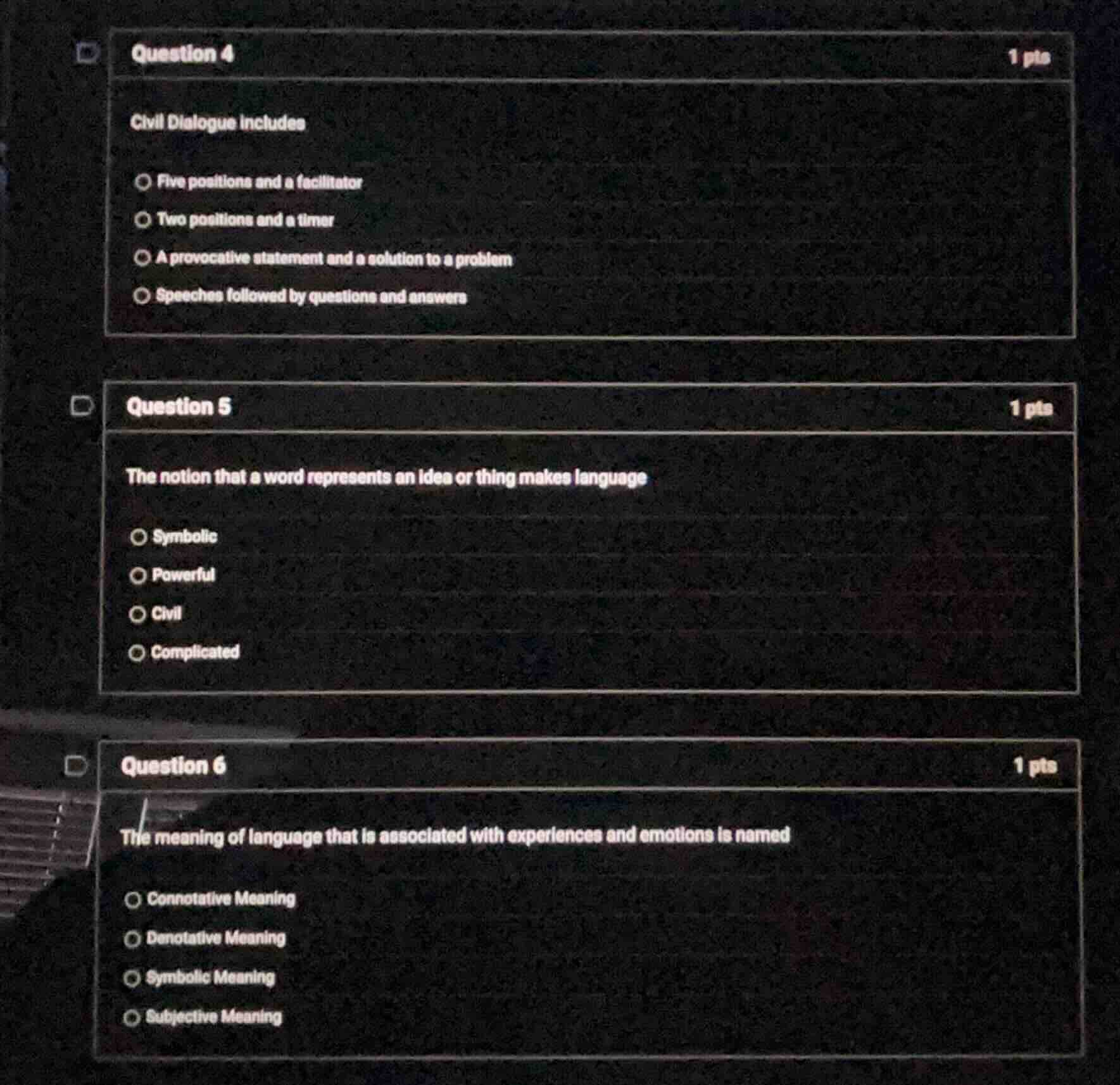
question 4
civil dialogue includes
- five positions and a facilitator
- two positions and a timer
- a provocative statement and a solution to a problem
- speeches followed by questions and answers
question 5
the notion that a word represents an idea or thing makes language
- symbolic
- powerful
- civil
- complicated
question 6
the meaning of language that is associated with experiences and emotions is named
- connotative meaning
- denotative meaning
- symbolic meaning
- subjective meaning
Analyze Civil Dialogue components
Civil Dialogue is a structured communication format designed to foster civil discussion on passionate topics. The standard model developed at Arizona State University (ASU) features a facilitator and five participants representing a range of viewpoints (five positions) on a given statement. Therefore, Civil Dialogue includes five positions and a facilitator.
Analyze the symbolic nature of language
Language is a system of symbols. A word itself is not the actual physical object or the abstract idea; rather, it stands in for or represents that idea or thing. This representative quality is what makes language symbolic.
Analyze connotative versus denotative meaning
In communication studies, the literal, dictionary definition of a word is its denotative meaning. In contrast, the emotional, cultural, or experiential associations and feelings that a word evokes are referred to as its connotative meaning.

Snap & solve any problem in the app
Get step-by-step solutions on Sovi AI
Photo-based solutions with guided steps
Explore more problems and detailed explanations
Question 4
- (A) Five positions and a facilitator (Correct answer)
- (B) Two positions and a timer
- (C) A provocative statement and a solution to a problem
- (D) Speeches followed by questions and answers
Question 5
- (A) Symbolic (Correct answer)
- (B) Powerful
- (C) Civil
- (D) Complicated
Question 6
- (A) Connotative Meaning (Correct answer)
- (B) Denotative Meaning
- (C) Symbolic Meaning
- (D) Subjective Meaning