QUESTION IMAGE
Question
question 40
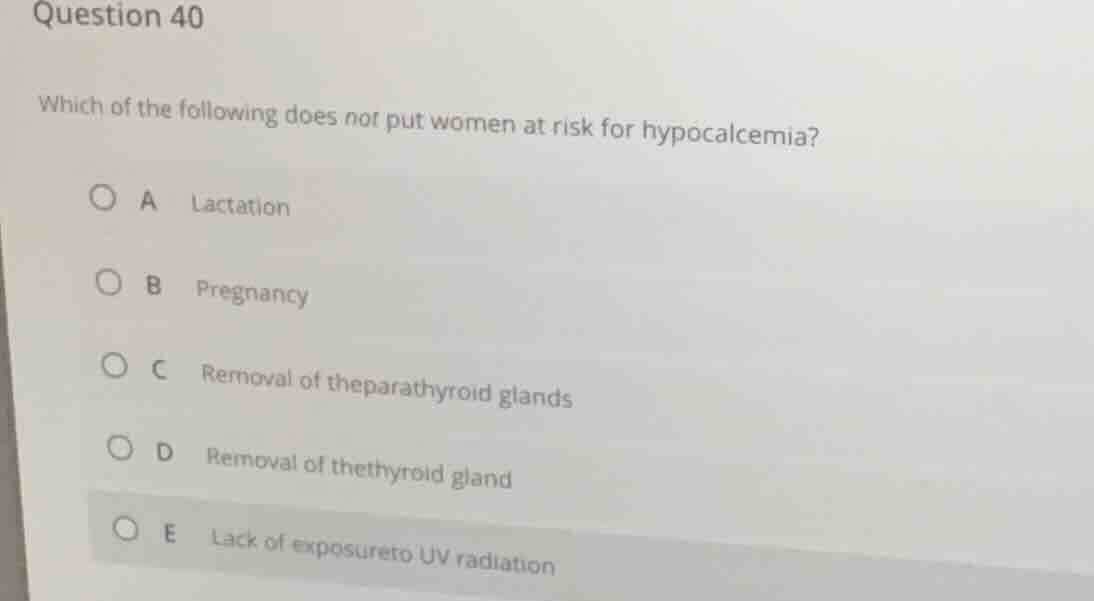
which of the following does not put women at risk for hypocalcemia?
a lactation
b pregnancy
c removal of theparathyroid glands
d removal of thethyroid gland
e lack of exposureto uv radiation
Define hypocalcemia and its physiological causes
Hypocalcemia is a state of abnormally low calcium levels in the blood. It is typically caused by factors that increase calcium loss (such as lactation or pregnancy, where calcium is transferred to milk or the fetus), decrease calcium absorption (such as vitamin D deficiency due to lack of UV exposure), or impair calcium regulation (such as the removal of the parathyroid glands, which produce parathyroid hormone to raise blood calcium).
Analyze the impact of thyroid gland removal
The thyroid gland produces calcitonin, a hormone that functions to lower blood calcium levels when they are too high. Removing the thyroid gland eliminates calcitonin production, which would theoretically prevent blood calcium levels from being lowered, rather than causing them to drop. Therefore, removal of the thyroid gland does not put individuals at risk for hypocalcemia.
Evaluate the remaining options
- Lactation and pregnancy involve significant transfers of maternal calcium, increasing hypocalcemia risk.
- The parathyroid glands are essential for raising blood calcium; their removal directly causes severe hypocalcemia.
- UV radiation is required for vitamin D synthesis, which is necessary for dietary calcium absorption; a lack of UV exposure leads to hypocalcemia.

Snap & solve any problem in the app
Get step-by-step solutions on Sovi AI
Photo-based solutions with guided steps
Explore more problems and detailed explanations
- (A) Lactation
- (B) Pregnancy
- (C) Removal of theparathyroid glands
- (D) Removal of thethyroid gland (Correct answer)
- (E) Lack of exposureto UV radiation