QUESTION IMAGE
Question
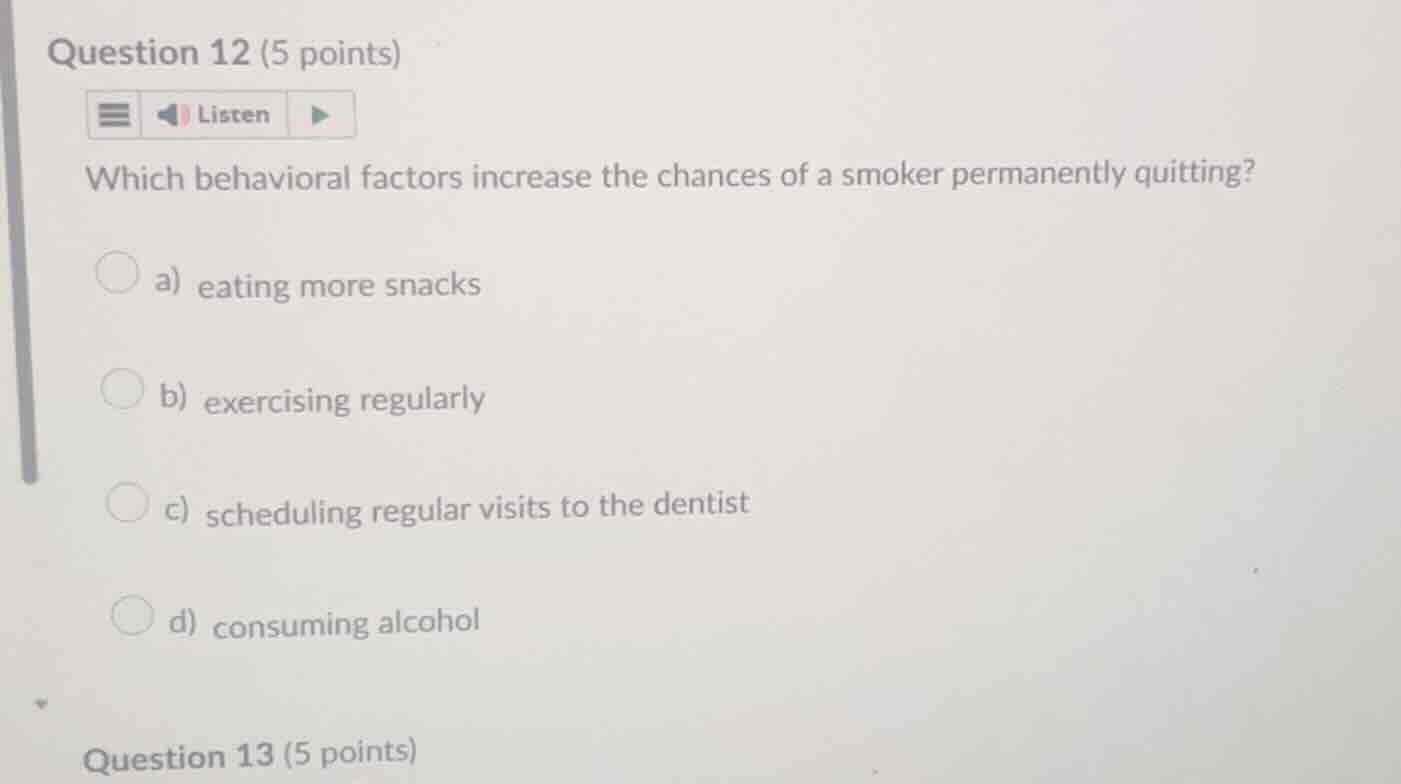
question 12 (5 points)
which behavioral factors increase the chances of a smoker permanently quitting?
a) eating more snacks
b) exercising regularly
c) scheduling regular visits to the dentist
d) consuming alcohol
question 13 (5 points)
🆕 New Concept Discovered: Behavioral Interventions for Addiction Recovery
Healthy habits that replace cravings
Step 1: Analyze the options
To find which behavioral factor helps a smoker permanently quit, we evaluate how each option impacts cravings, stress, and overall health:
- a) eating more snacks: Often leads to unhealthy weight gain and does not address the underlying psychological or physical triggers of smoking.
- b) exercising regularly: Physical activity reduces nicotine cravings, eases withdrawal symptoms, and helps manage stress and weight during cessation.
- c) scheduling regular visits to the dentist: While good for oral hygiene, it is not a daily behavioral coping mechanism that directly helps manage cravings.
- d) consuming alcohol: Alcohol is a major trigger for smoking relapse because it lowers inhibitions and is frequently paired with smoking.
Step 2: Identify the most effective behavior
Regular exercise acts as a positive substitute behavior. It releases endorphins (natural mood lifters) that counteract the anxiety and irritability associated with nicotine withdrawal, making it a highly effective behavioral strategy for long-term success.

Snap & solve any problem in the app
Get step-by-step solutions on Sovi AI
Photo-based solutions with guided steps
Explore more problems and detailed explanations
b) exercising regularly