QUESTION IMAGE
Question
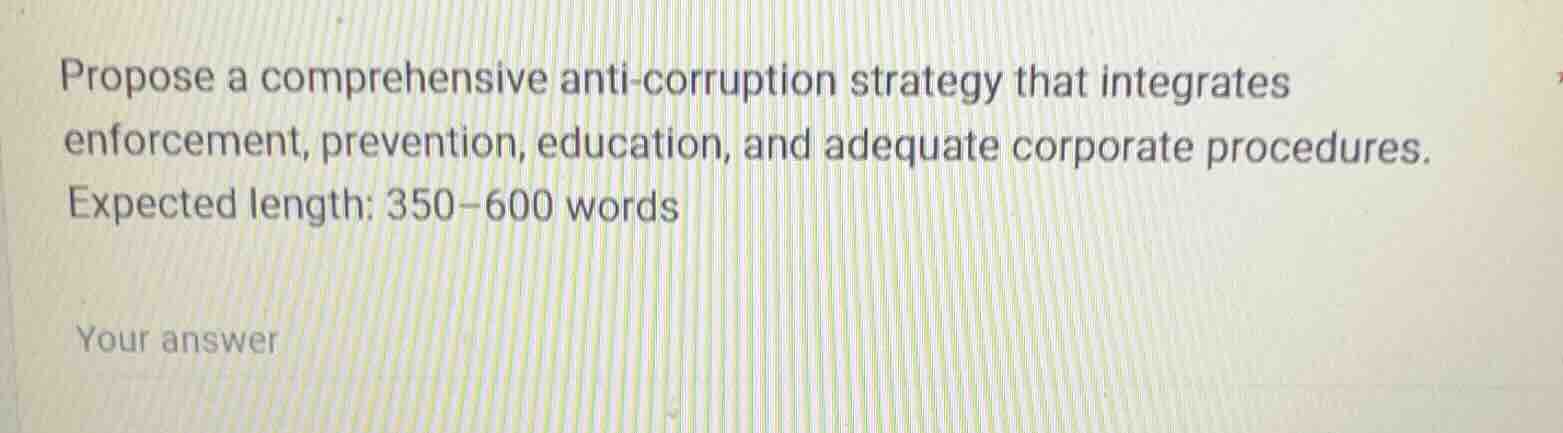
propose a comprehensive anti-corruption strategy that integrates enforcement, prevention, education, and adequate corporate procedures.
expected length: 350-600 words
Analyze the prompt requirements
The prompt asks for a comprehensive anti-corruption strategy integrating four pillars: enforcement, prevention, education, and adequate corporate procedures. The expected length is 350–600 words. We will structure the response to address each pillar systematically.
Define the core strategy framework
Using the Anti-Corruption Strategies knowledge point, a robust framework must balance punitive measures with systemic reforms. We will outline a multi-layered strategy that aligns public policy with corporate compliance.
Detail the four pillars
- Enforcement: Independent anti-corruption agencies, whistleblower protection, and swift prosecution.
- Prevention: Transparency in public procurement, digitalization of services, and conflict-of-interest registries.
- Education: Public awareness campaigns, ethical training in schools, and professional codes of conduct.
- Corporate Procedures: Compliance programs, internal audits, and "adequate procedures" under frameworks like the UK Bribery Act.
Draft and refine the comprehensive strategy
We will write a cohesive, professional essay of approximately 450 words that integrates these four pillars into a unified anti-corruption ecosystem.

Snap & solve any problem in the app
Get step-by-step solutions on Sovi AI
Photo-based solutions with guided steps
Explore more problems and detailed explanations
Integrated Anti-Corruption Strategy
A comprehensive anti-corruption strategy requires a holistic ecosystem that balances punitive measures with systemic, cultural, and institutional reforms. By integrating enforcement, prevention, education, and adequate corporate procedures, society can transition from reactive policing to proactive integrity management.
1. Enforcement: Strengthening Accountability
Robust enforcement serves as the primary deterrent against corrupt practices. This pillar requires:
- Independent Oversight: Establishing autonomous anti-corruption agencies free from political interference, equipped with specialized financial forensic units.
- Whistleblower Protection: Implementing comprehensive legal frameworks that guarantee anonymity, job security, and physical protection for individuals reporting illicit activities.
- Swift Prosecution: Streamlining judicial processes for corruption cases to ensure timely, public, and proportionate penalties, thereby reinforcing the rule of law.
2. Prevention: Reducing Opportunities
Prevention focuses on eliminating systemic vulnerabilities and reducing discretionary power. Key measures include:
- Digitalization of Public Services: Transitioning to e-governance and digital procurement platforms to minimize direct human interaction, thereby reducing bribery opportunities.
- Transparency and Open Data: Mandating public registries for beneficial ownership, asset declarations for public officials, and real-time tracking of government expenditures.
- Conflict of Interest Management: Establishing clear boundaries and cooling-off periods for public officials transitioning to the private sector.
3. Education: Cultivating a Culture of Integrity
Long-term success relies on shifting societal norms and building ethical resilience. This involves:
- Curriculum Integration: Introducing ethics, civic responsibility, and anti-corruption education in primary, secondary, and higher education institutions.
- Public Awareness Campaigns: Utilizing media and community outreach to educate citizens on their rights, the societal costs of corruption, and how to report grievances.
- Professional Ethics Training: Mandating regular ethical training and certification for public servants and corporate employees.
4. Adequate Corporate Procedures: Private Sector Compliance
Corporations must act as active partners in fighting corruption by implementing internal controls aligned with international standards (such as the UK Bribery Act and the US FCPA):
- Proportionate Procedures: Designing compliance policies tailored to the organization's specific size, sector, and risk profile.
- Top-Level Commitment: Fostering a "tone from the top" where executive leadership actively promotes a zero-tolerance culture toward bribery.
- Risk Assessment and Due Diligence: Conducting regular audits of third-party intermediaries, joint ventures, and supply chains to identify and mitigate corruption risks.
Conclusion
Ultimately, these four pillars are interdependent. Enforcement without prevention leads to overloaded judicial systems; prevention without education fails to address root cultural causes; and public sector integrity is impossible without robust corporate compliance. Integrating these elements ensures a resilient, transparent, and ethical society.