QUESTION IMAGE
Question
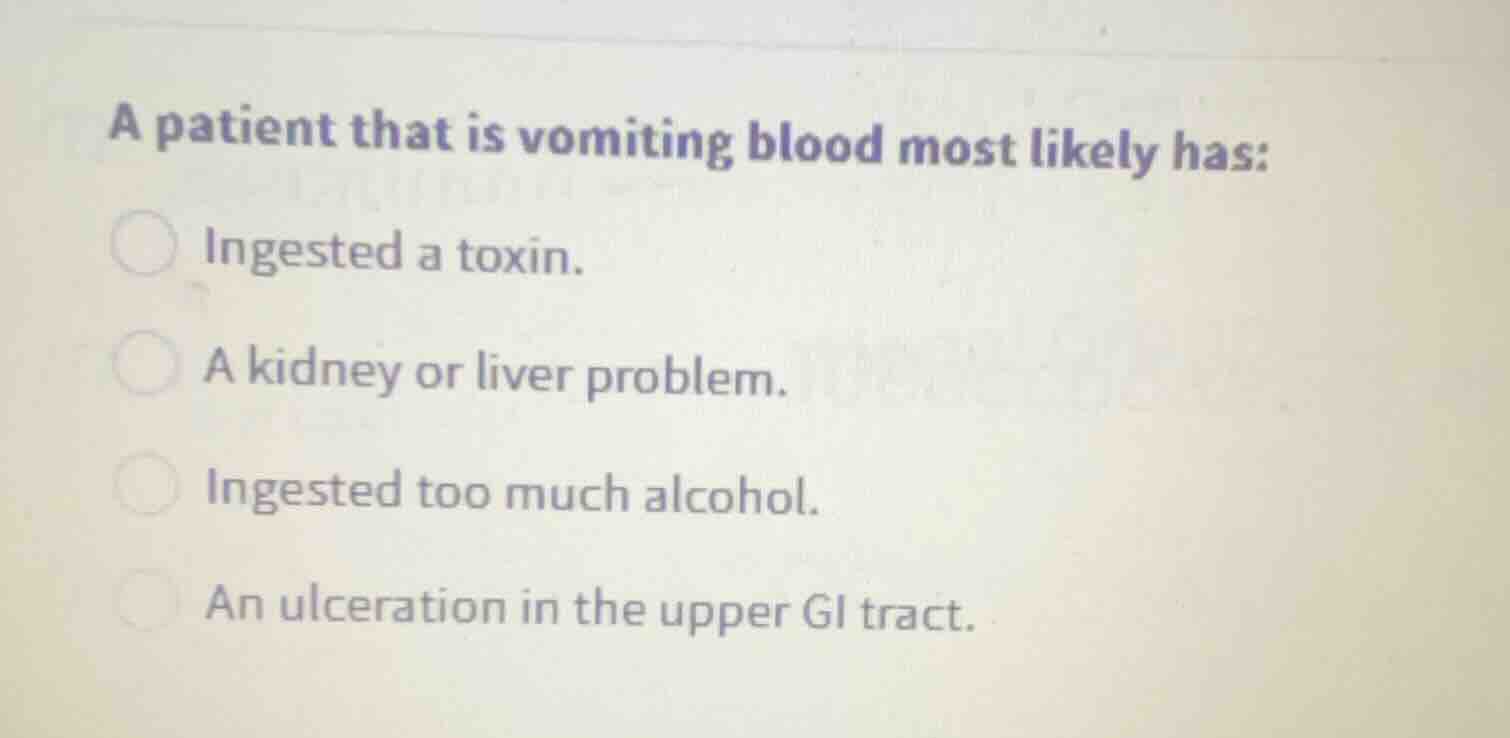
a patient that is vomiting blood most likely has:
ingested a toxin.
a kidney or liver problem.
ingested too much alcohol.
an ulceration in the upper gi tract.
Define hematemesis and its clinical presentation
Using the Gastrointestinal Disorders knowledge point
Vomiting blood is clinically known as hematemesis. This symptom indicates active bleeding within the upper gastrointestinal (GI) tract, which includes the esophagus, stomach, or the first part of the small intestine (duodenum).
Evaluate the potential causes among the options
- Ingested a toxin: While certain toxic substances can cause irritation or systemic bleeding, it is not the most direct or common primary cause of vomiting blood compared to localized structural lesions.
- A kidney or liver problem: Liver disease (such as cirrhosis) can lead to esophageal varices which bleed heavily, but the direct source of the blood being vomited is still an upper GI tract issue. Kidney problems do not typically present primarily with hematemesis.
- Ingested too much alcohol: Acute alcohol ingestion can cause gastritis or lead to violent vomiting that tears the esophagus (Mallory-Weiss tear), but the direct anatomical source of the blood is the resulting mucosal damage or tear.
- An ulceration in the upper GI tract: Peptic ulcer disease (gastric or duodenal ulcers) is the most common cause of upper gastrointestinal bleeding, directly resulting in hematemesis when an ulcer erodes into a blood vessel.

Snap & solve any problem in the app
Get step-by-step solutions on Sovi AI
Photo-based solutions with guided steps
Explore more problems and detailed explanations
- (A) Ingested a toxin.
- (B) A kidney or liver problem.
- (C) Ingested too much alcohol.
- (D) An ulceration in the upper GI tract. (Correct answer)