QUESTION IMAGE
Question
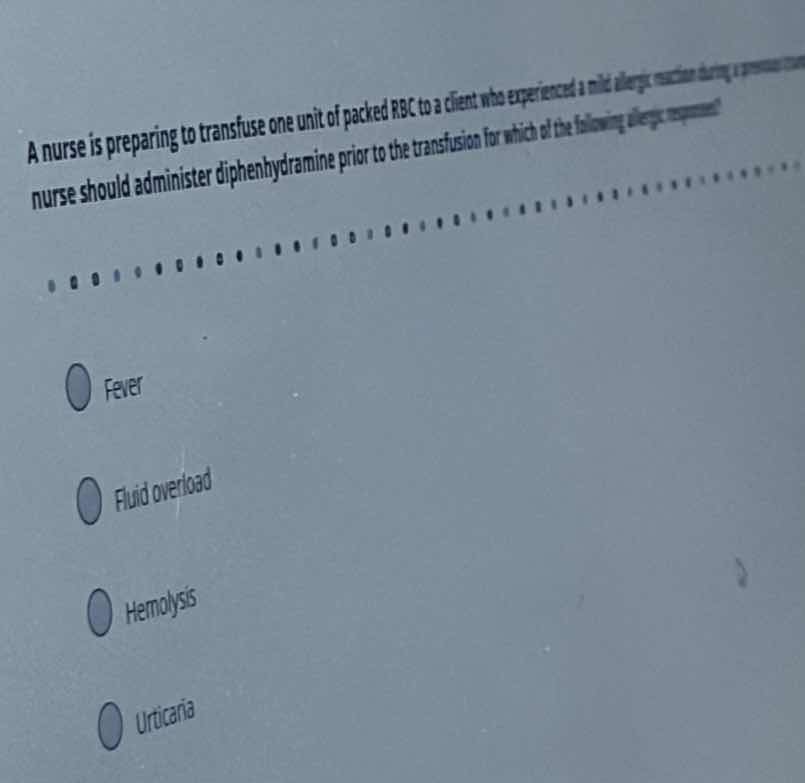
a nurse is preparing to transfuse one unit of packed rbc to a client who experienced a mild allergic reaction during a previous transfusion. the nurse should administer diphenhydramine prior to the transfusion for which of the following allergic responses?
fever
fluid overload
hemolysis
urticaria
Analyze the clinical scenario
The question describes a nurse preparing to transfuse one unit of packed red blood cells (RBCs) to a client who has a history of a mild allergic reaction during a previous transfusion. The nurse is planning to administer diphenhydramine prior to starting the transfusion. We need to identify which allergic response diphenhydramine is intended to prevent.
Evaluate the mechanism of diphenhydramine
Diphenhydramine is a first-generation antihistamine. It works by blocking H1 histamine receptors, which prevents the physiological effects of histamine release during an IgE-mediated (allergic) hypersensitivity reaction.
Assess the clinical manifestations of transfusion reactions
- Fever: This is characteristic of a febrile non-hemolytic transfusion reaction, which is primarily mediated by cytokines or recipient antibodies reacting against donor white blood cells, not histamine. Acetaminophen is typically used to prevent or treat this.
- Fluid overload: Transfusion-associated circulatory overload (TACO) is a mechanical/volume issue, managed with diuretics (like furosemide) and slow infusion rates, not antihistamines.
- Hemolysis: Acute hemolytic transfusion reactions are life-threatening immunological reactions caused by ABO incompatibility, leading to intravascular hemolysis. Antihistamines cannot prevent or treat hemolysis.
- Urticaria: Also known as hives, urticaria is a classic cutaneous manifestation of a mild allergic transfusion reaction. It is caused by histamine release from mast cells and basophils in response to donor plasma proteins. Diphenhydramine is specifically indicated to prevent or treat this histamine-mediated response.
Formulate the final conclusion
Diphenhydramine is administered prophylactically to prevent histamine-mediated allergic symptoms, specifically urticaria (hives) and pruritus (itching), in clients with a history of mild allergic transfusion reactions.

Snap & solve any problem in the app
Get step-by-step solutions on Sovi AI
Photo-based solutions with guided steps
Explore more problems and detailed explanations
- Fever
- Fluid overload
- Hemolysis
- Urticaria (Correct answer)