QUESTION IMAGE
Question
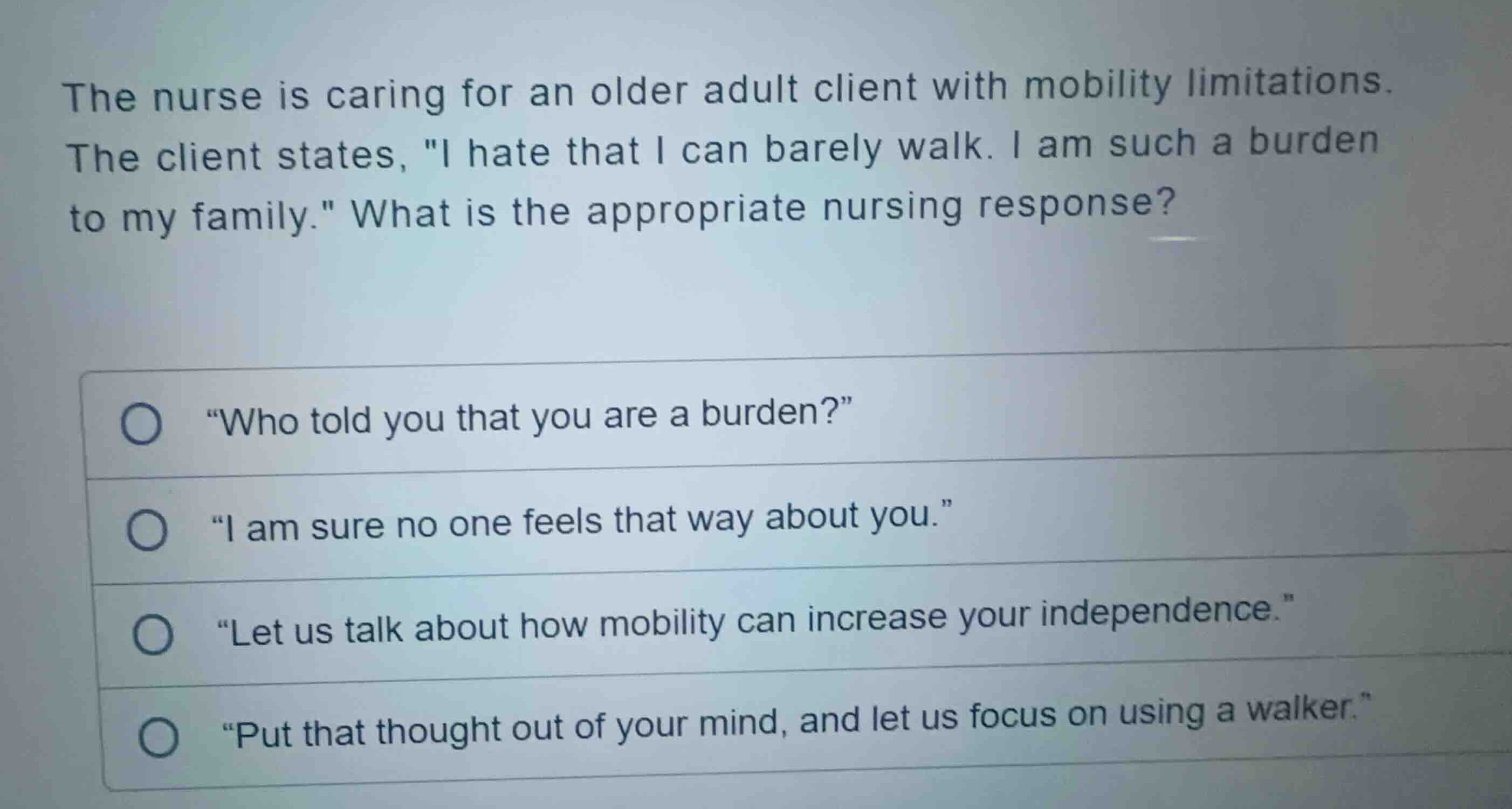
the nurse is caring for an older adult client with mobility limitations. the client states, \i hate that i can barely walk. i am such a burden to my family.\ what is the appropriate nursing response?
- \who told you that you are a burden?\
- \i am sure no one feels that way about you.\
- \let us talk about how mobility can increase your independence.\
- \put that thought out of your mind, and let us focus on using a walker.\
Analyze the client's statement
The client expresses feelings of worthlessness and frustration regarding physical limitations, stating, "I hate that I can barely walk. I am such a burden to my family." This statement conveys deep emotional distress, loss of independence, and altered self-esteem.
Evaluate therapeutic communication principles
Using the Therapeutic Communication knowledge point:
- Therapeutic responses must validate the client's feelings, encourage open expression, and focus on the client's concerns.
- Non-therapeutic responses include offering false reassurance, asking "why" or probing questions, changing the subject, or dismissing the client's feelings.
Assess the options
- "Who told you that you are a burden?": This is a probing, defensive question that shifts focus away from the client's internal feelings to external sources.
- "I am sure no one feels that way about you.": This offers false reassurance and minimizes the client's genuine feelings of distress.
- "Let us talk about how mobility can increase your independence.": This response validates the client's underlying concern about mobility and constructively redirects the conversation toward a client-centered, positive goal (independence) while keeping the communication open.
- "Put that thought out of your mind, and let us focus on using a walker.": This dismisses the client's feelings and abruptly changes the subject to a task, blocking further therapeutic dialogue.
Select the optimal response
The response "Let us talk about how mobility can increase your independence" is the most therapeutic because it addresses the client's concern about walking limitations while offering a supportive, collaborative plan to address it.

Snap & solve any problem in the app
Get step-by-step solutions on Sovi AI
Photo-based solutions with guided steps
Explore more problems and detailed explanations
- (A) "Who told you that you are a burden?"
- (B) "I am sure no one feels that way about you."
- (C) "Let us talk about how mobility can increase your independence." (Correct answer)
- (D) "Put that thought out of your mind, and let us focus on using a walker."