QUESTION IMAGE
Question
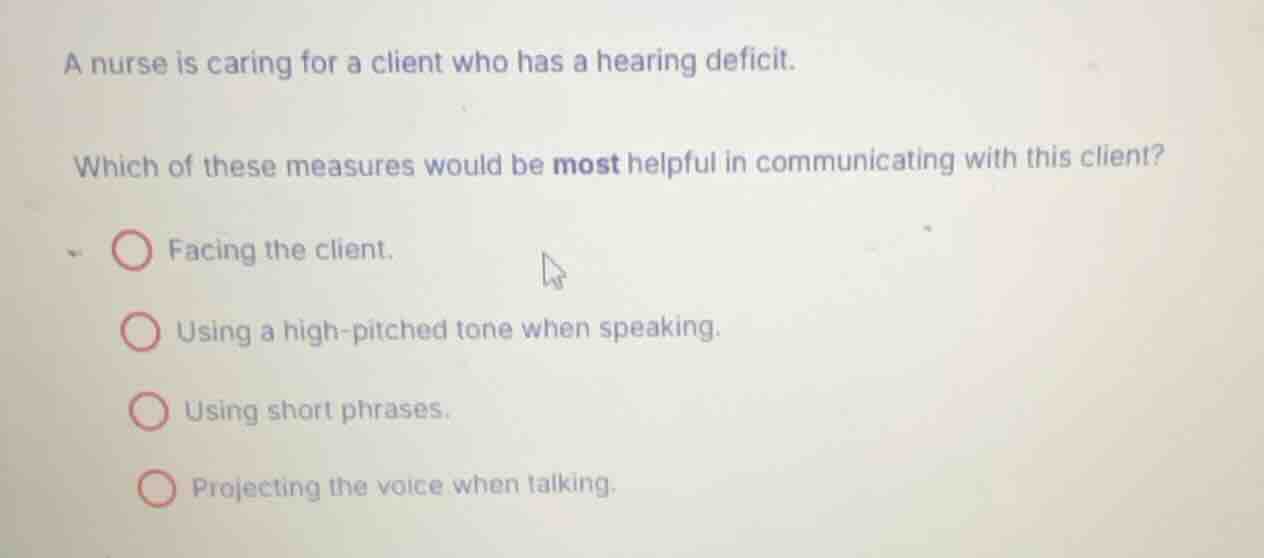
a nurse is caring for a client who has a hearing deficit.
which of these measures would be most helpful in communicating with this client?
facing the client.
using a high-pitched tone when speaking.
using short phrases.
projecting the voice when talking.
🆕 New Concept Discovered: Therapeutic Communication for Sensory Deficits
Adapting communication techniques for clients with hearing loss.
Step 1: Analyze the client's specific need
The client has a hearing deficit (hearing loss). To communicate effectively, the nurse must use techniques that maximize the client's ability to receive and understand verbal and non-verbal messages. Many individuals with hearing impairment rely heavily on visual cues, such as lip-reading, facial expressions, and gestures, to supplement what they cannot hear.
Step 2: Evaluate the options
- Facing the client: This is the most helpful measure. Facing the client directly ensures that they can see the nurse's mouth movements, facial expressions, and body language. This visual input is crucial for lip-reading and understanding the context of the conversation.
- Using a high-pitched tone when speaking: This is incorrect. Age-related hearing loss (presbycusis) typically makes it harder to hear high-frequency sounds. Speaking in a lower-pitched, deeper tone is much easier for clients with hearing deficits to understand.
- Using short phrases: While clear and concise language is helpful, overly short or fragmented phrases can lack context and make natural conversation more difficult to follow.
- Projecting the voice when talking: While speaking clearly is important, "projecting" can easily cross into shouting. Shouting distorts the sounds of words, alters facial expressions (which can look aggressive), and makes lip-reading much harder.
Step 3: Select the best intervention
Facing the client directly at eye level, in a well-lit room, is the foundational step in establishing effective communication with a hearing-impaired client.

Snap & solve any problem in the app
Get step-by-step solutions on Sovi AI
Photo-based solutions with guided steps
Explore more problems and detailed explanations
Facing the client.