QUESTION IMAGE
Question
Question was provided via image upload.
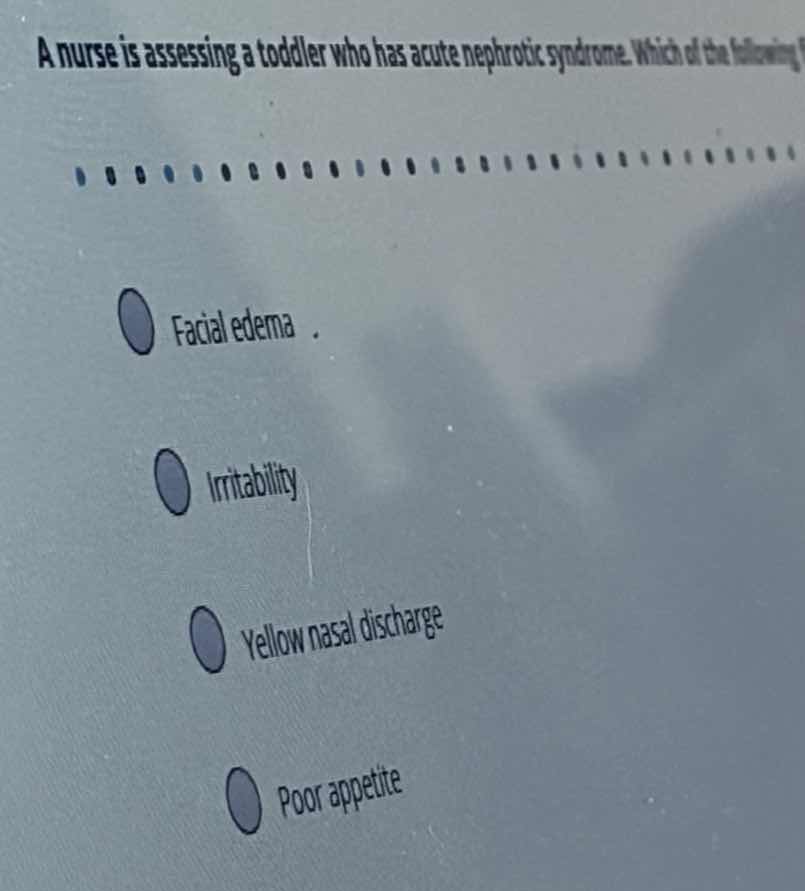
Identify the clinical condition
The question asks about clinical findings in a toddler with acute nephrotic syndrome. Nephrotic syndrome is a glomerular disorder characterized by massive proteinuria, hypoalbuminemia, hyperlipidemia, and edema.
Analyze the pathophysiology of edema
In Pediatric Nursing, understanding fluid shifts is essential. Due to the loss of albumin in the urine (proteinuria), intravascular oncotic pressure decreases. This causes fluid to shift from the vascular space into the interstitial tissues, leading to generalized edema.
Evaluate the clinical manifestations
Edema in nephrotic syndrome typically presents first as periorbital or facial edema, especially noticeable when the child wakes up in the morning, before progressing to generalized edema (anasarca).
Compare the options
- Facial edema: This is a classic, hallmark initial sign of nephrotic syndrome due to fluid shifts.
- Irritability: While a child with nephrotic syndrome may be irritable due to discomfort, it is not a specific diagnostic hallmark compared to facial edema.
- Yellow nasal discharge: This indicates an upper respiratory infection, not a direct manifestation of nephrotic syndrome.
- Poor appetite: While anorexia can occur due to abdominal swelling (ascites), facial edema is the most direct and classic clinical assessment finding associated with the pathophysiology of the disease.

Snap & solve any problem in the app
Get step-by-step solutions on Sovi AI
Photo-based solutions with guided steps
Explore more problems and detailed explanations
- Facial edema (Correct answer)
- Irritability
- Yellow nasal discharge
- Poor appetite