QUESTION IMAGE
Question
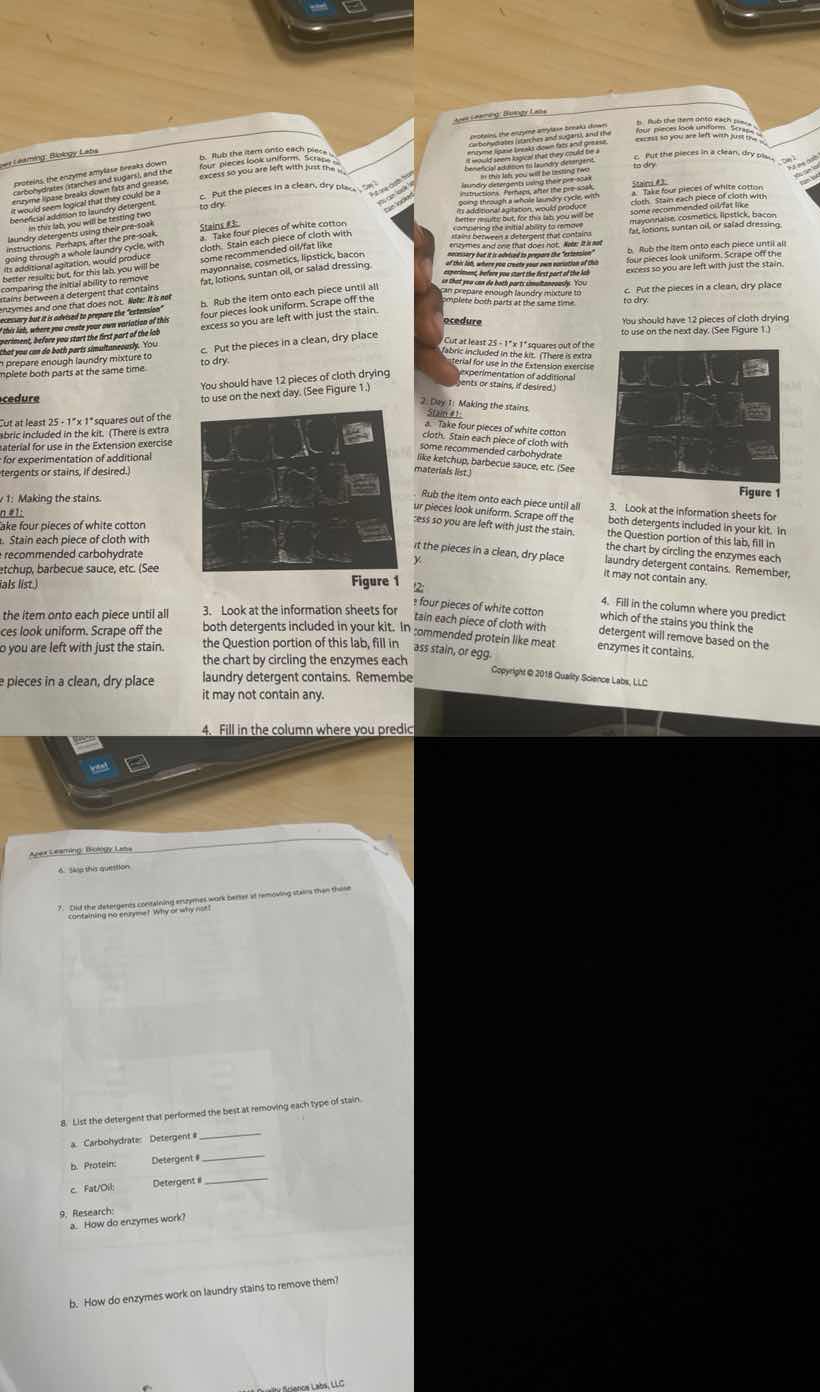
Question was provided via image upload.
Analyze enzyme function on laundry stains
Enzymes are biological catalysts that speed up chemical reactions by lowering the activation energy. They target specific substrates due to the complementary shape of their active site (the lock-and-key model).
Explain mechanism of action
In laundry detergents, specific enzymes break down large, insoluble stain molecules into smaller, soluble fragments that can be easily washed away by water and surfactants:
- Amylases break down carbohydrates (starches) into simple sugars.
- Proteases break down proteins into amino acids/peptides.
- Lipases break down lipids (fats and oils) into glycerol and fatty acids.

Snap & solve any problem in the app
Get step-by-step solutions on Sovi AI
Photo-based solutions with guided steps
Explore more problems and detailed explanations
Question 9a
Enzymes work as biological catalysts. They speed up chemical reactions by lowering the activation energy required for the reaction to occur, without being consumed in the process. Each enzyme has a specifically shaped active site that binds to a matching substrate molecule (known as enzyme specificity or the lock-and-key model) to catalyze a specific reaction.
Question 9b
Enzymes in laundry detergents target and break down the large, insoluble macromolecular chains that make up stains into smaller, water-soluble molecules:
- Amylases target carbohydrate stains (like starch or ketchup) and break them down into simple sugars.
- Proteases target protein stains (like blood, grass, or egg) and break them down into soluble peptides and amino acids.
- Lipases target lipid/fat stains (like oils, butter, or cosmetics) and break them down into fatty acids and glycerol.
Once these large molecules are broken down into smaller, soluble pieces, the water and surfactants in the detergent can easily wash them away from the fabric fibers.