QUESTION IMAGE
Question
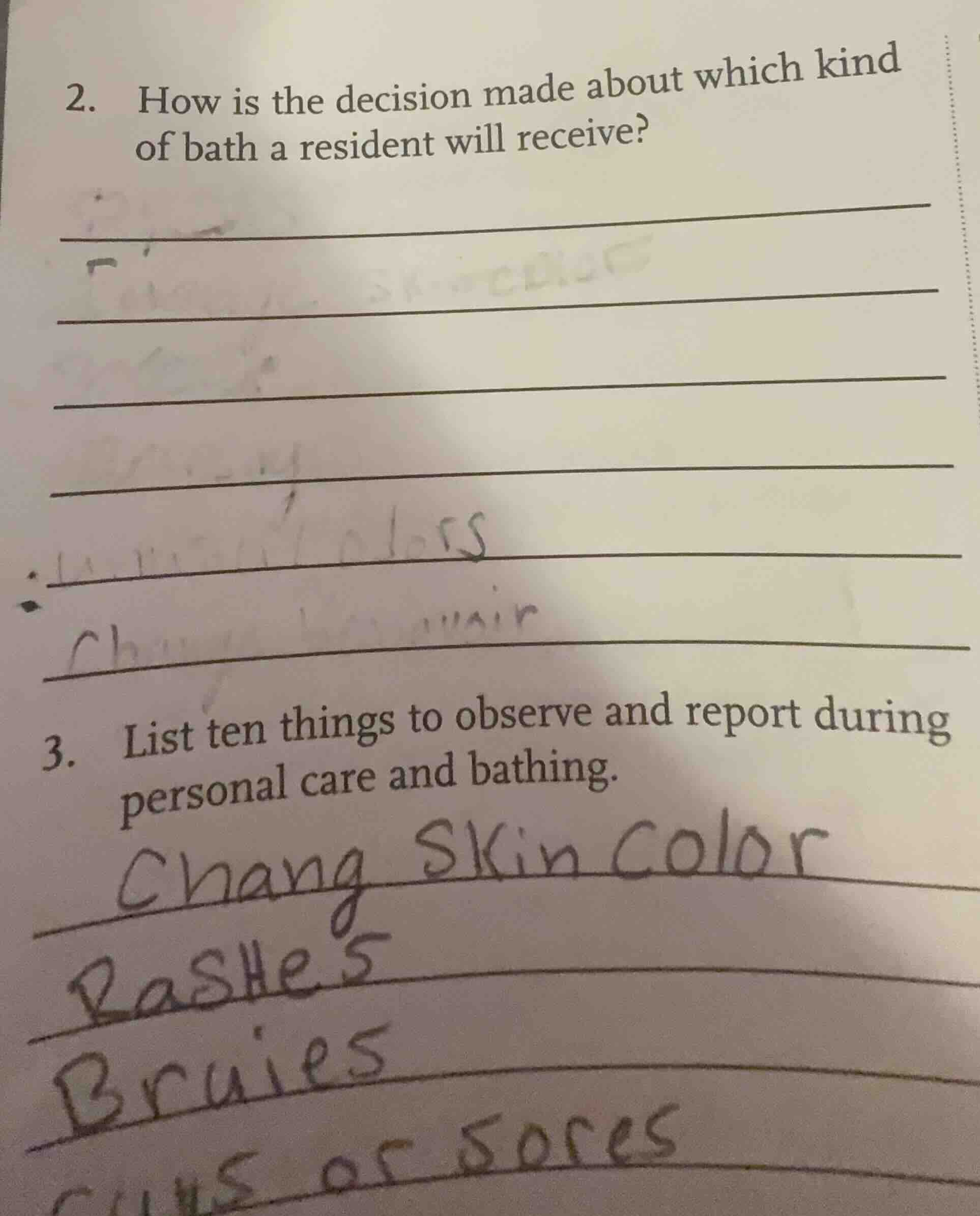
- how is the decision made about which kind of bath a resident will receive?
- list ten things to observe and report during personal care and bathing.
Decision factors for resident bath type
The decision is based on the doctor's or nurse's orders, the resident's care plan, their physical and cognitive abilities, and their personal preferences.
Observations during personal care and bathing
Key observations include:
- Skin color changes (pale, blue, red, yellow)
- Rashes or skin irritation
- Bruises or swelling
- Cuts, scrapes, or open sores
- Dry, flaking, or cracking skin
- Signs of pain or discomfort
- Changes in mobility or strength
- Drainage, discharge, or unusual odors
- Temperature of the skin (hot or cold)
- Mental state or behavioral changes

Snap & solve any problem in the app
Get step-by-step solutions on Sovi AI
Photo-based solutions with guided steps
Explore more problems and detailed explanations
Question 2
The decision about which kind of bath a resident will receive is made based on:
- The doctor's or nurse's orders and the resident's official care plan.
- The resident's physical capabilities, mobility, and overall health status.
- The resident's personal preferences and choices.
Question 3
Ten things to observe and report during personal care and bathing:
- Changes in skin color (e.g., redness, paleness, cyanosis, or jaundice)
- Rashes, hives, or skin irritation
- Bruises, swelling, or fluid retention
- Cuts, scrapes, tears, or open sores
- Dry, flaking, cracking, or peeling skin
- Signs of pain, discomfort, or grimacing during movement
- Changes in mobility, balance, or physical strength
- Drainage, pus, bleeding, or unusual odors from any body area
- Skin temperature (unusually hot or cold to the touch)
- Changes in mental status, confusion, or behavioral reactions