QUESTION IMAGE
Question
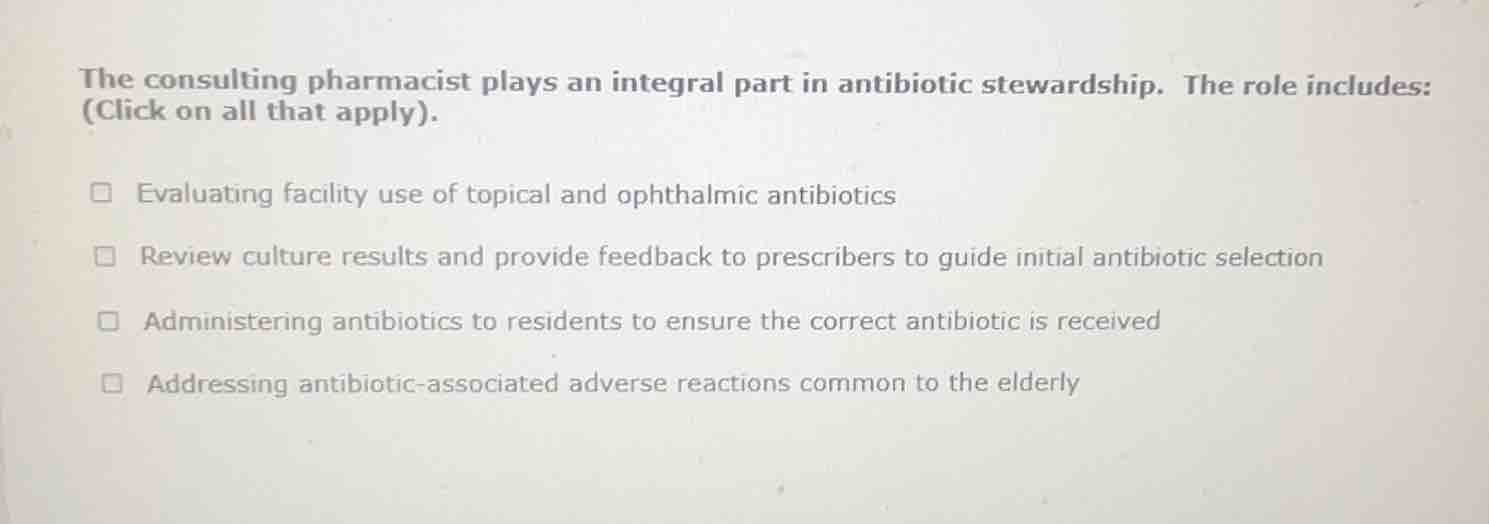
the consulting pharmacist plays an integral part in antibiotic stewardship. the role includes: (click on all that apply).
- evaluating facility use of topical and ophthalmic antibiotics
- review culture results and provide feedback to prescribers to guide initial antibiotic selection
- administering antibiotics to residents to ensure the correct antibiotic is received
- addressing antibiotic-associated adverse reactions common to the elderly
🆕 New Concept Discovered: Antimicrobial Stewardship in Long-Term Care
Optimizing antibiotic use to improve resident outcomes and reduce resistance.
Step 1: Define the role of a consulting pharmacist in stewardship
In long-term care facilities, consulting pharmacists perform retrospective and prospective medication regimen reviews (MRR). Their role in antibiotic stewardship involves monitoring prescribing patterns, ensuring appropriate selection based on microbiology data, and minimizing adverse drug events. They act as educators and advisors rather than direct hands-on clinical administrators.
Step 2: Evaluate Option 1
- Evaluating facility use of topical and ophthalmic antibiotics: Yes. Stewardship programs often overlook non-systemic antibiotics, but consulting pharmacists track and evaluate all forms of antimicrobial use (including topical and ophthalmic preparations) to prevent overuse and resistance development.
Step 3: Evaluate Option 2
- Review culture results and provide feedback to prescribers to guide initial antibiotic selection: Yes. Consulting pharmacists review laboratory and microbiology reports to ensure that empirical antibiotic choices align with culture and sensitivity results, recommending de-escalation or optimization when necessary.
Step 4: Evaluate Option 3
- Administering antibiotics to residents to ensure the correct antibiotic is received: No. The physical administration of medications to residents is a nursing responsibility, not a function of the consulting pharmacist.
Step 5: Evaluate Option 4
- Addressing antibiotic-associated adverse reactions common to the elderly: Yes. Older adults are highly susceptible to adverse drug events (such as Clostridioides difficile infections, renal toxicity, and drug interactions). Consulting pharmacists identify, monitor, and mitigate these risks during their reviews.

Snap & solve any problem in the app
Get step-by-step solutions on Sovi AI
Photo-based solutions with guided steps
Explore more problems and detailed explanations
- Evaluating facility use of topical and ophthalmic antibiotics
- Review culture results and provide feedback to prescribers to guide initial antibiotic selection
- Addressing antibiotic-associated adverse reactions common to the elderly