Sovi.AI - AI Math Tutor

Scan to solve math questions

QUESTION IMAGE

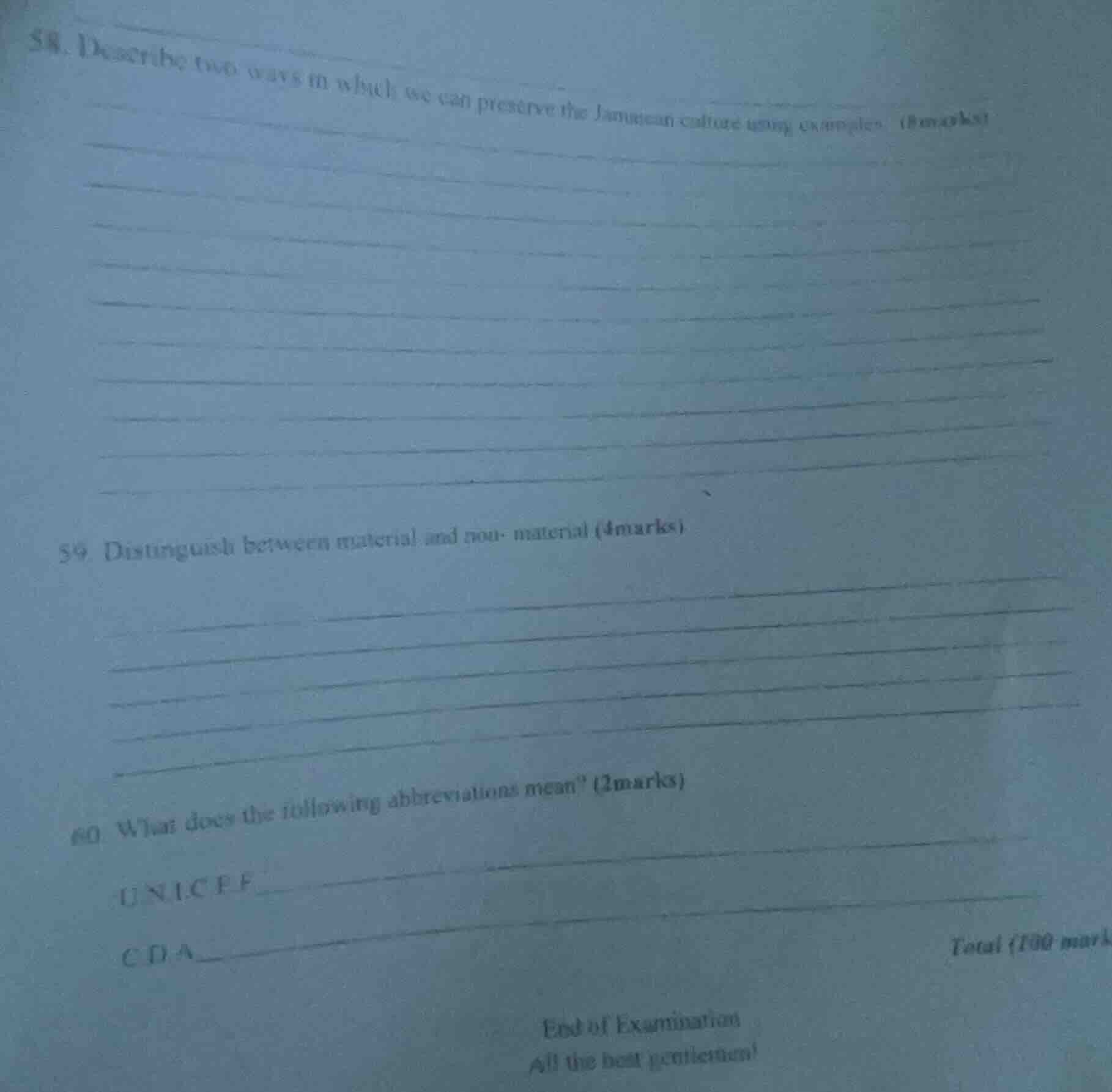
58. describe two ways in which we can preserve the jamaican culture usi…

Question

  1. describe two ways in which we can preserve the jamaican culture using examples. (8marks)
  1. distinguish between material and non-material (4marks)
  1. what does the following abbreviations mean? (2marks)

unicef

cda

Explanation:

Response

<pre_analysis>
{
"quality": "clear",
"question_count": 3,
"skills_matched": [
"direct_cot",
"explain_then_answer",
"tutor"
],
"needs_drawing": false,
"concepts_used": [
"Caribbean Heritage",
"Cultural Characteristics"
],
"new_concepts": [
"Material Culture",
"Non-material Culture",
"International Organizations"
],
"current_concepts": [
"Caribbean Heritage",
"Cultural Characteristics",
"Material Culture",
"Non-material Culture",
"International Organizations"
]
}
</pre_analysis>

<reasoning>

Analyze cultural preservation methods

To preserve Caribbean Heritage, we can document traditions and host cultural festivals.

  • Documentation: Recording oral histories, folk songs, and traditional recipes in books or digital archives.
  • Festivals: Hosting annual events like Grand Gala or culinary festivals to showcase traditional music, dance, and food.

Define material and non-material culture

We distinguish between these two aspects of Cultural Characteristics:

  • Material culture: Physical, tangible objects created and used by a society (e.g., historical buildings, traditional clothing, crafts).
  • Non-material culture: Intangible ideas, beliefs, values, and practices of a society (e.g., folklore, language, religious beliefs, music).

Define the given abbreviations

We identify the meanings of the two institutional abbreviations:

  • UNICEF: United Nations Children's Fund.
  • CDA: Child Development Agency (a prominent child welfare agency in Jamaica).

</reasoning>

<answer>

Question 58

Two ways to preserve Jamaican culture are:

  1. Documentation and Archiving: Recording oral histories, traditional folk songs, and recipes in books, museums, or digital databases to ensure future generations can access them.
  2. Cultural Festivals and Education: Hosting national events like Jamaica Festival or culinary expositions, and teaching traditional dances, music, and crafts in schools.

Question 59

  • Material Culture: Refers to the physical, tangible objects and artifacts created, used, and shared by a society, such as historical monuments, traditional clothing, pottery, and local cuisine.
  • Non-material Culture: Refers to the intangible, non-physical ideas, beliefs, values, languages, music, folklore, and social norms shared by a society.

Question 60

  • UNICEF: United Nations Children's Fund
  • CDA: Child Development Agency

</answer>

<post_analysis>
{
"subject": "Social Science",
"question_type": "Multi-part",
"knowledge_point": [
"Social Science",
"Sociology",
"Culture and Heritage"
]
}
</post_analysis>

Answer:

<pre_analysis>
{
"quality": "clear",
"question_count": 3,
"skills_matched": [
"direct_cot",
"explain_then_answer",
"tutor"
],
"needs_drawing": false,
"concepts_used": [
"Caribbean Heritage",
"Cultural Characteristics"
],
"new_concepts": [
"Material Culture",
"Non-material Culture",
"International Organizations"
],
"current_concepts": [
"Caribbean Heritage",
"Cultural Characteristics",
"Material Culture",
"Non-material Culture",
"International Organizations"
]
}
</pre_analysis>

<reasoning>

Analyze cultural preservation methods

To preserve Caribbean Heritage, we can document traditions and host cultural festivals.

  • Documentation: Recording oral histories, folk songs, and traditional recipes in books or digital archives.
  • Festivals: Hosting annual events like Grand Gala or culinary festivals to showcase traditional music, dance, and food.

Define material and non-material culture

We distinguish between these two aspects of Cultural Characteristics:

  • Material culture: Physical, tangible objects created and used by a society (e.g., historical buildings, traditional clothing, crafts).
  • Non-material culture: Intangible ideas, beliefs, values, and practices of a society (e.g., folklore, language, religious beliefs, music).

Define the given abbreviations

We identify the meanings of the two institutional abbreviations:

  • UNICEF: United Nations Children's Fund.
  • CDA: Child Development Agency (a prominent child welfare agency in Jamaica).

</reasoning>

<answer>

Question 58

Two ways to preserve Jamaican culture are:

  1. Documentation and Archiving: Recording oral histories, traditional folk songs, and recipes in books, museums, or digital databases to ensure future generations can access them.
  2. Cultural Festivals and Education: Hosting national events like Jamaica Festival or culinary expositions, and teaching traditional dances, music, and crafts in schools.

Question 59

  • Material Culture: Refers to the physical, tangible objects and artifacts created, used, and shared by a society, such as historical monuments, traditional clothing, pottery, and local cuisine.
  • Non-material Culture: Refers to the intangible, non-physical ideas, beliefs, values, languages, music, folklore, and social norms shared by a society.

Question 60

  • UNICEF: United Nations Children's Fund
  • CDA: Child Development Agency

</answer>

<post_analysis>
{
"subject": "Social Science",
"question_type": "Multi-part",
"knowledge_point": [
"Social Science",
"Sociology",
"Culture and Heritage"
]
}
</post_analysis>