QUESTION IMAGE
Question
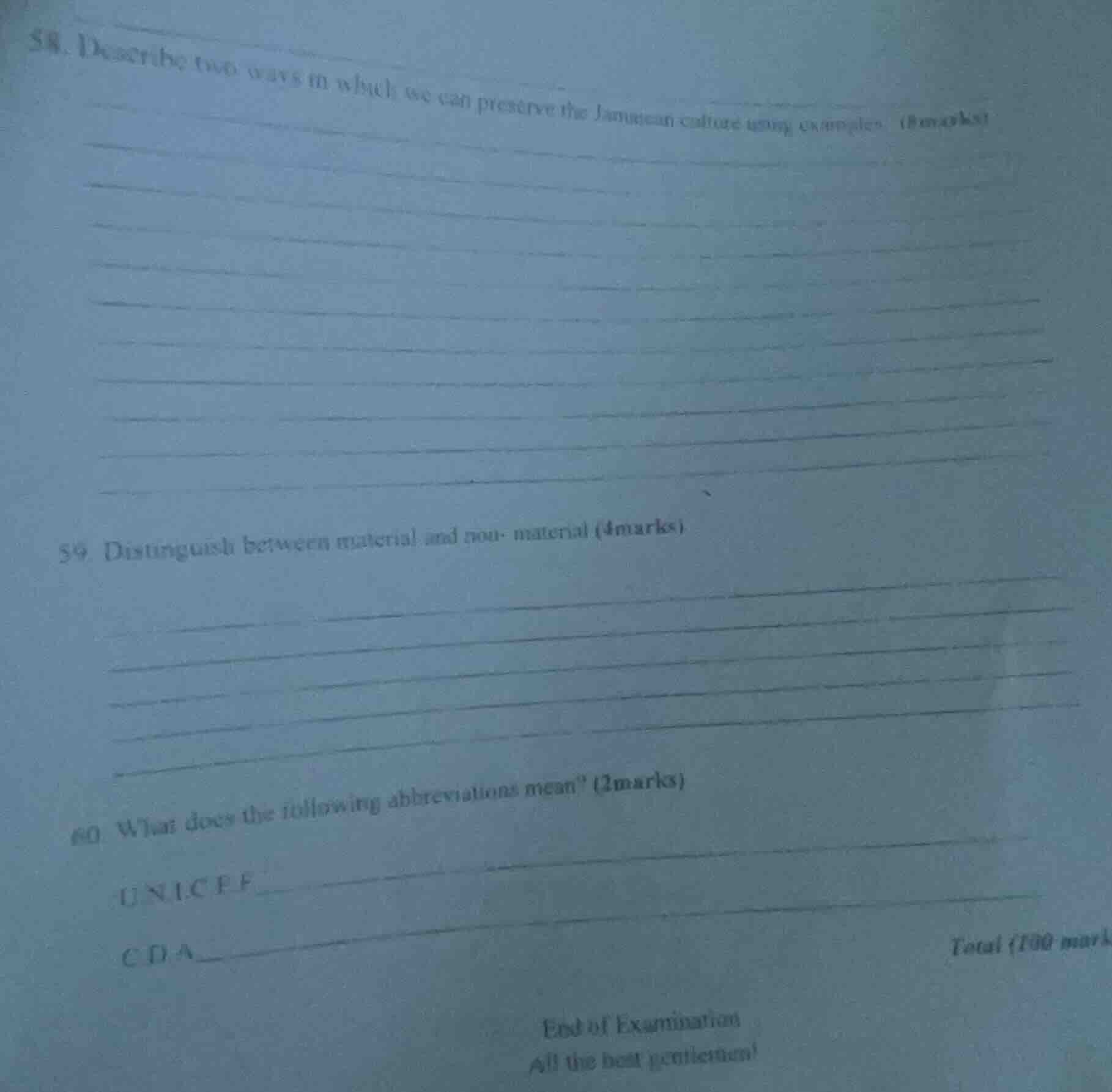
- describe two ways in which we can preserve the jamaican culture using examples. (8marks)
- distinguish between material and non-material (4marks)
- what does the following abbreviations mean? (2marks)
unicef
cda
<pre_analysis>
{
"quality": "clear",
"question_count": 3,
"skills_matched": [
"direct_cot",
"explain_then_answer",
"tutor"
],
"needs_drawing": false,
"concepts_used": [
"Caribbean Heritage",
"Cultural Characteristics"
],
"new_concepts": [
"Material Culture",
"Non-material Culture",
"International Organizations"
],
"current_concepts": [
"Caribbean Heritage",
"Cultural Characteristics",
"Material Culture",
"Non-material Culture",
"International Organizations"
]
}
</pre_analysis>
<reasoning>
Analyze cultural preservation methods
To preserve Caribbean Heritage, we can document traditions and host cultural festivals.
- Documentation: Recording oral histories, folk songs, and traditional recipes in books or digital archives.
- Festivals: Hosting annual events like Grand Gala or culinary festivals to showcase traditional music, dance, and food.
Define material and non-material culture
We distinguish between these two aspects of Cultural Characteristics:
- Material culture: Physical, tangible objects created and used by a society (e.g., historical buildings, traditional clothing, crafts).
- Non-material culture: Intangible ideas, beliefs, values, and practices of a society (e.g., folklore, language, religious beliefs, music).
Define the given abbreviations
We identify the meanings of the two institutional abbreviations:
- UNICEF: United Nations Children's Fund.
- CDA: Child Development Agency (a prominent child welfare agency in Jamaica).
</reasoning>
<answer>
Question 58
Two ways to preserve Jamaican culture are:
- Documentation and Archiving: Recording oral histories, traditional folk songs, and recipes in books, museums, or digital databases to ensure future generations can access them.
- Cultural Festivals and Education: Hosting national events like Jamaica Festival or culinary expositions, and teaching traditional dances, music, and crafts in schools.
Question 59
- Material Culture: Refers to the physical, tangible objects and artifacts created, used, and shared by a society, such as historical monuments, traditional clothing, pottery, and local cuisine.
- Non-material Culture: Refers to the intangible, non-physical ideas, beliefs, values, languages, music, folklore, and social norms shared by a society.
Question 60
- UNICEF: United Nations Children's Fund
- CDA: Child Development Agency
</answer>
<post_analysis>
{
"subject": "Social Science",
"question_type": "Multi-part",
"knowledge_point": [
"Social Science",
"Sociology",
"Culture and Heritage"
]
}
</post_analysis>
Snap & solve any problem in the app
Get step-by-step solutions on Sovi AI
Photo-based solutions with guided steps
Explore more problems and detailed explanations
<pre_analysis>
{
"quality": "clear",
"question_count": 3,
"skills_matched": [
"direct_cot",
"explain_then_answer",
"tutor"
],
"needs_drawing": false,
"concepts_used": [
"Caribbean Heritage",
"Cultural Characteristics"
],
"new_concepts": [
"Material Culture",
"Non-material Culture",
"International Organizations"
],
"current_concepts": [
"Caribbean Heritage",
"Cultural Characteristics",
"Material Culture",
"Non-material Culture",
"International Organizations"
]
}
</pre_analysis>
<reasoning>
Analyze cultural preservation methods
To preserve Caribbean Heritage, we can document traditions and host cultural festivals.
- Documentation: Recording oral histories, folk songs, and traditional recipes in books or digital archives.
- Festivals: Hosting annual events like Grand Gala or culinary festivals to showcase traditional music, dance, and food.
Define material and non-material culture
We distinguish between these two aspects of Cultural Characteristics:
- Material culture: Physical, tangible objects created and used by a society (e.g., historical buildings, traditional clothing, crafts).
- Non-material culture: Intangible ideas, beliefs, values, and practices of a society (e.g., folklore, language, religious beliefs, music).
Define the given abbreviations
We identify the meanings of the two institutional abbreviations:
- UNICEF: United Nations Children's Fund.
- CDA: Child Development Agency (a prominent child welfare agency in Jamaica).
</reasoning>
<answer>
Question 58
Two ways to preserve Jamaican culture are:
- Documentation and Archiving: Recording oral histories, traditional folk songs, and recipes in books, museums, or digital databases to ensure future generations can access them.
- Cultural Festivals and Education: Hosting national events like Jamaica Festival or culinary expositions, and teaching traditional dances, music, and crafts in schools.
Question 59
- Material Culture: Refers to the physical, tangible objects and artifacts created, used, and shared by a society, such as historical monuments, traditional clothing, pottery, and local cuisine.
- Non-material Culture: Refers to the intangible, non-physical ideas, beliefs, values, languages, music, folklore, and social norms shared by a society.
Question 60
- UNICEF: United Nations Children's Fund
- CDA: Child Development Agency
</answer>
<post_analysis>
{
"subject": "Social Science",
"question_type": "Multi-part",
"knowledge_point": [
"Social Science",
"Sociology",
"Culture and Heritage"
]
}
</post_analysis>