Sovi.AI - AI Math Tutor

Scan to solve math questions

QUESTION IMAGE

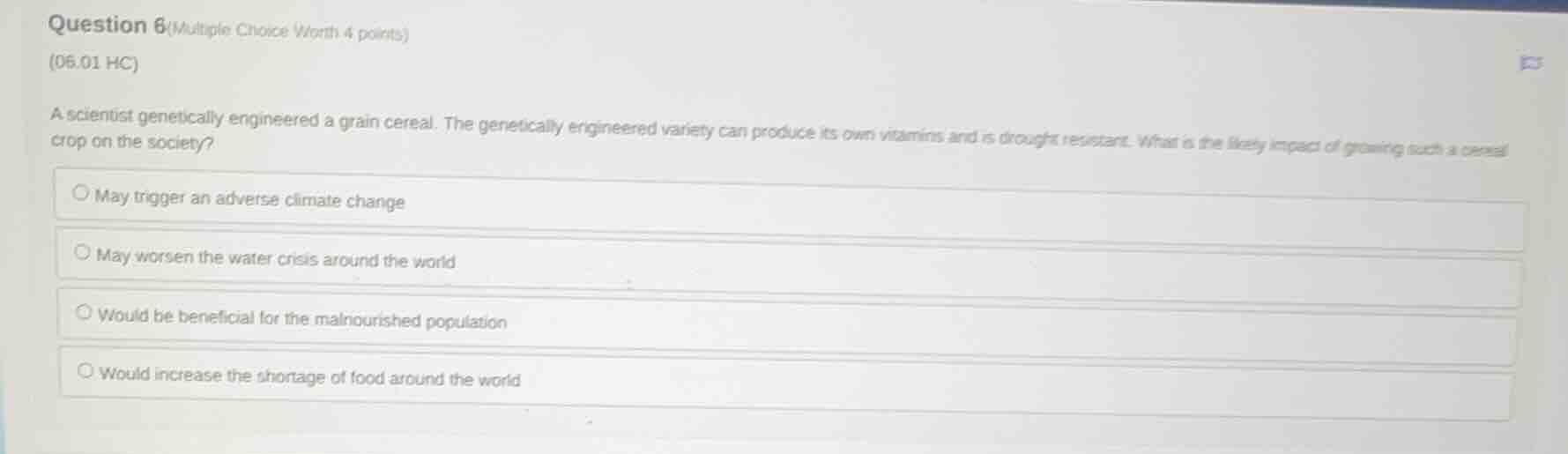
question 6 (multiple choice worth 4 points) (06.01 hc) a scientist gene…

Question

question 6 (multiple choice worth 4 points)
(06.01 hc)

a scientist genetically engineered a grain cereal. the genetically engineered variety can produce its own vitamins and is drought resistant. what is the likely impact of growing such a cereal crop on the society?

  • may trigger an adverse climate change
  • may worsen the water crisis around the world
  • would be beneficial for the malnourished population
  • would increase the shortage of food around the world

Explanation:

Response

<pre_analysis>
{
"quality": "clear",
"question_count": 1,
"skills_matched": [
"direct_cot",
"multiple_choice_formatter",
"explain_then_answer",
"tutor",
"mastery_adaptive_brevity"
],
"needs_drawing": false,
"concepts_used": [
"Genetic Engineering"
],
"new_concepts": [
"Agricultural Biotechnology Impact"
],
"current_concepts": [
"Genetic Engineering",
"Agricultural Biotechnology Impact"
]
}
</pre_analysis>

<reasoning>

Analyze the traits of the engineered crop

Using the Genetic Engineering knowledge point
The grain cereal has two key genetically engineered traits:

  1. It produces its own vitamins (biofortification).
  2. It is drought-resistant (can grow with minimal water).

Evaluate the societal impacts of each option

  • May trigger an adverse climate change: Drought-resistant crops do not cause adverse climate change; rather, they help adapt to it.
  • May worsen the water crisis around the world: Drought-resistant crops require less water, which helps conserve water resources rather than worsening a crisis.
  • Would be beneficial for the malnourished population: Since the crop produces its own vitamins and can grow in dry conditions, it provides essential nutrients and a reliable food source to areas struggling with malnutrition and food insecurity.
  • Would increase the shortage of food around the world: A crop that is easier to grow and more nutritious decreases food shortages.

</reasoning>

<answer>
<mcq-option>May trigger an adverse climate change</mcq-option>
<mcq-option>May worsen the water crisis around the world</mcq-option>
<mcq-correct>Would be beneficial for the malnourished population</mcq-correct>
<mcq-option>Would increase the shortage of food around the world</mcq-option>
</answer>

<post_analysis>
{
"subject": "Natural Science",
"question_type": "Multiple Choice",
"knowledge_point": [
"Natural Science",
"Biology",
"Agricultural Biotechnology Impact"
]
}
</post_analysis>

Answer:

<pre_analysis>
{
"quality": "clear",
"question_count": 1,
"skills_matched": [
"direct_cot",
"multiple_choice_formatter",
"explain_then_answer",
"tutor",
"mastery_adaptive_brevity"
],
"needs_drawing": false,
"concepts_used": [
"Genetic Engineering"
],
"new_concepts": [
"Agricultural Biotechnology Impact"
],
"current_concepts": [
"Genetic Engineering",
"Agricultural Biotechnology Impact"
]
}
</pre_analysis>

<reasoning>

Analyze the traits of the engineered crop

Using the Genetic Engineering knowledge point
The grain cereal has two key genetically engineered traits:

  1. It produces its own vitamins (biofortification).
  2. It is drought-resistant (can grow with minimal water).

Evaluate the societal impacts of each option

  • May trigger an adverse climate change: Drought-resistant crops do not cause adverse climate change; rather, they help adapt to it.
  • May worsen the water crisis around the world: Drought-resistant crops require less water, which helps conserve water resources rather than worsening a crisis.
  • Would be beneficial for the malnourished population: Since the crop produces its own vitamins and can grow in dry conditions, it provides essential nutrients and a reliable food source to areas struggling with malnutrition and food insecurity.
  • Would increase the shortage of food around the world: A crop that is easier to grow and more nutritious decreases food shortages.

</reasoning>

<answer>
<mcq-option>May trigger an adverse climate change</mcq-option>
<mcq-option>May worsen the water crisis around the world</mcq-option>
<mcq-correct>Would be beneficial for the malnourished population</mcq-correct>
<mcq-option>Would increase the shortage of food around the world</mcq-option>
</answer>

<post_analysis>
{
"subject": "Natural Science",
"question_type": "Multiple Choice",
"knowledge_point": [
"Natural Science",
"Biology",
"Agricultural Biotechnology Impact"
]
}
</post_analysis>