Sovi.AI - AI Math Tutor

Scan to solve math questions

QUESTION IMAGE

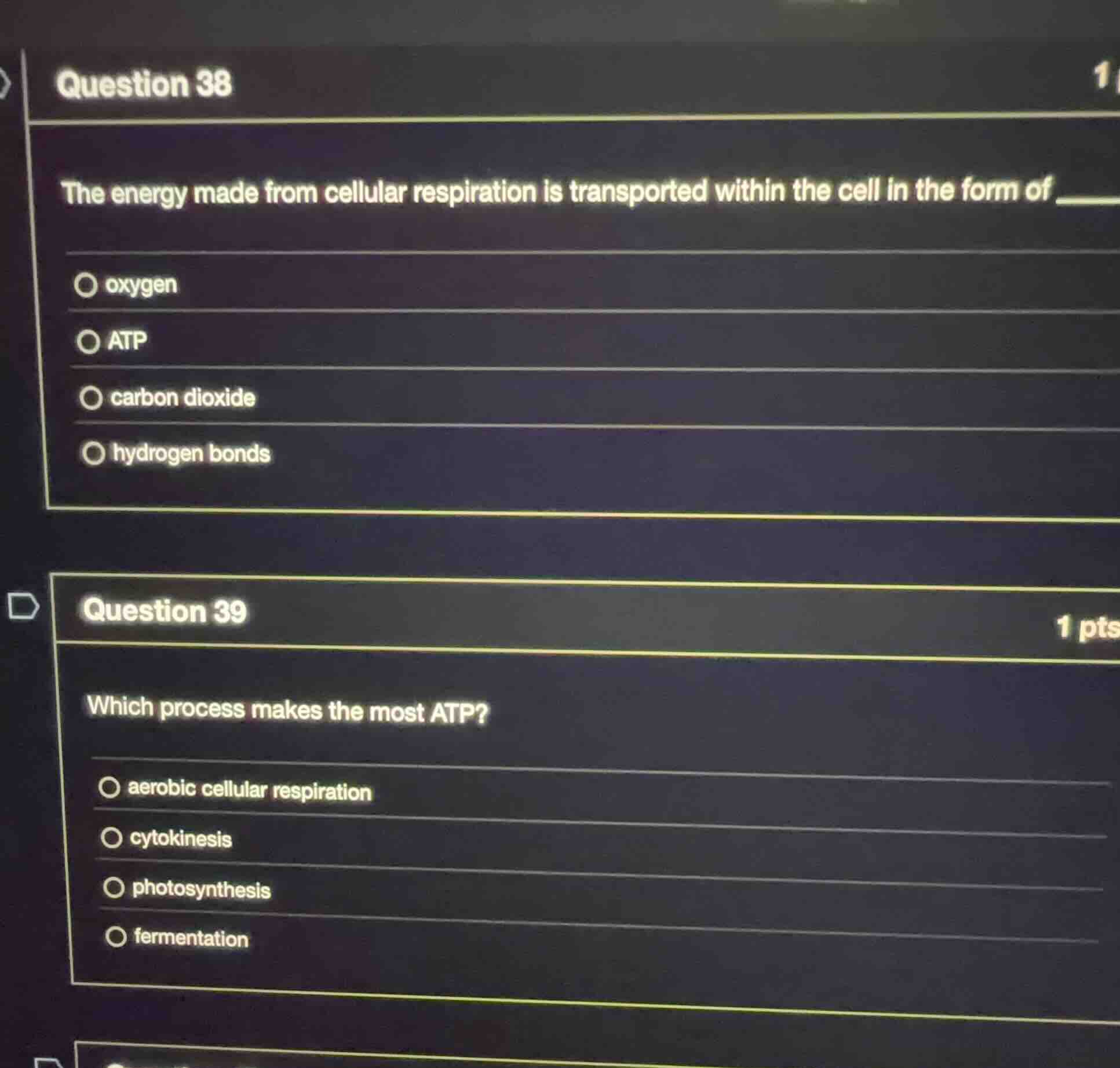
question 38 the energy made from cellular respiration is transported wi…

Question

question 38

the energy made from cellular respiration is transported within the cell in the form of ______.

oxygen
atp
carbon dioxide
hydrogen bonds

question 39

which process makes the most atp?

aerobic cellular respiration
cytokinesis
photosynthesis
fermentation

Explanation:

Response

<pre_analysis>
{
"quality": "clear",
"question_count": 2,
"skills_matched": [
"direct_cot",
"multiple_choice_formatter",
"explain_then_answer",
"quick"
],
"needs_drawing": false,
"concepts_used": [
"Cellular Respiration",
"Aerobic Respiration",
"ATP Structure"
],
"new_concepts": [],
"current_concepts": [
"Cellular Respiration",
"Aerobic Respiration",
"ATP Structure"
]
}
</pre_analysis>

<reasoning>

Analyze Question 38

Cellular respiration breaks down glucose to harvest chemical energy. This energy is captured and stored in adenosine triphosphate (ATP) molecules, which act as the primary energy currency to transport energy within the cell.

Analyze Question 39

Aerobic cellular respiration (consisting of glycolysis, the Krebs cycle, and the electron transport chain) produces approximately 36 to 38 ATP molecules per glucose molecule. In contrast, anaerobic processes like fermentation produce only 2 ATP, while photosynthesis stores energy rather than producing ATP for general cellular work, and cytokinesis is a division process that consumes energy.
</reasoning>

<answer>

Question 38

<mcq-option>oxygen</mcq-option>
<mcq-correct>ATP</mcq-correct>
<mcq-option>carbon dioxide</mcq-option>
<mcq-option>hydrogen bonds</mcq-option>

Question 39

<mcq-correct>aerobic cellular respiration</mcq-correct>
<mcq-option>cytokinesis</mcq-option>
<mcq-option>photosynthesis</mcq-option>
<mcq-option>fermentation</mcq-option>
</answer>

<post_analysis>
{
"subject": "Natural Science",
"question_type": "Multiple Choice",
"knowledge_point": [
"Natural Science",
"Biology",
"Cellular Respiration"
]
}
</post_analysis>

Answer:

<pre_analysis>
{
"quality": "clear",
"question_count": 2,
"skills_matched": [
"direct_cot",
"multiple_choice_formatter",
"explain_then_answer",
"quick"
],
"needs_drawing": false,
"concepts_used": [
"Cellular Respiration",
"Aerobic Respiration",
"ATP Structure"
],
"new_concepts": [],
"current_concepts": [
"Cellular Respiration",
"Aerobic Respiration",
"ATP Structure"
]
}
</pre_analysis>

<reasoning>

Analyze Question 38

Cellular respiration breaks down glucose to harvest chemical energy. This energy is captured and stored in adenosine triphosphate (ATP) molecules, which act as the primary energy currency to transport energy within the cell.

Analyze Question 39

Aerobic cellular respiration (consisting of glycolysis, the Krebs cycle, and the electron transport chain) produces approximately 36 to 38 ATP molecules per glucose molecule. In contrast, anaerobic processes like fermentation produce only 2 ATP, while photosynthesis stores energy rather than producing ATP for general cellular work, and cytokinesis is a division process that consumes energy.
</reasoning>

<answer>

Question 38

<mcq-option>oxygen</mcq-option>
<mcq-correct>ATP</mcq-correct>
<mcq-option>carbon dioxide</mcq-option>
<mcq-option>hydrogen bonds</mcq-option>

Question 39

<mcq-correct>aerobic cellular respiration</mcq-correct>
<mcq-option>cytokinesis</mcq-option>
<mcq-option>photosynthesis</mcq-option>
<mcq-option>fermentation</mcq-option>
</answer>

<post_analysis>
{
"subject": "Natural Science",
"question_type": "Multiple Choice",
"knowledge_point": [
"Natural Science",
"Biology",
"Cellular Respiration"
]
}
</post_analysis>