QUESTION IMAGE
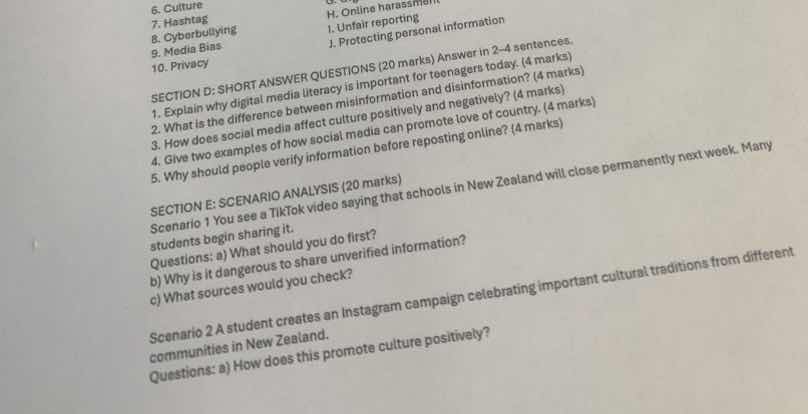
Question
section d: short answer questions (20 marks) answer in 2-4 sentences.
- explain why digital media literacy is important for teenagers today. (4 marks)
- what is the difference between misinformation and disinformation? (4 marks)
- how does social media affect culture positively and negatively? (4 marks)
- give two examples of how social media can promote love of country. (4 marks)
- why should people verify information before reposting online? (4 marks)
section e: scenario analysis (20 marks)
scenario 1 you see a tiktok video saying that schools in new zealand will close permanently next week. many students begin sharing it.
questions: a) what should you do first?
b) why is it dangerous to share unverified information?
c) what sources would you check?
scenario 2 a student creates an instagram campaign celebrating important cultural traditions from different communities in new zealand.
questions: a) how does this promote culture positively?
Analyze Section D: Short Answer Questions
Using the Digital Literacy and Media Literacy knowledge points
- Question 1: Digital media literacy is crucial for teenagers because they consume vast amounts of online content daily. It empowers them to critically evaluate sources, identify credible information, and protect themselves from online harms like scams or manipulation.
- Question 2: Misinformation is false or inaccurate information shared without harmful intent (e.g., a mistake or misunderstanding). Disinformation is false information deliberately created and spread to deceive, influence, or cause harm.
- Question 3: Positively, social media connects diverse communities, preserves cultural heritage, and amplifies marginalized voices. Negatively, it can promote cultural homogenization, spread harmful stereotypes, and foster echo chambers that polarize communities.
- Question 4: First, social media can be used to share national achievements, historical stories, or local community initiatives. Second, users can create campaigns celebrating national holidays, cultural events, or natural landscapes to foster a sense of shared identity.
- Question 5: Verifying information prevents the spread of harmful rumors, protects personal and public safety, and maintains the user's digital credibility. Sharing unverified news can cause unnecessary panic or damage reputations.
Analyze Section E: Scenario 1
Using the Online Safety and Digital Literacy knowledge points
- Question a: The first step is to pause and avoid sharing the video immediately until its claims can be verified through official sources.
- Question b: Sharing unverified information can cause widespread panic, disrupt school operations, and spread unnecessary anxiety among students, parents, and teachers.
- Question c: Reliable sources to check include official announcements from the Ministry of Education (New Zealand), reputable national news outlets (e.g., RNZ, Stuff, NZ Herald), or direct communications from individual school websites.
Analyze Section E: Scenario 2
Using the Media Literacy knowledge point
- Question a: This campaign promotes culture positively by fostering mutual respect, educating the public about diverse traditions, and celebrating multiculturalism to build an inclusive community.

Snap & solve any problem in the app
Get step-by-step solutions on Sovi AI
Photo-based solutions with guided steps
Explore more problems and detailed explanations
SECTION D: SHORT ANSWER QUESTIONS
Question 1
Digital media literacy is essential for teenagers today because they are primary consumers of online content, making them highly vulnerable to digital risks. Developing these skills enables them to critically analyze the credibility of online sources, protect their personal data, and make informed decisions in digital spaces.
Question 2
The primary difference lies in the intent behind the sharing. Misinformation refers to false or misleading information shared unintentionally without the intent to deceive, whereas disinformation is deliberately created and spread to mislead, manipulate, or cause harm.
Question 3
Social media affects culture positively by allowing global communities to share traditions, celebrate diversity, and preserve heritage. Conversely, it can have negative impacts by spreading cultural stereotypes, promoting unrealistic lifestyle standards, and creating polarized echo chambers.
Question 4
First, social media can be used to share educational content about a country's history, landmarks, and achievements. Second, users can launch collaborative online campaigns or hashtags celebrating national events, cultural festivals, and local community heroes.
Question 5
People should verify information before reposting to prevent the spread of harmful rumors and panic. Ensuring accuracy protects the safety of the community and helps individuals maintain a trustworthy digital footprint.
---
SECTION E: SCENARIO ANALYSIS
Scenario 1
Question a
You should stop and avoid sharing or liking the video immediately, taking time to verify the claim before reacting.
Question b
It is dangerous because it can cause widespread panic, anxiety, and confusion among students, parents, and school staff, potentially disrupting the education system based on a falsehood.
Question c
You should check official statements from the New Zealand Ministry of Education, updates on official school websites, and reports from trusted, mainstream news organizations.
Scenario 2
Question a
This campaign promotes culture positively by raising awareness of diverse traditions, fostering cross-cultural understanding, and encouraging mutual respect and inclusivity within the New Zealand community.