QUESTION IMAGE
Question
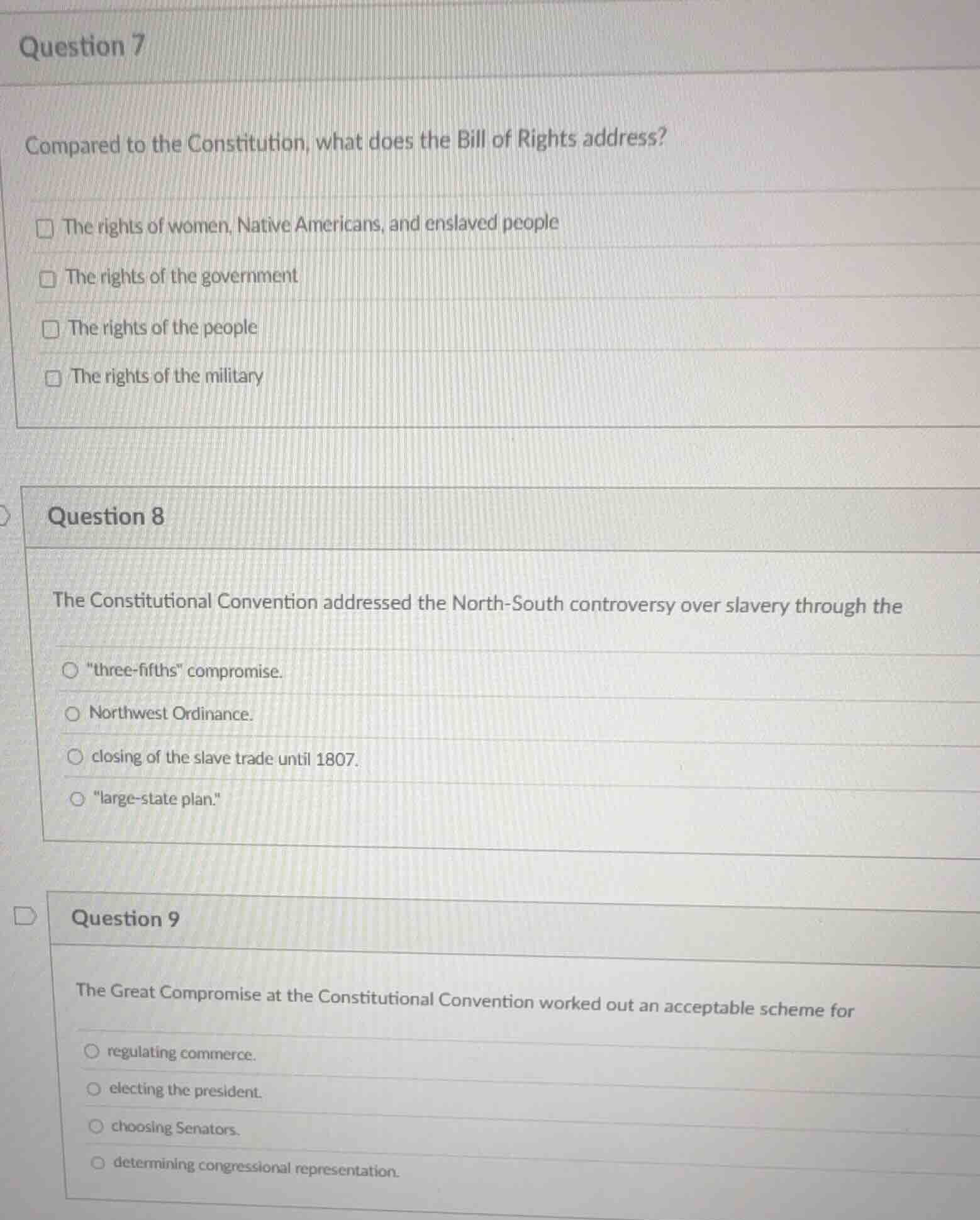
question 7
compared to the constitution, what does the bill of rights address?
the rights of women, native americans, and enslaved people
the rights of the government
the rights of the people
the rights of the military
question 8
the constitutional convention addressed the north-south controversy over slavery through the
\three-fifths\ compromise.
northwest ordinance.
closing of the slave trade until 1807.
\large-state plan.\
question 9
the great compromise at the constitutional convention worked out an acceptable scheme for
regulating commerce.
electing the president.
choosing senators.
determining congressional representation.
Analyze Question 7
The first question asks what the Bill of Rights addresses compared to the Constitution. The Constitution established the framework and powers of the federal government. Anti-Federalists argued that a Bill of Rights was necessary to protect individual liberties from government overreach. Thus, the Bill of Rights specifically addresses the rights of individual citizens (the people).
Analyze Question 8
The second question asks how the Constitutional Convention addressed the North-South controversy over slavery. The debate centered on whether enslaved individuals should be counted when determining a state's total population for legislative representation and taxation. This dispute was resolved by the "three-fifths" compromise, which counted three out of every five enslaved people for these purposes.
Analyze Question 9
The third question asks what acceptable scheme the Great Compromise worked out. During the Constitutional Convention, large states favored representation based on population (Virginia Plan), while small states wanted equal representation (New Jersey Plan). The Great Compromise (or Connecticut Compromise) resolved this by creating a bicameral legislature, thereby establishing the scheme for determining congressional representation.

Snap & solve any problem in the app
Get step-by-step solutions on Sovi AI
Photo-based solutions with guided steps
Explore more problems and detailed explanations
Question 7
- The rights of women, Native Americans, and enslaved people
- The rights of the government
- The rights of the people (Correct answer)
- The rights of the military
Question 8
- "three-fifths" compromise. (Correct answer)
- Northwest Ordinance.
- closing of the slave trade until 1807.
- "large-state plan."
Question 9
- regulating commerce.
- electing the president.
- choosing Senators.
- determining congressional representation. (Correct answer)