Sovi.AI - AI Math Tutor

Scan to solve math questions

QUESTION IMAGE

part b: arguments for each of the following, identify the type of argum…

Question

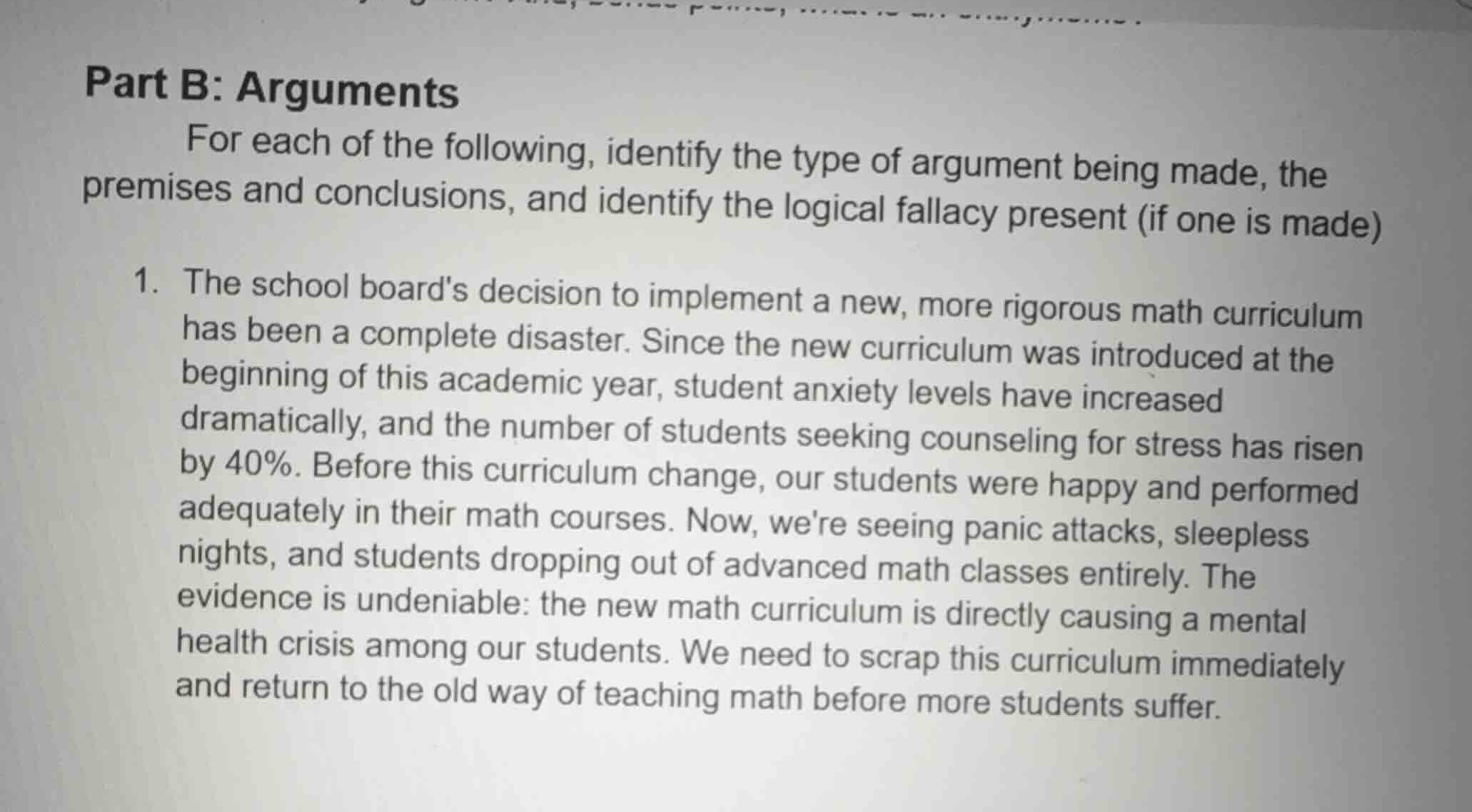
part b: arguments
for each of the following, identify the type of argument being made, the premises and conclusions, and identify the logical fallacy present (if one is made)

  1. the school boards decision to implement a new, more rigorous math curriculum has been a complete disaster. since the new curriculum was introduced at the beginning of this academic year, student anxiety levels have increased dramatically, and the number of students seeking counseling for stress has risen by 40%. before this curriculum change, our students were happy and performed adequately in their math courses. now, were seeing panic attacks, sleepless nights, and students dropping out of advanced math classes entirely. the evidence is undeniable: the new math curriculum is directly causing a mental health crisis among our students. we need to scrap this curriculum immediately and return to the old way of teaching math before more students suffer.

Explanation:

Response

<pre_analysis>
{
"quality": "clear",
"question_count": 1,
"skills_matched": [
"direct_cot",
"explain_then_answer",
"tutor",
"mastery_adaptive_brevity"
],
"needs_drawing": false,
"concepts_used": [
"Logical Fallacies"
],
"new_concepts": [
"Argument Analysis",
"Causal Fallacies"
],
"current_concepts": [
"Logical Fallacies",
"Argument Analysis",
"Causal Fallacies"
]
}
</pre_analysis>

<reasoning>

Identify the type of argument

Using the Logical Fallacies knowledge point
The argument is inductive, specifically a causal argument. It attempts to establish a cause-and-effect relationship between the introduction of the new math curriculum and the rise in student mental health issues based on chronological correlation.

Identify the premises

Using the Logical Fallacies knowledge point

  • Premise 1: Since the new curriculum was introduced at the beginning of this academic year, student anxiety levels have increased dramatically, and the number of students seeking counseling for stress has risen by 40%.
  • Premise 2: Before this curriculum change, students were happy and performed adequately in their math courses.
  • Premise 3: Now, students are experiencing panic attacks, sleepless nights, and are dropping out of advanced math classes.

Identify the conclusion

Using the Logical Fallacies knowledge point

  • Primary Conclusion: The new math curriculum is directly causing a mental health crisis among our students.
  • Actionable Conclusion: We need to scrap this curriculum immediately and return to the old way of teaching math.

Identify the logical fallacy

Using the Logical Fallacies knowledge point
The argument commits the post hoc ergo propter hoc (false cause) fallacy. It assumes that because the rise in student anxiety occurred after the introduction of the new curriculum, the curriculum must be the direct cause of the anxiety, ignoring other potential contributing factors.
</reasoning>

<answer>

  • Type of Argument: Inductive (Causal Argument)
  • Premises:
  1. Since the introduction of the new math curriculum this academic year, student anxiety has increased dramatically, and counseling visits for stress have risen by 40%.
  2. Prior to the change, students were happy and performed adequately in math.
  3. Currently, students are experiencing panic attacks, sleeplessness, and are dropping out of advanced math classes.
  • Conclusion: The new math curriculum is directly causing a mental health crisis among students, and it must be scrapped immediately in favor of the old curriculum.
  • Logical Fallacy: Post hoc ergo propter hoc (False Cause / Questionable Cause). The argument assumes chronological sequence equals causal connection without ruling out other variables.

</answer>

<post_analysis>
{
"subject": "Social Science",
"question_type": "Free Response",
"knowledge_point": [
"Social Science",
"Philosophy",
"Logical Fallacies"
]
}
</post_analysis>

Answer:

<pre_analysis>
{
"quality": "clear",
"question_count": 1,
"skills_matched": [
"direct_cot",
"explain_then_answer",
"tutor",
"mastery_adaptive_brevity"
],
"needs_drawing": false,
"concepts_used": [
"Logical Fallacies"
],
"new_concepts": [
"Argument Analysis",
"Causal Fallacies"
],
"current_concepts": [
"Logical Fallacies",
"Argument Analysis",
"Causal Fallacies"
]
}
</pre_analysis>

<reasoning>

Identify the type of argument

Using the Logical Fallacies knowledge point
The argument is inductive, specifically a causal argument. It attempts to establish a cause-and-effect relationship between the introduction of the new math curriculum and the rise in student mental health issues based on chronological correlation.

Identify the premises

Using the Logical Fallacies knowledge point

  • Premise 1: Since the new curriculum was introduced at the beginning of this academic year, student anxiety levels have increased dramatically, and the number of students seeking counseling for stress has risen by 40%.
  • Premise 2: Before this curriculum change, students were happy and performed adequately in their math courses.
  • Premise 3: Now, students are experiencing panic attacks, sleepless nights, and are dropping out of advanced math classes.

Identify the conclusion

Using the Logical Fallacies knowledge point

  • Primary Conclusion: The new math curriculum is directly causing a mental health crisis among our students.
  • Actionable Conclusion: We need to scrap this curriculum immediately and return to the old way of teaching math.

Identify the logical fallacy

Using the Logical Fallacies knowledge point
The argument commits the post hoc ergo propter hoc (false cause) fallacy. It assumes that because the rise in student anxiety occurred after the introduction of the new curriculum, the curriculum must be the direct cause of the anxiety, ignoring other potential contributing factors.
</reasoning>

<answer>

  • Type of Argument: Inductive (Causal Argument)
  • Premises:
  1. Since the introduction of the new math curriculum this academic year, student anxiety has increased dramatically, and counseling visits for stress have risen by 40%.
  2. Prior to the change, students were happy and performed adequately in math.
  3. Currently, students are experiencing panic attacks, sleeplessness, and are dropping out of advanced math classes.
  • Conclusion: The new math curriculum is directly causing a mental health crisis among students, and it must be scrapped immediately in favor of the old curriculum.
  • Logical Fallacy: Post hoc ergo propter hoc (False Cause / Questionable Cause). The argument assumes chronological sequence equals causal connection without ruling out other variables.

</answer>

<post_analysis>
{
"subject": "Social Science",
"question_type": "Free Response",
"knowledge_point": [
"Social Science",
"Philosophy",
"Logical Fallacies"
]
}
</post_analysis>