Sovi.AI - AI Math Tutor

Scan to solve math questions

QUESTION IMAGE

what effects do modern farming techniques have on world biodiversity? c…

Question

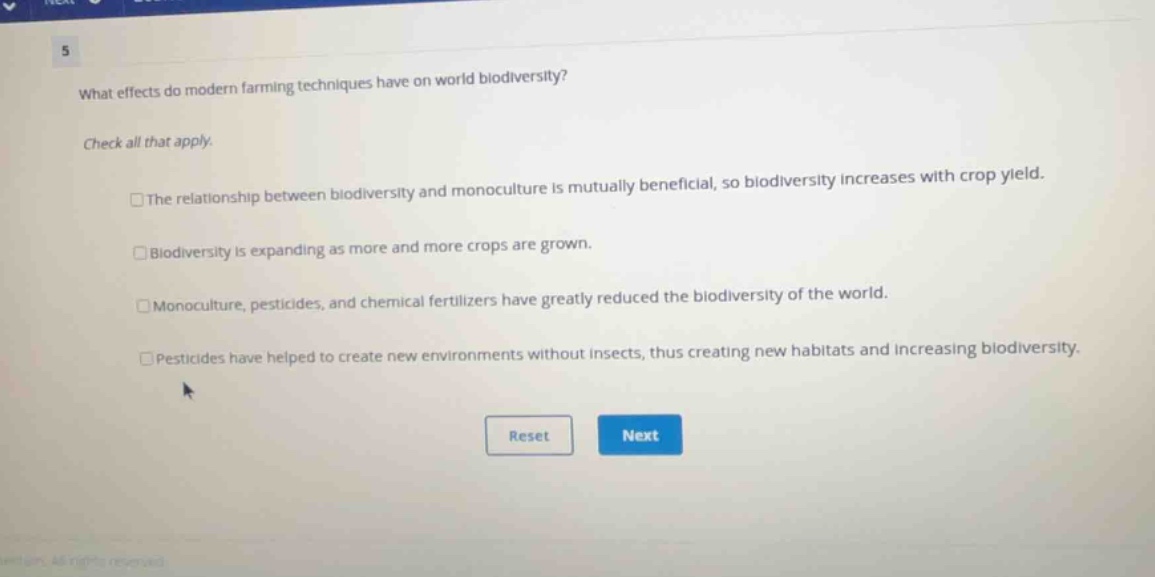
what effects do modern farming techniques have on world biodiversity?

check all that apply.

  • the relationship between biodiversity and monoculture is mutually beneficial, so biodiversity increases with crop yield.
  • biodiversity is expanding as more and more crops are grown.
  • monoculture, pesticides, and chemical fertilizers have greatly reduced the biodiversity of the world.
  • pesticides have helped to create new environments without insects, thus creating new habitats and increasing biodiversity.

Explanation:

Response

<pre_analysis>
{
"quality": "clear",
"question_count": 1,
"skills_matched": [
"direct_cot",
"multiple_choice_formatter",
"explain_then_answer",
"quick"
],
"needs_drawing": false,
"concepts_used": [
"Farming Practices"
],
"new_concepts": [
"Agricultural Biodiversity",
"Monoculture Impact"
],
"current_concepts": [
"Farming Practices",
"Agricultural Biodiversity",
"Monoculture Impact"
]
}
</pre_analysis>

<reasoning>

Analyze the impact of modern farming on biodiversity

Modern agricultural practices such as monoculture (growing a single crop over a wide area), heavy pesticide use, and chemical fertilizers simplify ecosystems, eliminate native plant and insect species, and disrupt local food webs, leading to a significant reduction in global biodiversity.

Evaluate the given statements

  • Statement 1 claims monoculture and biodiversity are mutually beneficial, which is false because monoculture reduces genetic and species diversity.
  • Statement 2 claims biodiversity is expanding, which is false as modern intensive farming is a primary driver of biodiversity loss.
  • Statement 3 correctly identifies that monoculture, pesticides, and chemical fertilizers have greatly reduced global biodiversity.
  • Statement 4 claims pesticides increase biodiversity by creating insect-free environments, which is false because removing insects reduces biodiversity and disrupts ecosystems.

</reasoning>

<answer>
<mcq-option>The relationship between biodiversity and monoculture is mutually beneficial, so biodiversity increases with crop yield.</mcq-option>
<mcq-option>Biodiversity is expanding as more and more crops are grown.</mcq-option>
<mcq-correct>Monoculture, pesticides, and chemical fertilizers have greatly reduced the biodiversity of the world.</mcq-correct>
<mcq-option>Pesticides have helped to create new environments without insects, thus creating new habitats and increasing biodiversity.</mcq-option>
</answer>

<post_analysis>
{
"subject": "Natural Science",
"question_type": "Multiple Choice",
"knowledge_point": [
"Natural Science",
"Environmental Science",
"Agricultural Biodiversity"
]
}
</post_analysis>

Answer:

<pre_analysis>
{
"quality": "clear",
"question_count": 1,
"skills_matched": [
"direct_cot",
"multiple_choice_formatter",
"explain_then_answer",
"quick"
],
"needs_drawing": false,
"concepts_used": [
"Farming Practices"
],
"new_concepts": [
"Agricultural Biodiversity",
"Monoculture Impact"
],
"current_concepts": [
"Farming Practices",
"Agricultural Biodiversity",
"Monoculture Impact"
]
}
</pre_analysis>

<reasoning>

Analyze the impact of modern farming on biodiversity

Modern agricultural practices such as monoculture (growing a single crop over a wide area), heavy pesticide use, and chemical fertilizers simplify ecosystems, eliminate native plant and insect species, and disrupt local food webs, leading to a significant reduction in global biodiversity.

Evaluate the given statements

  • Statement 1 claims monoculture and biodiversity are mutually beneficial, which is false because monoculture reduces genetic and species diversity.
  • Statement 2 claims biodiversity is expanding, which is false as modern intensive farming is a primary driver of biodiversity loss.
  • Statement 3 correctly identifies that monoculture, pesticides, and chemical fertilizers have greatly reduced global biodiversity.
  • Statement 4 claims pesticides increase biodiversity by creating insect-free environments, which is false because removing insects reduces biodiversity and disrupts ecosystems.

</reasoning>

<answer>
<mcq-option>The relationship between biodiversity and monoculture is mutually beneficial, so biodiversity increases with crop yield.</mcq-option>
<mcq-option>Biodiversity is expanding as more and more crops are grown.</mcq-option>
<mcq-correct>Monoculture, pesticides, and chemical fertilizers have greatly reduced the biodiversity of the world.</mcq-correct>
<mcq-option>Pesticides have helped to create new environments without insects, thus creating new habitats and increasing biodiversity.</mcq-option>
</answer>

<post_analysis>
{
"subject": "Natural Science",
"question_type": "Multiple Choice",
"knowledge_point": [
"Natural Science",
"Environmental Science",
"Agricultural Biodiversity"
]
}
</post_analysis>