Sovi.AI - AI Math Tutor

Scan to solve math questions

QUESTION IMAGE

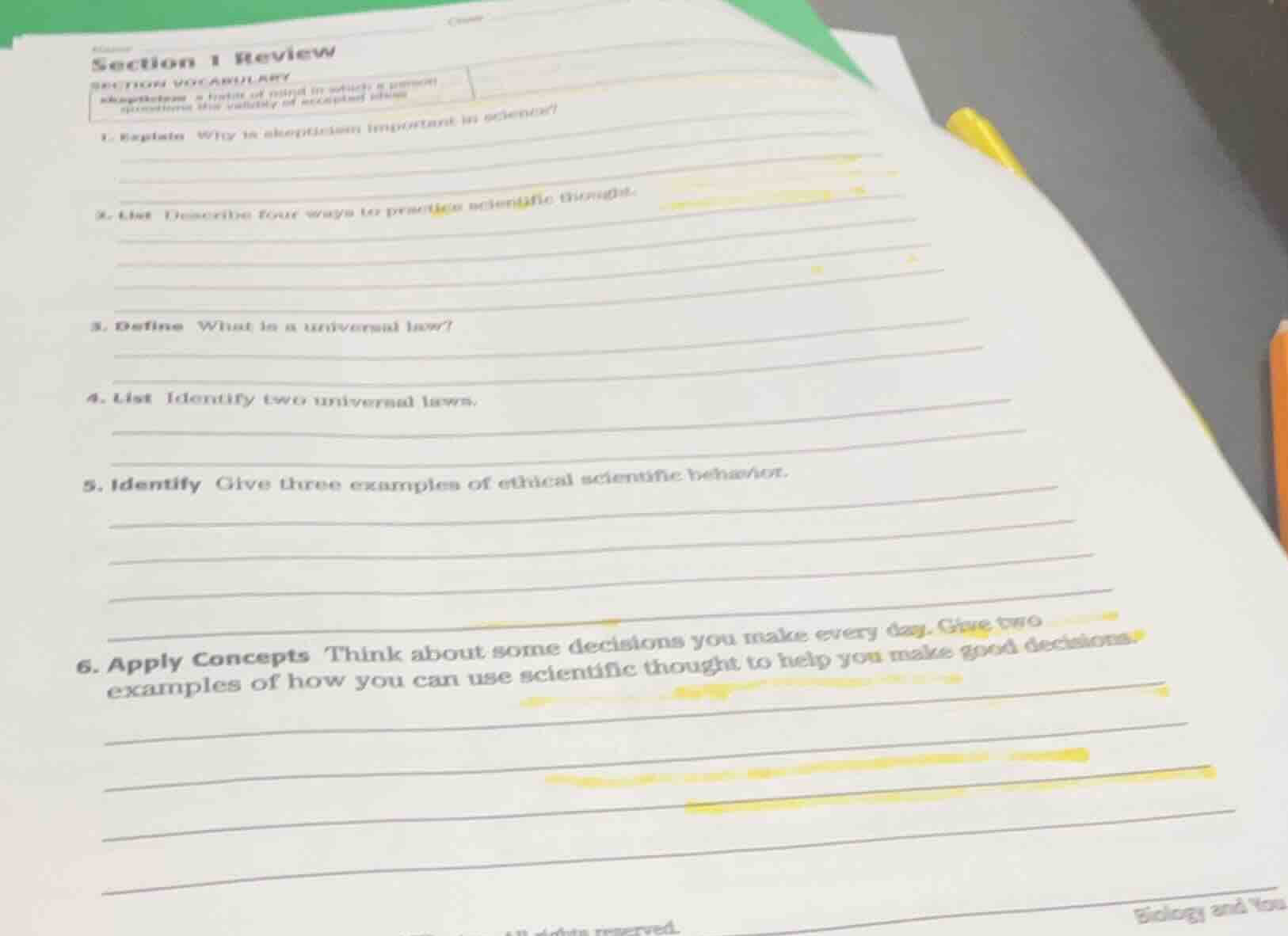
section 1 review section vocabulary skepticism a habit of mind in which…

Question

section 1 review
section vocabulary
skepticism a habit of mind in which a person questions the validity of accepted ideas

  1. explain why is skepticism important in science?
  2. list describe four ways to practice scientific thought.
  3. define what is a universal law?
  4. list identify two universal laws.
  5. identify give three examples of ethical scientific behavior.
  6. apply concepts think about some decisions you make every day. give two examples of how you can use scientific thought to help you make good decisions.

Explanation:

Response

<pre_analysis>
{
"quality": "clear",
"question_count": 6,
"skills_matched": [
"direct_cot",
"explain_then_answer",
"quick"
],
"needs_drawing": false,
"concepts_used": [
"Scientific Skepticism",
"Scientific Ethics"
],
"new_concepts": [
"Scientific Thought",
"Universal Laws"
],
"current_concepts": [
"Scientific Skepticism",
"Scientific Thought",
"Universal Laws",
"Scientific Ethics"
]
}
</pre_analysis>

<reasoning>

Importance of skepticism in science

Skepticism prevents the acceptance of unsupported claims, ensuring scientific conclusions are based on verifiable evidence.

Ways to practice scientific thought

  1. Observing and asking questions.
  2. Designing experiments to test hypotheses.
  3. Analyzing data objectively.
  4. Thinking creatively and critically.

Definition of a universal law

A universal law is a scientific principle or theory that applies everywhere in the universe at all times.

Examples of universal laws

  1. The law of gravity.
  2. The law of conservation of energy.

Examples of ethical scientific behavior

  1. Reporting data honestly and accurately.
  2. Giving proper credit to other researchers' work.
  3. Ensuring the safety and well-being of research subjects.

Applying scientific thought to daily decisions

  1. Evaluating the claims of advertising by looking for objective evidence.
  2. Analyzing nutritional information to make healthier dietary choices.

</reasoning>

<answer>

Question 1

Skepticism ensures that scientific claims are thoroughly tested and supported by evidence before they are accepted.

Question 2

  1. Making observations and asking questions.
  2. Designing experiments to test hypotheses.
  3. Analyzing data and drawing evidence-based conclusions.
  4. Thinking critically and remaining open to new ideas.

Question 3

A universal law is a scientific truth or principle that is valid throughout the universe.

Question 4

  1. Law of Gravity
  2. Law of Conservation of Energy

Question 5

  1. Reporting experimental data honestly without fabrication.
  2. Crediting other scientists for their contributions.
  3. Obtaining informed consent from human participants.

Question 6

  1. Using evidence and critical thinking to evaluate the claims of commercial products before buying them.
  2. Analyzing nutritional data and scientific facts to make informed dietary and health choices.

</answer>

<post_analysis>
{
"subject": "Natural Science",
"question_type": "Multi-part",
"knowledge_point": [
"Natural Science",
"Scientific Method",
"Scientific Thought and Ethics"
]
}
</post_analysis>

Answer:

<pre_analysis>
{
"quality": "clear",
"question_count": 6,
"skills_matched": [
"direct_cot",
"explain_then_answer",
"quick"
],
"needs_drawing": false,
"concepts_used": [
"Scientific Skepticism",
"Scientific Ethics"
],
"new_concepts": [
"Scientific Thought",
"Universal Laws"
],
"current_concepts": [
"Scientific Skepticism",
"Scientific Thought",
"Universal Laws",
"Scientific Ethics"
]
}
</pre_analysis>

<reasoning>

Importance of skepticism in science

Skepticism prevents the acceptance of unsupported claims, ensuring scientific conclusions are based on verifiable evidence.

Ways to practice scientific thought

  1. Observing and asking questions.
  2. Designing experiments to test hypotheses.
  3. Analyzing data objectively.
  4. Thinking creatively and critically.

Definition of a universal law

A universal law is a scientific principle or theory that applies everywhere in the universe at all times.

Examples of universal laws

  1. The law of gravity.
  2. The law of conservation of energy.

Examples of ethical scientific behavior

  1. Reporting data honestly and accurately.
  2. Giving proper credit to other researchers' work.
  3. Ensuring the safety and well-being of research subjects.

Applying scientific thought to daily decisions

  1. Evaluating the claims of advertising by looking for objective evidence.
  2. Analyzing nutritional information to make healthier dietary choices.

</reasoning>

<answer>

Question 1

Skepticism ensures that scientific claims are thoroughly tested and supported by evidence before they are accepted.

Question 2

  1. Making observations and asking questions.
  2. Designing experiments to test hypotheses.
  3. Analyzing data and drawing evidence-based conclusions.
  4. Thinking critically and remaining open to new ideas.

Question 3

A universal law is a scientific truth or principle that is valid throughout the universe.

Question 4

  1. Law of Gravity
  2. Law of Conservation of Energy

Question 5

  1. Reporting experimental data honestly without fabrication.
  2. Crediting other scientists for their contributions.
  3. Obtaining informed consent from human participants.

Question 6

  1. Using evidence and critical thinking to evaluate the claims of commercial products before buying them.
  2. Analyzing nutritional data and scientific facts to make informed dietary and health choices.

</answer>

<post_analysis>
{
"subject": "Natural Science",
"question_type": "Multi-part",
"knowledge_point": [
"Natural Science",
"Scientific Method",
"Scientific Thought and Ethics"
]
}
</post_analysis>