Sovi.AI - AI Math Tutor

Scan to solve math questions

QUESTION IMAGE

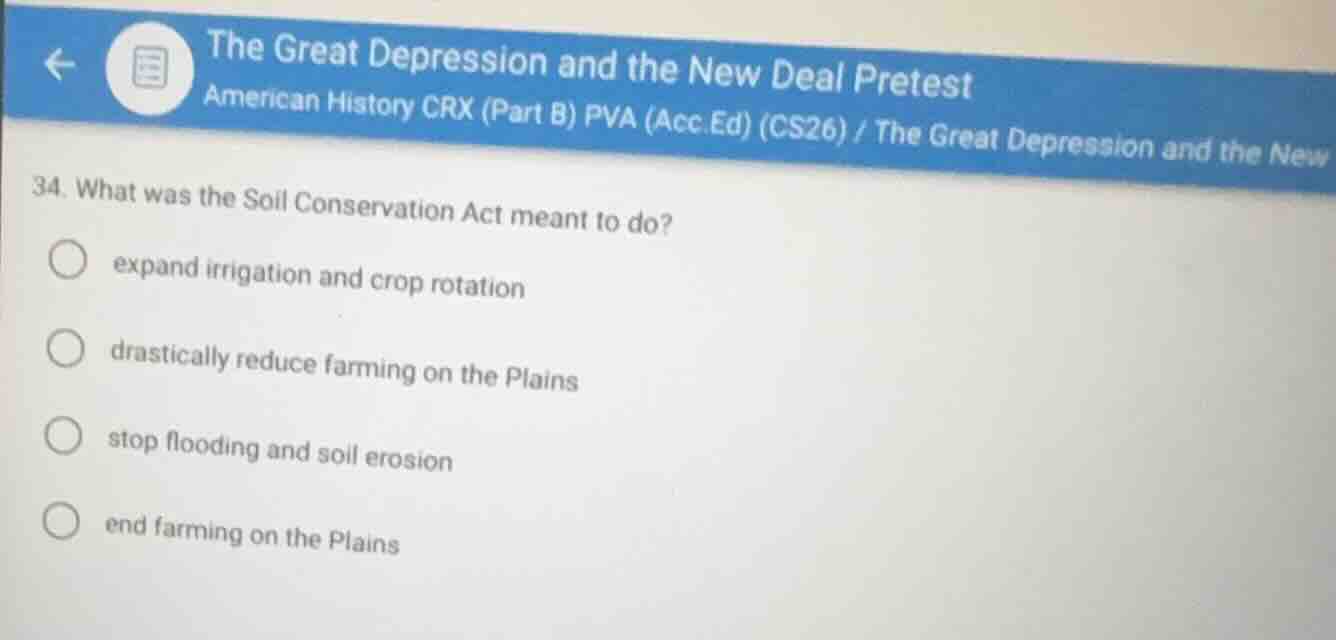
34. what was the soil conservation act meant to do? expand irrigation a…

Question

  1. what was the soil conservation act meant to do?

expand irrigation and crop rotation
drastically reduce farming on the plains
stop flooding and soil erosion
end farming on the plains

Explanation:

Response

<pre_analysis>
{
"quality": "clear",
"question_count": 1,
"skills_matched": [
"direct_cot",
"multiple_choice_formatter",
"explain_then_answer",
"tutor"
],
"needs_drawing": false,
"concepts_used": [],
"new_concepts": [
"Soil Conservation Act",
"New Deal Agriculture",
"Dust Bowl Response"
],
"current_concepts": [
"Soil Conservation Act",
"New Deal Agriculture",
"Dust Bowl Response"
]
}
</pre_analysis>

<reasoning>

Identify the historical context of the legislation

The Soil Conservation and Domestic Allotment Act was passed by Congress in 1936 during the Franklin D. Roosevelt administration. This legislation was a direct response to the ecological and economic devastation of the Dust Bowl, which severely affected the Great Plains region of the United States.

Analyze the primary goals of the Act

The severe dust storms of the 1930s were caused by a combination of prolonged drought and poor agricultural practices that left topsoil vulnerable to wind erosion. The Soil Conservation Act aimed to address these environmental issues by paying farmers to reduce production of soil-depleting crops (such as wheat and cotton) and instead plant soil-conserving grasses and legumes. This strategy was designed to prevent soil erosion, improve soil fertility, and help control flooding by restoring natural vegetation.

Evaluate the given multiple-choice options

  • expand irrigation and crop rotation: While crop rotation was encouraged, expanding large-scale irrigation was not the primary legislative mandate of this specific conservation act.
  • drastically reduce farming on the Plains: The act aimed to reform farming practices and conserve soil, not to drastically eliminate or shut down farming across the Great Plains.
  • stop flooding and soil erosion: This directly aligns with the core purpose of the act, which sought to combat the devastating wind and water erosion of topsoil and manage water runoff to prevent flooding.
  • end farming on the Plains: This is an extreme option; the federal government sought to make farming sustainable, not to end it.

</reasoning>

<answer>
<mcq-option>(A) expand irrigation and crop rotation</mcq-option>
<mcq-option>(B) drastically reduce farming on the Plains</mcq-option>
<mcq-correct>(C) stop flooding and soil erosion</mcq-correct>
<mcq-option>(D) end farming on the Plains</mcq-option>
</answer>

<post_analysis>
{
"subject": "Social Science",
"question_type": "Multiple Choice",
"knowledge_point": [
"Social Science",
"US History",
"New Deal Legislation"
]
}
</post_analysis>

Answer:

<pre_analysis>
{
"quality": "clear",
"question_count": 1,
"skills_matched": [
"direct_cot",
"multiple_choice_formatter",
"explain_then_answer",
"tutor"
],
"needs_drawing": false,
"concepts_used": [],
"new_concepts": [
"Soil Conservation Act",
"New Deal Agriculture",
"Dust Bowl Response"
],
"current_concepts": [
"Soil Conservation Act",
"New Deal Agriculture",
"Dust Bowl Response"
]
}
</pre_analysis>

<reasoning>

Identify the historical context of the legislation

The Soil Conservation and Domestic Allotment Act was passed by Congress in 1936 during the Franklin D. Roosevelt administration. This legislation was a direct response to the ecological and economic devastation of the Dust Bowl, which severely affected the Great Plains region of the United States.

Analyze the primary goals of the Act

The severe dust storms of the 1930s were caused by a combination of prolonged drought and poor agricultural practices that left topsoil vulnerable to wind erosion. The Soil Conservation Act aimed to address these environmental issues by paying farmers to reduce production of soil-depleting crops (such as wheat and cotton) and instead plant soil-conserving grasses and legumes. This strategy was designed to prevent soil erosion, improve soil fertility, and help control flooding by restoring natural vegetation.

Evaluate the given multiple-choice options

  • expand irrigation and crop rotation: While crop rotation was encouraged, expanding large-scale irrigation was not the primary legislative mandate of this specific conservation act.
  • drastically reduce farming on the Plains: The act aimed to reform farming practices and conserve soil, not to drastically eliminate or shut down farming across the Great Plains.
  • stop flooding and soil erosion: This directly aligns with the core purpose of the act, which sought to combat the devastating wind and water erosion of topsoil and manage water runoff to prevent flooding.
  • end farming on the Plains: This is an extreme option; the federal government sought to make farming sustainable, not to end it.

</reasoning>

<answer>
<mcq-option>(A) expand irrigation and crop rotation</mcq-option>
<mcq-option>(B) drastically reduce farming on the Plains</mcq-option>
<mcq-correct>(C) stop flooding and soil erosion</mcq-correct>
<mcq-option>(D) end farming on the Plains</mcq-option>
</answer>

<post_analysis>
{
"subject": "Social Science",
"question_type": "Multiple Choice",
"knowledge_point": [
"Social Science",
"US History",
"New Deal Legislation"
]
}
</post_analysis>