QUESTION IMAGE
Question
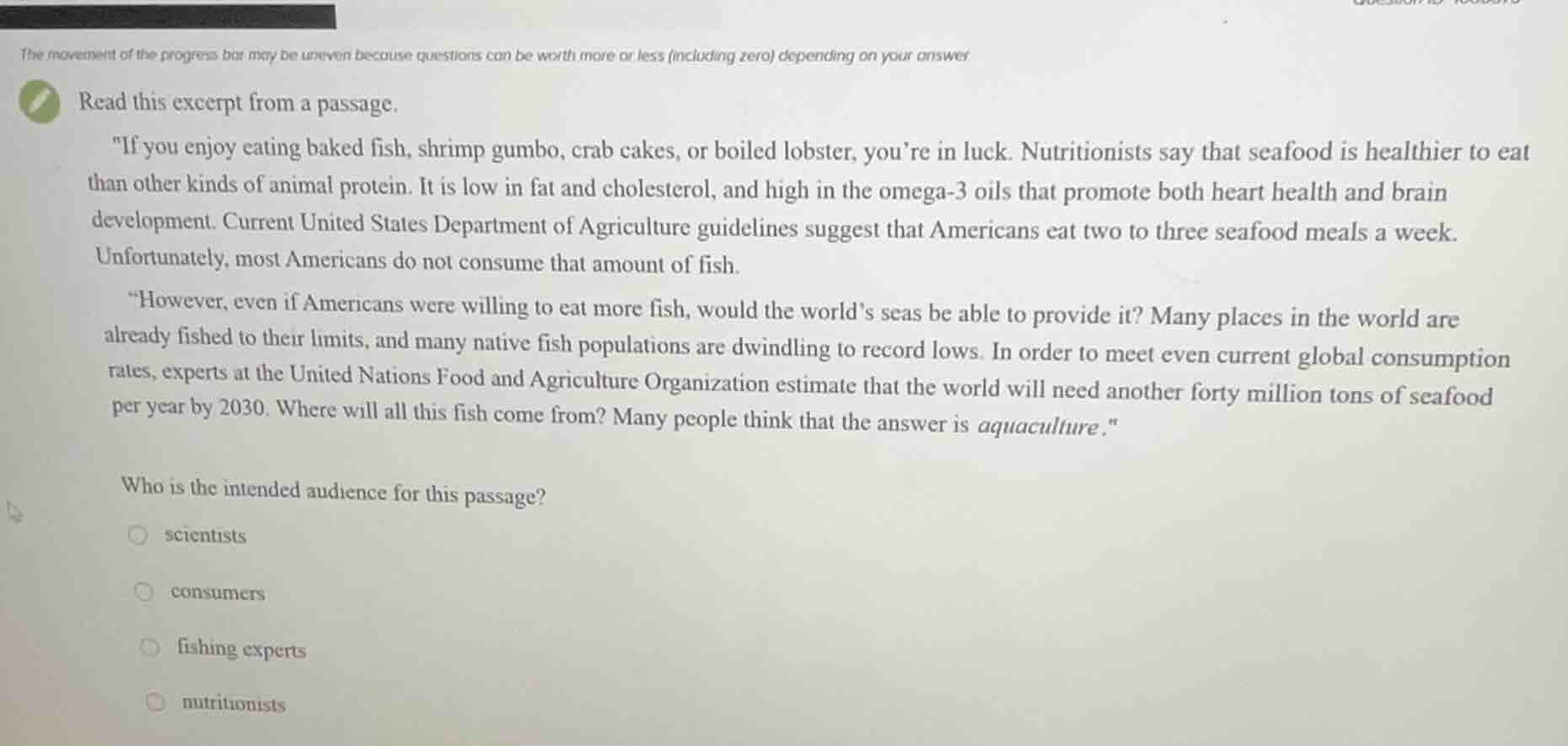
read this excerpt from a passage.
\if you enjoy eating baked fish, shrimp gumbo, crab cakes, or boiled lobster, youre in luck. nutritionists say that seafood is healthier to eat than other kinds of animal protein. it is low in fat and cholesterol, and high in the omega-3 oils that promote both heart health and brain development. current united states department of agriculture guidelines suggest that americans eat two to three seafood meals a week. unfortunately, most americans do not consume that amount of fish.
\however, even if americans were willing to eat more fish, would the worlds seas be able to provide it? many places in the world are already fished to their limits, and many native fish populations are dwindling to record lows. in order to meet even current global consumption rates, experts at the united nations food and agriculture organization estimate that the world will need another forty million tons of seafood per year by 2030. where will all this fish come from? many people think that the answer is aquaculture.\
who is the intended audience for this passage?
scientists
consumers
fishing experts
nutritionists
Analyze the opening hook
The passage begins by addressing the reader directly: "If you enjoy eating baked fish, shrimp gumbo, crab cakes, or boiled lobster, you're in luck." This direct address ("you") targets general individuals who eat or purchase food, rather than specialized professionals.
Evaluate the level of detail
The text explains basic health benefits of seafood (low in fat, high in omega-3) and references general dietary guidelines. This introductory, non-technical explanation is designed for general public understanding rather than specialists like nutritionists or scientists, who would already know these basic facts.
Examine the central conflict
The second paragraph discusses the supply issue of meeting seafood demand and introduces "aquaculture" as a potential solution. This broad overview of food consumption and sustainability is aimed at educating the general public, who are the primary consumers of these seafood products.
Match with the options
Using Reading Comprehension, we evaluate the choices:
- scientists: Too specialized; the language is simple and introductory.
- consumers: Correct; the passage addresses general eaters ("you") and discusses their dietary habits and food sources.
- fishing experts: Too specialized; the text introduces basic sustainability issues rather than technical fishery management.
- nutritionists: Incorrect; the text cites what "nutritionists say" to inform the reader, meaning nutritionists are the source, not the intended audience.

Snap & solve any problem in the app
Get step-by-step solutions on Sovi AI
Photo-based solutions with guided steps
Explore more problems and detailed explanations
- scientists
- consumers (Correct answer)
- fishing experts
- nutritionists