QUESTION IMAGE
Question
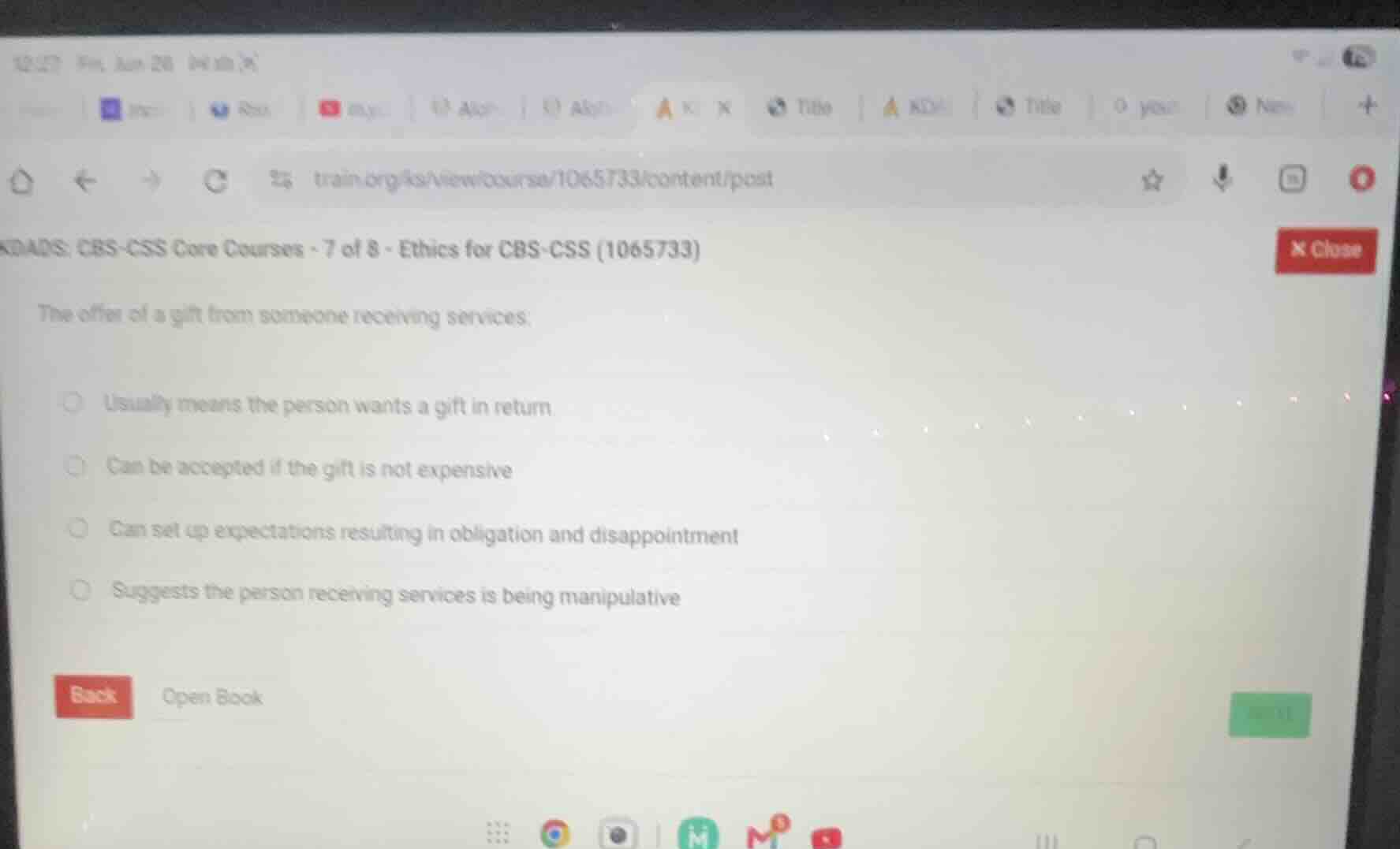
the offer of a gift from someone receiving services:
usually means the person wants a gift in return
can be accepted if the gift is not expensive
can set up expectations resulting in obligation and disappointment
suggests the person receiving services is being manipulative
Analyze the ethical implications of accepting gifts
In community-based and social services, receiving a gift from a client (someone receiving services) introduces potential boundary issues. It can create an unspoken dynamic of reciprocity, expectation, or obligation between the provider and the client, which can lead to professional boundary confusion and eventual disappointment.
Evaluate the given options
- Option 1 ("Usually means the person wants a gift in return") is an overgeneralization and often inaccurate regarding client intentions.
- Option 2 ("Can be accepted if the gift is not expensive") is incorrect because even inexpensive gifts can compromise professional boundaries depending on the context.
- Option 3 ("Can set up expectations resulting in obligation and disappointment") accurately describes the primary ethical concern regarding boundary maintenance and role clarity.
- Option 4 ("Suggests the person receiving services is being manipulative") is a clinical assumption that unfairly stereotypes the client's intent.

Snap & solve any problem in the app
Get step-by-step solutions on Sovi AI
Photo-based solutions with guided steps
Explore more problems and detailed explanations
- (A) Usually means the person wants a gift in return
- (B) Can be accepted if the gift is not expensive
- (C) Can set up expectations resulting in obligation and disappointment (Correct answer)
- (D) Suggests the person receiving services is being manipulative