QUESTION IMAGE
Question
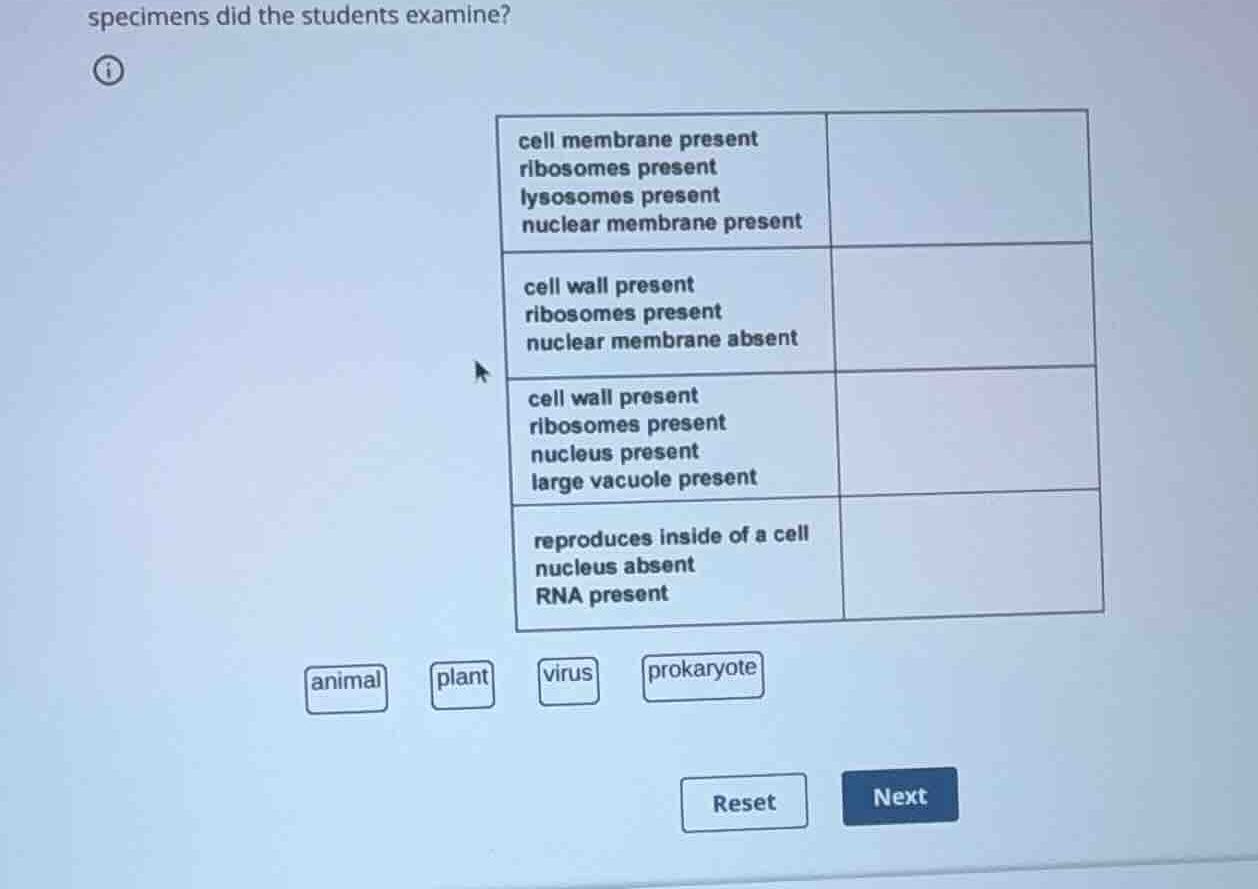
specimens did the students examine?
cell membrane present
ribosomes present
lysosomes present
nuclear membrane present
cell wall present
ribosomes present
nuclear membrane absent
cell wall present
ribosomes present
nucleus present
large vacuole present
reproduces inside of a cell
nucleus absent
rna present
animal plant virus prokaryote
<pre_analysis>
{
"quality": "clear",
"question_count": 1,
"skills_matched": [
"direct_cot",
"table_formatter",
"explain_then_answer",
"tutor",
"mastery_adaptive_brevity"
],
"needs_drawing": false,
"concepts_used": [
"Prokaryotic Cells",
"Viral Classification"
],
"new_concepts": [
"Cellular Organelles",
"Taxonomic Classification"
],
"current_concepts": [
"Prokaryotic Cells",
"Viral Classification",
"Cellular Organelles",
"Taxonomic Classification"
]
}
</pre_analysis>
<reasoning>
Identificar el primer espécimen
Using the Prokaryotic Cells knowledge point
- Características: membrana celular presente, ribosomas presentes, lisosomas presentes, membrana nuclear presente.
- Análisis: La presencia de una membrana nuclear (núcleo) y lisosomas indica que es una célula eucariota. Al no tener pared celular ni gran vacuola, corresponde a una célula animal.
Identificar el segundo espécimen
Using the Prokaryotic Cells knowledge point
- Características: pared celular presente, ribosomas presentes, membrana nuclear ausente.
- Análisis: La ausencia de membrana nuclear (núcleo) define a un organismo procariota. Las bacterias poseen pared celular y ribosomas, pero carecen de núcleo.
Identificar el tercer espécimen
Using the Prokaryotic Cells knowledge point
- Características: pared celular presente, ribosomas presentes, núcleo presente, gran vacuola presente.
- Análisis: La presencia de núcleo, pared celular y una gran vacuola central es la combinación clásica que define a una célula vegetal (plant).
Identificar el cuarto espécimen
Using the Viral Classification knowledge point
- Características: se reproduce dentro de una célula, núcleo ausente, ARN presente.
- Análisis: Un agente acelular que requiere obligatoriamente la maquinaria de una célula hospedadora para replicarse (reproduce inside of a cell) y que contiene material genético (como ARN) sin estructura celular es un virus.
</reasoning>
<answer>
| Características | Clasificación |
|---|---|
| cell wall present<br>ribosomes present<br>nuclear membrane absent | prokaryote |
| cell wall present<br>ribosomes present<br>nucleus present<br>large vacuole present | plant |
| reproduces inside of a cell<br>nucleus absent<br>RNA present | virus |
</answer>
<post_analysis>
{
"subject": "Natural Science",
"question_type": "Fill-in-the-blank",
"knowledge_point": [
"Natural Science",
"Biology",
"Cell Biology"
]
}
</post_analysis>
Snap & solve any problem in the app
Get step-by-step solutions on Sovi AI
Photo-based solutions with guided steps
Explore more problems and detailed explanations
<pre_analysis>
{
"quality": "clear",
"question_count": 1,
"skills_matched": [
"direct_cot",
"table_formatter",
"explain_then_answer",
"tutor",
"mastery_adaptive_brevity"
],
"needs_drawing": false,
"concepts_used": [
"Prokaryotic Cells",
"Viral Classification"
],
"new_concepts": [
"Cellular Organelles",
"Taxonomic Classification"
],
"current_concepts": [
"Prokaryotic Cells",
"Viral Classification",
"Cellular Organelles",
"Taxonomic Classification"
]
}
</pre_analysis>
<reasoning>
Identificar el primer espécimen
Using the Prokaryotic Cells knowledge point
- Características: membrana celular presente, ribosomas presentes, lisosomas presentes, membrana nuclear presente.
- Análisis: La presencia de una membrana nuclear (núcleo) y lisosomas indica que es una célula eucariota. Al no tener pared celular ni gran vacuola, corresponde a una célula animal.
Identificar el segundo espécimen
Using the Prokaryotic Cells knowledge point
- Características: pared celular presente, ribosomas presentes, membrana nuclear ausente.
- Análisis: La ausencia de membrana nuclear (núcleo) define a un organismo procariota. Las bacterias poseen pared celular y ribosomas, pero carecen de núcleo.
Identificar el tercer espécimen
Using the Prokaryotic Cells knowledge point
- Características: pared celular presente, ribosomas presentes, núcleo presente, gran vacuola presente.
- Análisis: La presencia de núcleo, pared celular y una gran vacuola central es la combinación clásica que define a una célula vegetal (plant).
Identificar el cuarto espécimen
Using the Viral Classification knowledge point
- Características: se reproduce dentro de una célula, núcleo ausente, ARN presente.
- Análisis: Un agente acelular que requiere obligatoriamente la maquinaria de una célula hospedadora para replicarse (reproduce inside of a cell) y que contiene material genético (como ARN) sin estructura celular es un virus.
</reasoning>
<answer>
| Características | Clasificación |
|---|---|
| cell wall present<br>ribosomes present<br>nuclear membrane absent | prokaryote |
| cell wall present<br>ribosomes present<br>nucleus present<br>large vacuole present | plant |
| reproduces inside of a cell<br>nucleus absent<br>RNA present | virus |
</answer>
<post_analysis>
{
"subject": "Natural Science",
"question_type": "Fill-in-the-blank",
"knowledge_point": [
"Natural Science",
"Biology",
"Cell Biology"
]
}
</post_analysis>