QUESTION IMAGE
Question
select all the correct answers.
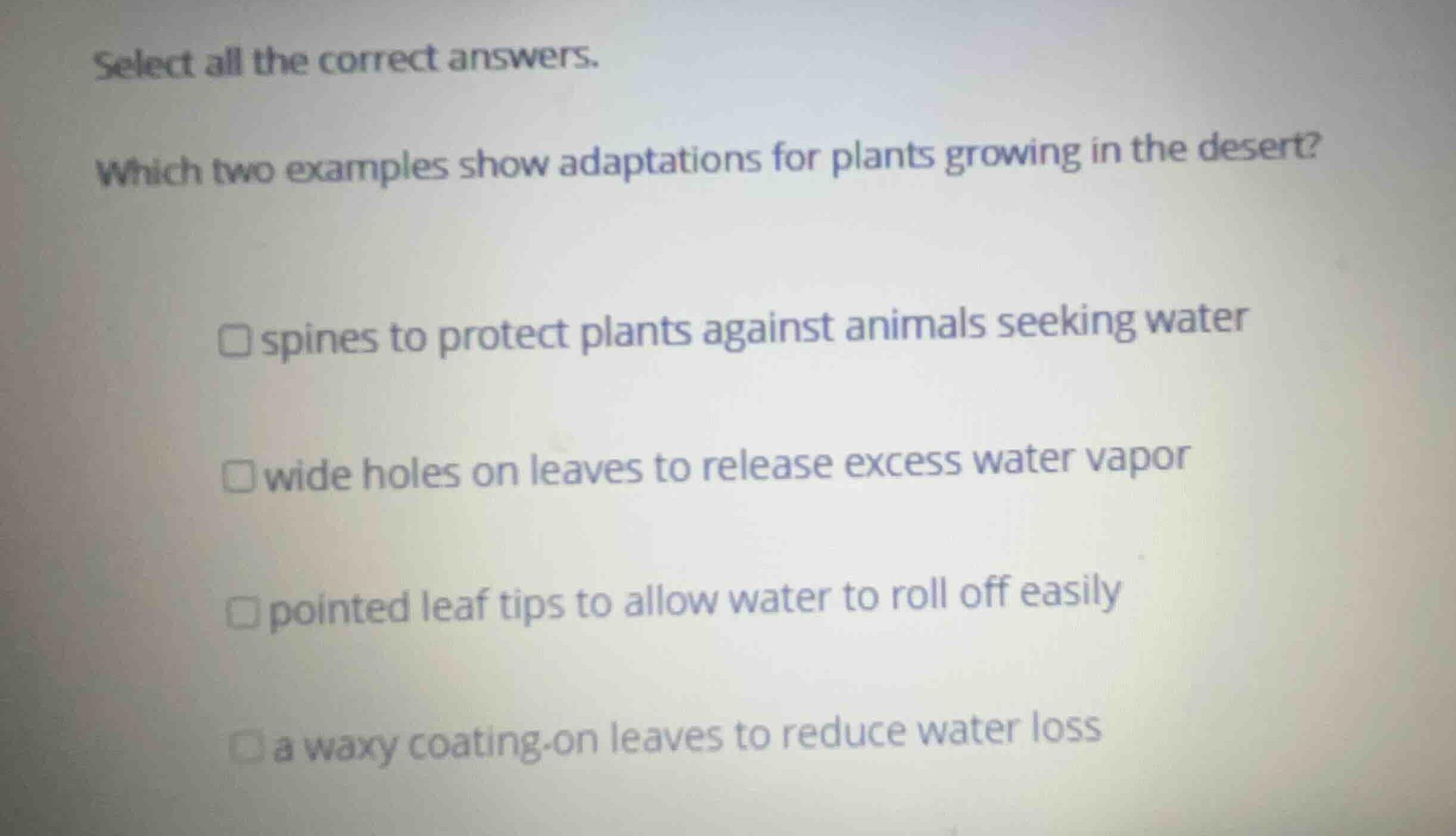
which two examples show adaptations for plants growing in the desert?
spines to protect plants against animals seeking water
wide holes on leaves to release excess water vapor
pointed leaf tips to allow water to roll off easily
a waxy coating on leaves to reduce water loss
Identify the environmental challenges of the desert
Desert environments are characterized by extremely low precipitation, high temperatures, and high rates of evaporation. For plants (xerophytes) to survive, they must minimize water loss, store water efficiently, and protect their stored water from herbivores seeking hydration.
Evaluate the first option: Spines
Desert plants, such as cacti, have leaves modified into sharp spines. These spines serve two critical functions: they reduce the surface area available for transpiration (water loss) and protect the plant's succulent, water-rich stems from thirsty desert animals. Therefore, this is a correct adaptation.
Evaluate the second option: Wide holes on leaves
"Wide holes" (large or numerous stomata) that release excess water vapor would increase transpiration. In an arid desert, conserving water is vital, so plants typically have fewer, smaller, or sunken stomata to prevent water loss. This option describes an adaptation more suited to wet environments.
Evaluate the third option: Pointed leaf tips
Pointed leaf tips (often called "drip tips") allow heavy rainwater to run off leaves quickly, preventing mold and fungus growth. This is a classic adaptation of tropical rainforest plants where rainfall is extremely high, not desert plants where water is scarce.
Evaluate the fourth option: Waxy coating on leaves
A thick, waxy cuticle (coating) on leaves and stems acts as a waterproof barrier. This barrier significantly reduces the amount of water lost through non-stomatal transpiration under the hot desert sun. Therefore, this is a correct adaptation.

Snap & solve any problem in the app
Get step-by-step solutions on Sovi AI
Photo-based solutions with guided steps
Explore more problems and detailed explanations
- spines to protect plants against animals seeking water (Correct answer)
- wide holes on leaves to release excess water vapor
- pointed leaf tips to allow water to roll off easily
- a waxy coating on leaves to reduce water loss (Correct answer)