QUESTION IMAGE
Question
question 1
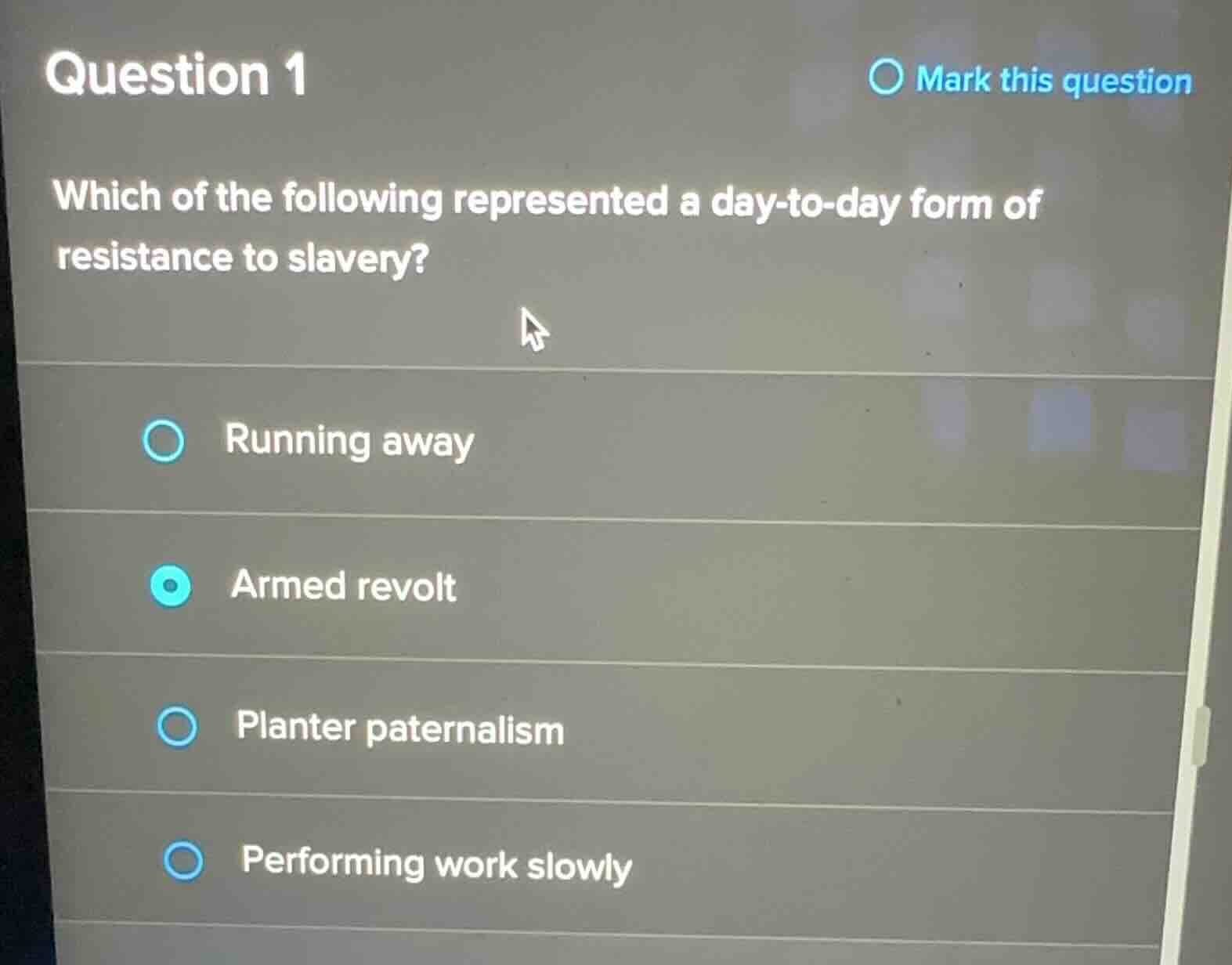
which of the following represented a day-to-day form of resistance to slavery?
running away
armed revolt
planter paternalism
performing work slowly
Define day-to-day resistance
Using the Everyday Resistance and Resistance to Enslavement knowledge points
- Day-to-day resistance (also known as everyday or silent resistance) refers to small-scale, routine acts of defiance carried out by enslaved individuals to slow down production, preserve dignity, and assert control over their labor without provoking immediate, extreme retaliation.
Evaluate the given options
Using the Everyday Resistance and Resistance to Enslavement knowledge points
- Running away: This represents an overt, high-risk form of escape or active flight, rather than a routine, day-to-day workplace disruption.
- Armed revolt: This is an organized, violent, and collective rebellion (such as Nat Turner's Rebellion), which was rare and highly dangerous, not a routine daily act.
- Planter paternalism: This is a historical concept used by slaveholders to justify slavery by framing it as a mutually beneficial, fatherly relationship, not a form of resistance.
- Performing work slowly: Work slowdowns, breaking tools, feigning illness, and minor sabotage were classic, widespread examples of daily, low-profile resistance.

Snap & solve any problem in the app
Get step-by-step solutions on Sovi AI
Photo-based solutions with guided steps
Explore more problems and detailed explanations
- (A) Running away
- (B) Armed revolt
- (C) Planter paternalism
- (D) Performing work slowly (Correct answer)