QUESTION IMAGE
Question
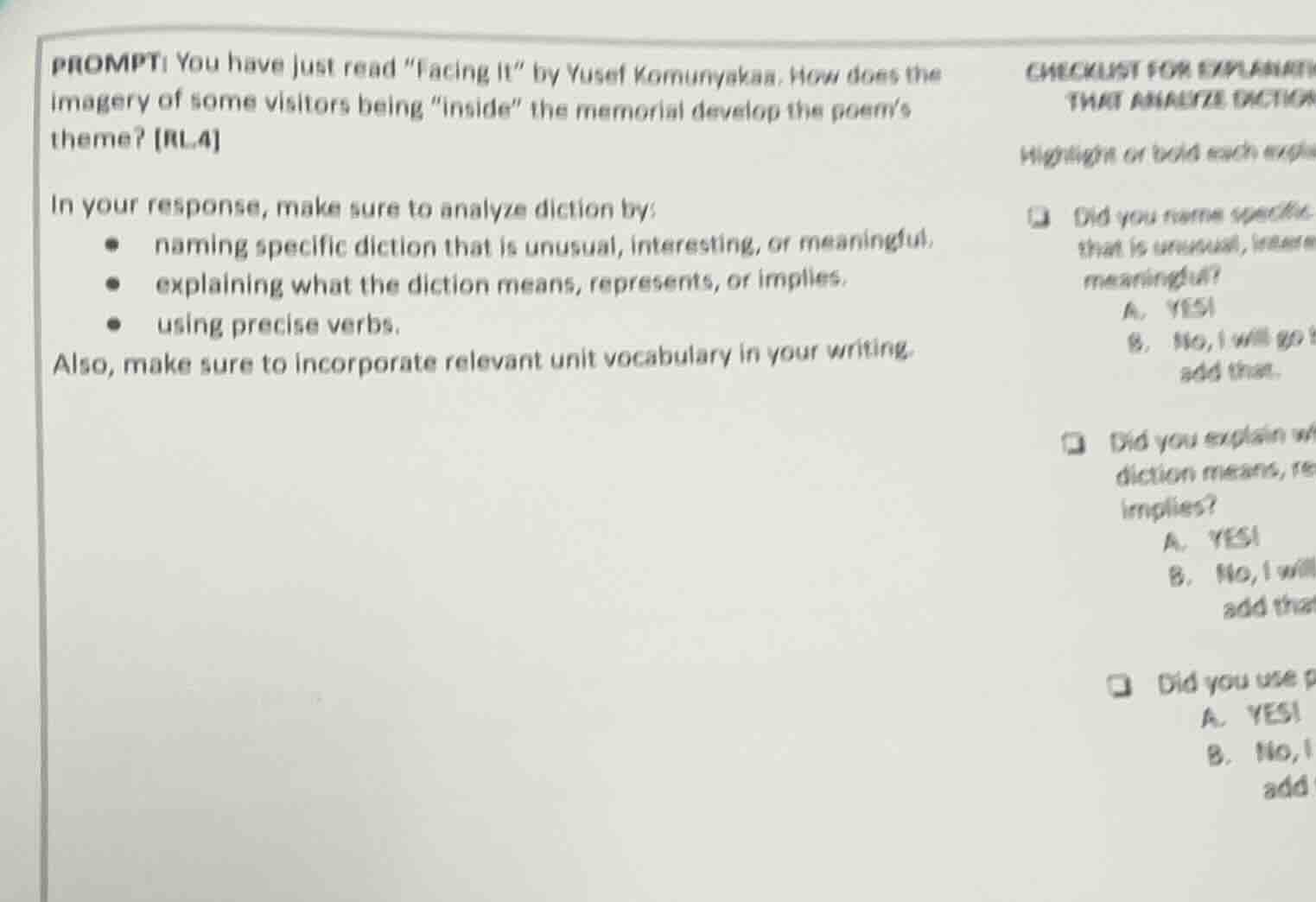
prompt: you have just read \facing it\ by yusef komunyakaa. how does the imagery of some visitors being \inside\ the memorial develop the poems theme? rl.4
in your response, make sure to analyze diction by:
- naming specific diction that is unusual, interesting, or meaningful.
- explaining what the diction means, represents, or implies.
- using precise verbs.
also, make sure to incorporate relevant unit vocabulary in your writing.
Analyze the imagery of being "inside" the memorial
The reflection of visitors on the polished black granite of the Vietnam Veterans Memorial creates a visual illusion where they appear to be trapped or existing "inside" the wall. This imagery blurs the boundary between the living and the dead, suggesting that those who survived the war remain psychologically trapped within its trauma and connected to those who perished.
Identify and analyze specific diction
The poem uses verbs like "lost" and "trapped" alongside the physical description of the "black mirror" of the wall. This diction implies a state of permanent captivity and psychological immersion, where the past and present coexist, and the living are consumed by the memory of the fallen.
Connect the imagery to the poem's theme
This imagery develops the theme of the inescapable, lingering trauma of war. By depicting the living as being "inside" the memorial with the names of the dead, Komunyakaa conveys that survival does not mean escape; the psychological wounds of combat permanently integrate the survivors into the monument of loss.

Snap & solve any problem in the app
Get step-by-step solutions on Sovi AI
Photo-based solutions with guided steps
Explore more problems and detailed explanations
In Yusef Komunyakaa's "Facing It," the imagery of visitors appearing "inside" the polished black granite of the memorial develops the theme of the inescapable, lingering trauma of war. By utilizing precise diction that describes the wall as a "mirror" where the living "lose" themselves, the poem blurs the boundary between the past and present, and the living and the dead. This visual illusion suggests that survivors remain psychologically trapped within the memory of the conflict, permanently bound to those who perished.