QUESTION IMAGE
Question
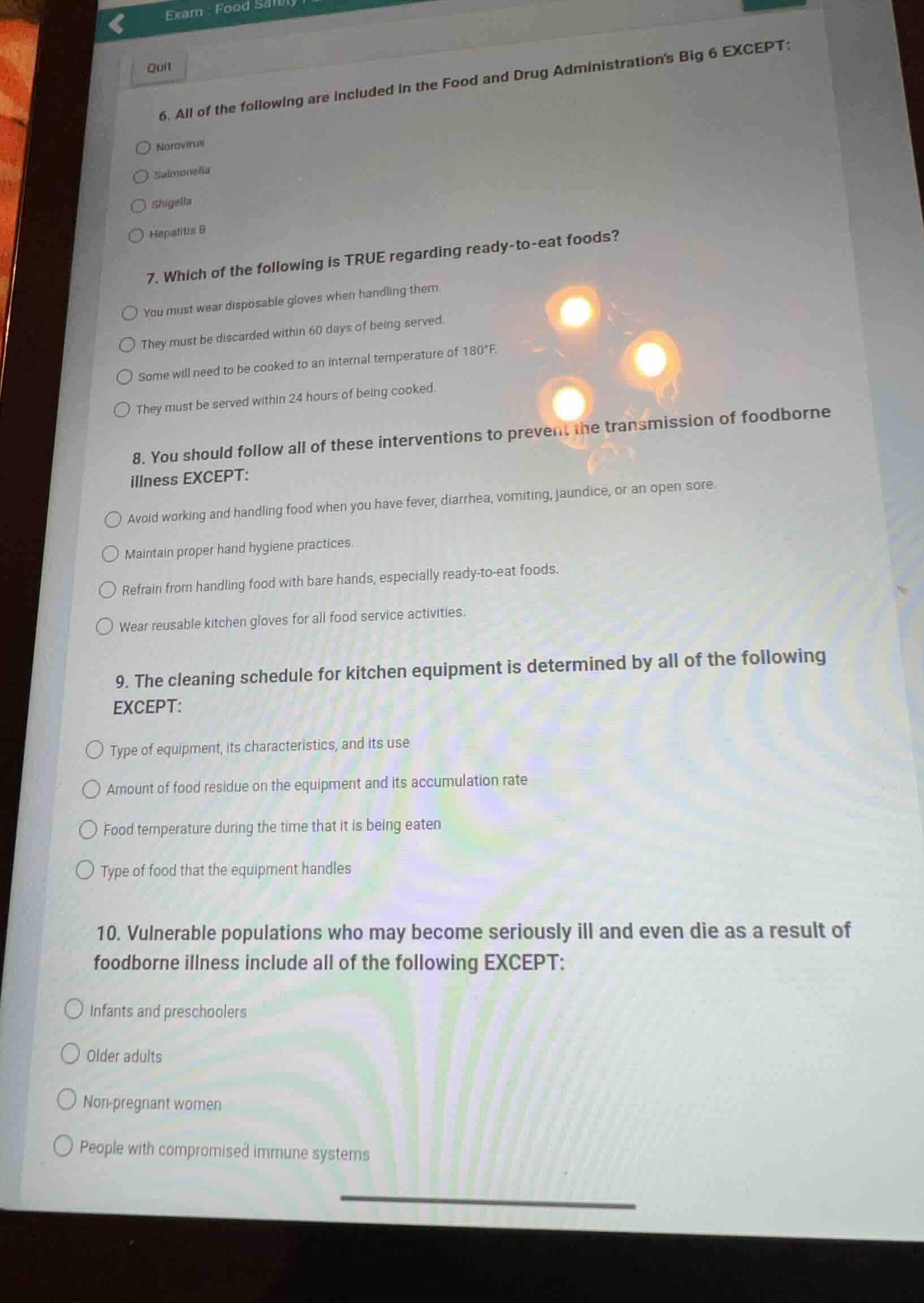
- all of the following are included in the food and drug administrations big 6 except:
norovirus
salmonella
shigella
hepatitis b
- which of the following is true regarding ready-to-eat foods?
you must wear disposable gloves when handling them.
they must be discarded within 60 days of being served.
some will need to be cooked to an internal temperature of 180°f.
they must be served within 24 hours of being cooked.
- you should follow all of these interventions to prevent the transmission of foodborne illness except:
avoid working and handling food when you have fever, diarrhea, vomiting, jaundice, or an open sore.
maintain proper hand hygiene practices.
refrain from handling food with bare hands, especially ready-to-eat foods.
wear reusable kitchen gloves for all food service activities.
- the cleaning schedule for kitchen equipment is determined by all of the following except:
type of equipment, its characteristics, and its use
amount of food residue on the equipment and its accumulation rate
food temperature during the time that it is being eaten
type of food that the equipment handles
- vulnerable populations who may become seriously ill and even die as a result of foodborne illness include all of the following except:
infants and preschoolers
older adults
non-pregnant women
people with compromised immune systems
Analyze FDA Big 6 Pathogens
We apply Food Safety Regulations to identify the FDA's "Big 6" highly infectious pathogens. These include Norovirus, Hepatitis A, Salmonella Typhi, Nontyphoidal Salmonella, Shigella spp., and Shiga toxin-producing Escherichia coli (STEC). Hepatitis B is a bloodborne pathogen, not a foodborne one, making it the correct exception.
Evaluate Ready-to-Eat Food Rules
Using Food Safety Regulations, we evaluate the rules for handling ready-to-eat (RTE) foods. Food handlers must avoid bare-hand contact with RTE foods, which means wearing disposable gloves is required. The other options contain incorrect timelines or temperatures.
Identify Foodborne Illness Interventions
Applying Foodborne Illness Prevention, we review standard interventions. Hand hygiene, avoiding work when sick, and avoiding bare-hand contact are standard. Wearing reusable kitchen gloves for all activities is incorrect because reusable gloves can cross-contaminate.
Determine Cleaning Schedule Factors
Using Sanitation Standards, we analyze what determines equipment cleaning schedules. The type of equipment, food residue accumulation, and the type of food handled are critical factors. The temperature of the food while it is being eaten by the customer does not affect the kitchen equipment cleaning schedule.
Identify Vulnerable Populations
Applying Foodborne Illness Prevention, we identify populations highly susceptible to foodborne illnesses. These include infants/preschoolers, older adults, pregnant women, and immunocompromised individuals. Non-pregnant women are not classified as a highly vulnerable population.

Snap & solve any problem in the app
Get step-by-step solutions on Sovi AI
Photo-based solutions with guided steps
Explore more problems and detailed explanations
Question 6
- Norovirus
- Salmonella
- Shigella
- Hepatitis B (Correct answer)
Question 7
- You must wear disposable gloves when handling them. (Correct answer)
- They must be discarded within 60 days of being served.
- Some will need to be cooked to an internal temperature of 180°F.
- They must be served within 24 hours of being cooked.
Question 8
- Avoid working and handling food when you have fever, diarrhea, vomiting, jaundice, or an open sore.
- Maintain proper hand hygiene practices.
- Refrain from handling food with bare hands, especially ready-to-eat foods.
- Wear reusable kitchen gloves for all food service activities. (Correct answer)
Question 9
- Type of equipment, its characteristics, and its use
- Amount of food residue on the equipment and its accumulation rate
- Food temperature during the time that it is being eaten (Correct answer)
- Type of food that the equipment handles
Question 10
- Infants and preschoolers
- Older adults
- Non-pregnant women (Correct answer)
- People with compromised immune systems