QUESTION IMAGE
Question
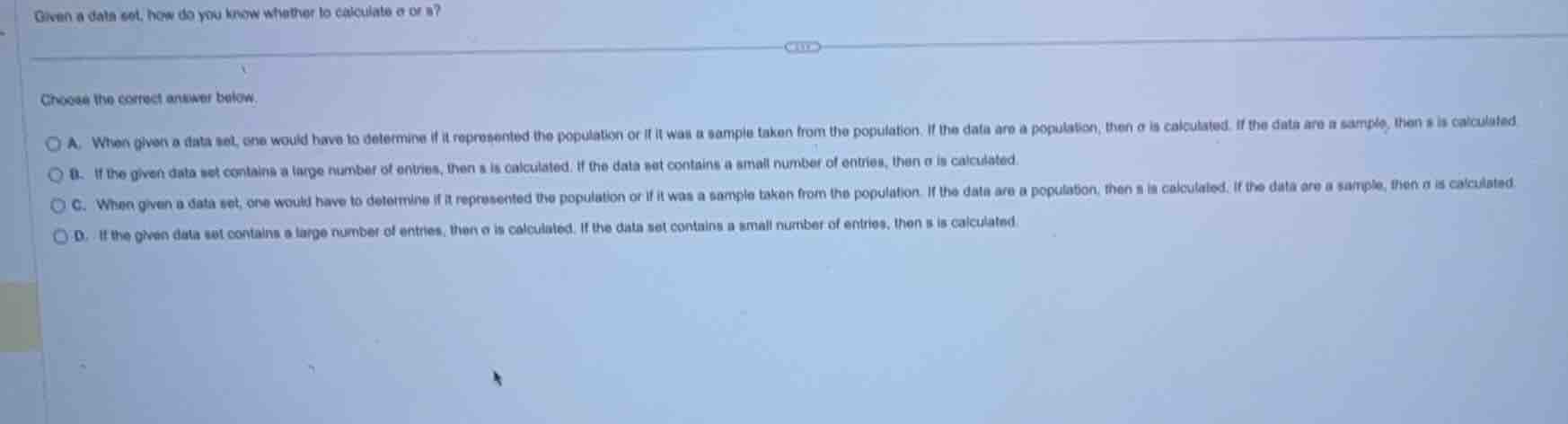
given a data set, how do you know whether to calculate \\(\sigma\\) or \\(s\\)?
choose the correct answer below.
a. when given a data set, one would have to determine if it represented the population or if it was a sample taken from the population. if the data are a population, then \\(\sigma\\) is calculated. if the data are a sample, then \\(s\\) is calculated.
b. if the given data set contains a large number of entries, then \\(s\\) is calculated. if the data set contains a small number of entries, then \\(\sigma\\) is calculated.
c. when given a data set, one would have to determine if it represented the population or if it was a sample taken from the population. if the data are a population, then \\(s\\) is calculated. if the data are a sample, then \\(\sigma\\) is calculated.
d. if the given data set contains a large number of entries, then \\(\sigma\\) is calculated. if the data set contains a small number of entries, then \\(s\\) is calculated.
Identify the symbols and definitions
We need to distinguish between the standard deviation symbols \(\sigma\) and \(s\). The Greek letter \(\sigma\) represents the population standard deviation, which is a parameter calculated when the data set includes all members of the population of interest. The lowercase letter \(s\) represents the sample standard deviation, which is a statistic calculated when the data set is a subset or sample taken from the larger population.
Evaluate the decision process
Using the Measures of Variation knowledge point, we determine which formula to apply based on the source of the data:
- If the data set represents the entire population, we calculate the Population Standard Deviation \(\sigma\).
- If the data set represents a sample, we calculate the sample standard deviation \(s\).
Analyze the given options
- A: Correctly states that one must determine if the data represents a population or a sample. If it is a population, \(\sigma\) is calculated; if it is a sample, \(s\) is calculated.
- B: Incorrectly bases the choice on the number of entries (sample size) rather than the nature of the data set.
- C: Reverses the symbols, stating that \(\s\) is for population and \(\sigma\) is for sample.
- D: Incorrectly bases the choice on the number of entries.

Snap & solve any problem in the app
Get step-by-step solutions on Sovi AI
Photo-based solutions with guided steps
Explore more problems and detailed explanations
- A. When given a data set, one would have to determine if it represented the population or if it was a sample taken from the population. If the data are a population, then \(\sigma\) is calculated. If the data are a sample, then \(s\) is calculated. (Correct answer)
- B. If the given data set contains a large number of entries, then \(s\) is calculated. If the data set contains a small number of entries, then \(\sigma\) is calculated.
- C. When given a data set, one would have to determine if it represented the population or if it was a sample taken from the population. If the data are a population, then \(s\) is calculated. If the data are a sample, then \(\sigma\) is calculated.
- D. If the given data set contains a large number of entries, then \(\sigma\) is calculated. If the data set contains a small number of entries, then \(s\) is calculated.