QUESTION IMAGE
Question
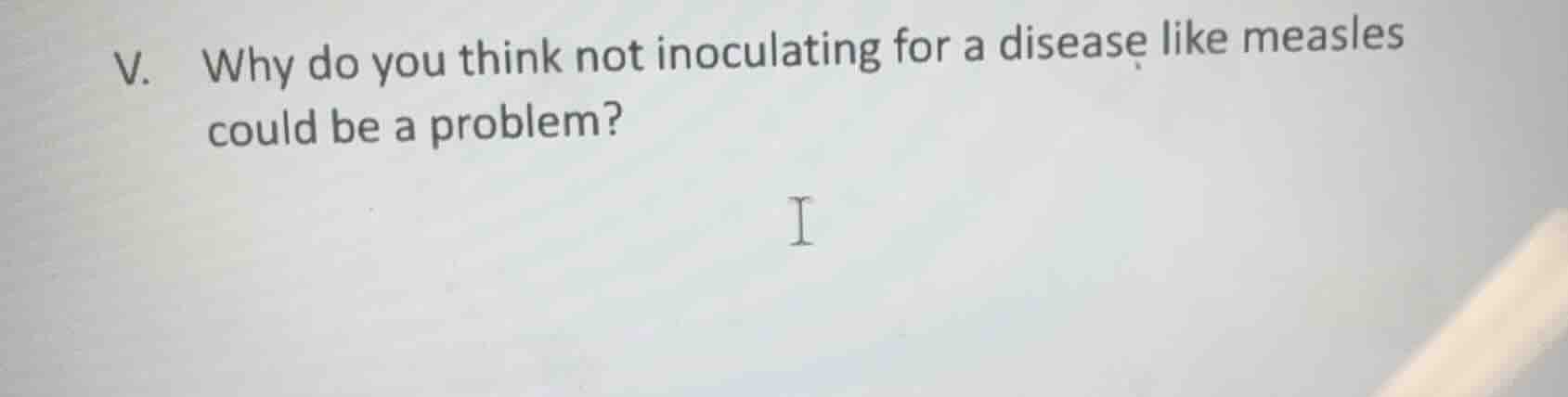
v. why do you think not inoculating for a disease like measles could be a problem?
Individual vulnerability to infection
Without inoculation, an individual lacks immunological memory against the measles virus. This leaves them highly susceptible to contracting the disease, which can lead to severe health complications such as pneumonia, encephalitis, or even death.
Loss of herd immunity
When a significant portion of a population is not inoculated, herd immunity is compromised. This is a key aspect of the Ethics of Vaccination, as maintaining high vaccination rates is essential to protect vulnerable individuals who cannot be vaccinated, such as infants or immunocompromised people.
Increased risk of outbreaks
A low inoculation rate allows the highly contagious measles virus to spread rapidly through a community. This can lead to widespread outbreaks, putting immense strain on healthcare systems and public health resources.

Snap & solve any problem in the app
Get step-by-step solutions on Sovi AI
Photo-based solutions with guided steps
Explore more problems and detailed explanations
Not inoculating for a highly contagious disease like measles is a major problem because it leaves individuals vulnerable to severe illness, compromises herd immunity (which protects vulnerable populations who cannot be vaccinated), and increases the risk of widespread community outbreaks.