QUESTION IMAGE
Question
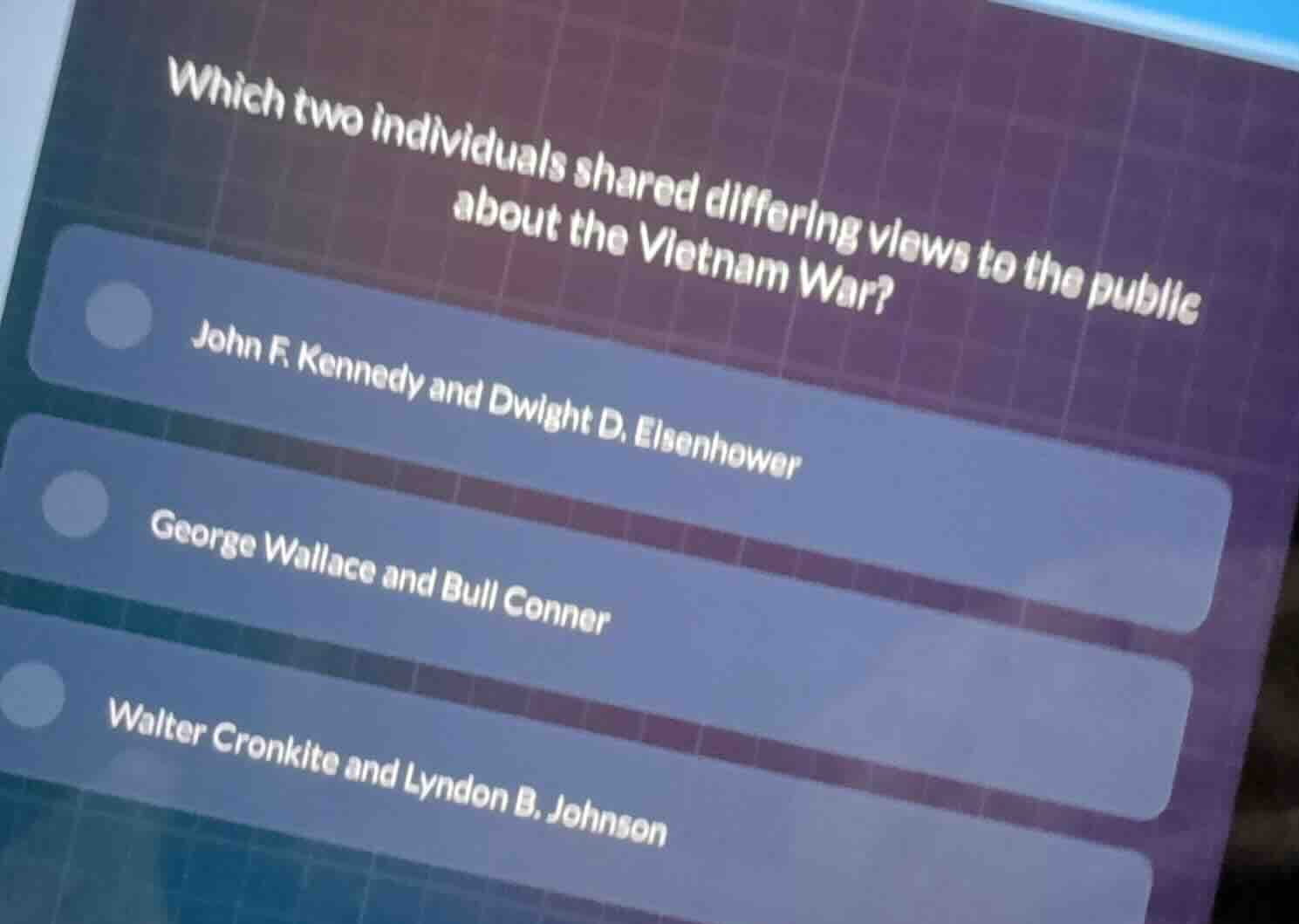
which two individuals shared differing views to the public about the vietnam war?
john f. kennedy and dwight d. eisenhower
george wallace and bull conner
walter cronkite and lyndon b. johnson
🆕 New Concept Discovered: Media and Executive Perspectives on War
How public reporting and official government stances clash during conflicts.
Step 1: Analyze the options and historical context
To find which two individuals presented differing public views on the Vietnam War, we examine the roles of the people listed:
- John F. Kennedy and Dwight D. Eisenhower: Both were U.S. Presidents who served before the major escalation of the Vietnam War. While they had different foreign policy approaches, they did not engage in a prominent public debate or present clashing public narratives about the war's progress to the American public.
- George Wallace and Bull Connor: Both were prominent Southern political figures during the Civil Rights Movement known for opposing racial integration, rather than being key opposing figures in the public debate over the Vietnam War.
- Walter Cronkite and Lyndon B. Johnson: Lyndon B. Johnson was the U.S. President who significantly escalated American involvement in Vietnam, consistently projecting optimism to the public that the war was being won. Walter Cronkite was a highly trusted CBS News anchor. After visiting Vietnam during the 1968 Tet Offensive, Cronkite delivered a famous television broadcast declaring that the war was mired in a stalemate and could not be won militarily. This directly contradicted President Johnson's official administration narrative.
Step 2: Identify the correct pair
The public clash between Walter Cronkite's journalistic skepticism and Lyndon B. Johnson's official administration reports represents one of the most famous examples of differing public views and the "credibility gap" during the Vietnam War.

Snap & solve any problem in the app
Get step-by-step solutions on Sovi AI
Photo-based solutions with guided steps
Explore more problems and detailed explanations
Walter Cronkite and Lyndon B. Johnson