QUESTION IMAGE
Question
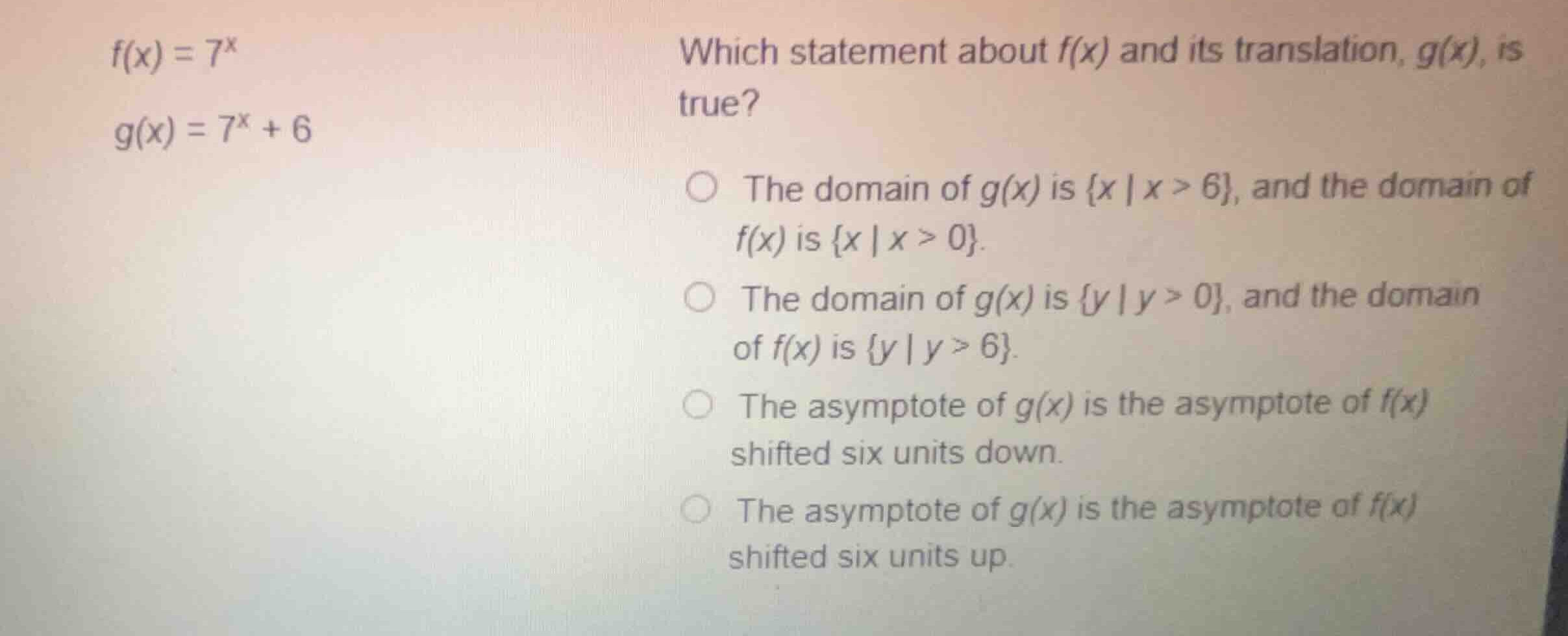
\\f(x) = 7^x\\
\\g(x) = 7^x + 6\\
which statement about \\(f(x)\\) and its translation, \\(g(x)\\), is true?
- the domain of \\(g(x)\\) is \\(\\{x \mid x > 6\\}\\), and the domain of \\(f(x)\\) is \\(\\{x \mid x > 0\\}\\).
- the domain of \\(g(x)\\) is \\(\\{y \mid y > 0\\}\\), and the domain of \\(f(x)\\) is \\(\\{y \mid y > 6\\}\\).
- the asymptote of \\(g(x)\\) is the asymptote of \\(f(x)\\) shifted six units down.
- the asymptote of \\(g(x)\\) is the asymptote of \\(f(x)\\) shifted six units up.
Analyze the parent function
Using the Exponential Functions knowledge point
$$
f(x) = 7^x
$$
The domain is all real numbers, and the horizontal asymptote is \(y = 0\).
Analyze the transformation
Using the Function Transformations knowledge point
$$
g(x) = f(x) + 6 = 7^x + 6
$$
This represents a vertical shift of the entire graph upward by 6 units.
Determine the new asymptote
Using the Horizontal Asymptote knowledge point
$$
\text{Asymptote of } g(x): y = 6
$$
The asymptote of \(g(x)\) is the asymptote of \(f(x)\) shifted six units up.

Snap & solve any problem in the app
Get step-by-step solutions on Sovi AI
Photo-based solutions with guided steps
Explore more problems and detailed explanations
- The domain of \(g(x)\) is \(\{x \mid x > 6\}\), and the domain of \(f(x)\) is \(\{x \mid x > 0\}\).
- The domain of \(g(x)\) is \(\{y \mid y > 0\}\), and the domain of \(f(x)\) is \(\{y \mid y > 6\}\).
- The asymptote of \(g(x)\) is the asymptote of \(f(x)\) shifted six units down.
- The asymptote of \(g(x)\) is the asymptote of \(f(x)\) shifted six units up. (Correct answer)